A House Shaped by Interruption

In Haddonfield, New Jersey, the center hall colonial is a familiar and enduring form—ordered, symmetrical, and deeply rooted in place.

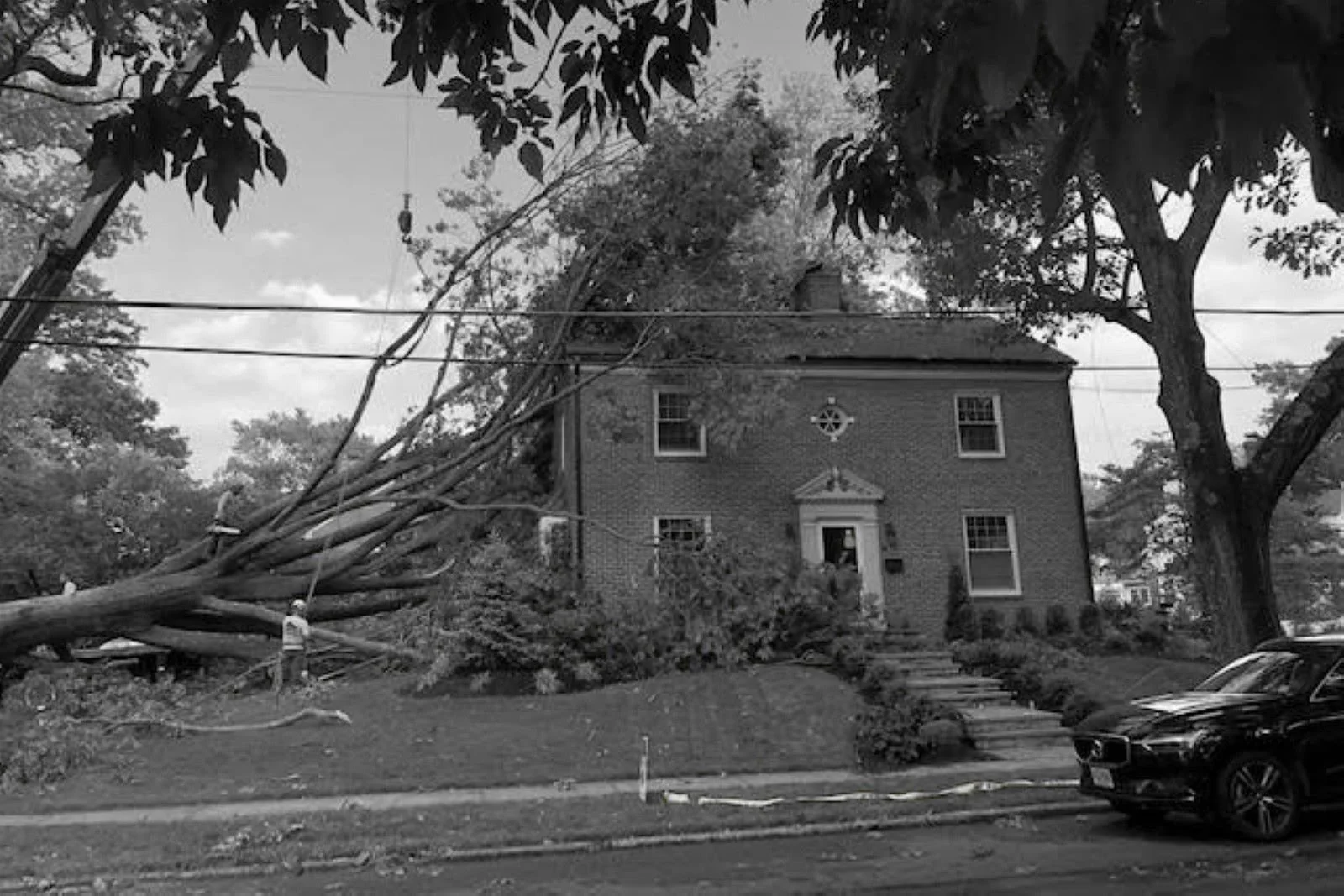
This project did not begin with intention. It began with interruption.

A fallen tree damaged the home—exposing the roof, compromising portions of the structure, and forcing immediate evaluation.

What initially presented as a repair effort quickly became something more.

As the house was opened and assessed, it revealed not only damage—but underlying issues that had existed for years:

  • Circulation that interrupted daily life

  • Limited natural light within a traditionally enclosed plan

  • Additions that were attached, but never fully integrated

Like many meaningful projects, clarity emerged only after the house was partially undone.


The Challenge

The homeowners came to us with a clear goal:

Repair the home and remain in Haddonfield—close to family and community—while making the home work better for how they live today.

The storm damage required initial decisions to be made quickly. As architect, our role extended beyond design—working with the owner, guiding the evaluation of damage, advising contractors, and helping determine what should be repaired… and what should be reconsidered.

What became clear was that restoring the house as it was would also include restoring its limitations, inefficiencies, and dated aethetics.

The opportunity was to move beyond repair—and address the center hall colonial homes fundamental design organization and aesthetic issues:

  • Compartmentalized interior spaces

  • Disconnected circulation paths

  • A rear addition that attempted to mimic the original structure, but never truly belonged

The client’s weren’t looking for more space, they were looking for a home that felt simple, connected, intuitive, and safe.

Before shots illustrating isolation created by the center hall


before center hall colonial kitchen is isolated from other rooms in the home, but is where everyone wants to gather

before - center hall cuts house in half, dividing the interior rooms

before - family room addition isolated from the rest of the home and minimal connection to yard for outdoor living

Reimagining the Center Hall

At its best, the center hall is more than a hallway—it is the organizing structure of the home.
At its worst, it becomes a barrier—dividing rooms and disrupting the flow needed for contemporary family life.

Here, the center hall maintained its formal role, but failed to provide a clear path through the house—particularly to the family room addition constructed by a previous owner. Movement was indirect, and daily routines were shaped by working around the plan rather than moving naturally through it.

The new design maintains the center hall as the primary organizing axis, while introducing selective openings within the existing bearing wall to create visual and spatial continuity.

Rather than fully removing separation, these interventions allow connection to develop through alignment, light, and partial transparency. Industrial shelving elements are integrated within these openings—introducing depth, layering, and a place for plant life to soften and activate the center of the home.

The result is a circulation spine that remains defined, but no longer closed—light-filled, connected, and visually engaging.


Cross Axis

The defining move is the introduction of a secondary, cross-axis behind the kitchen.

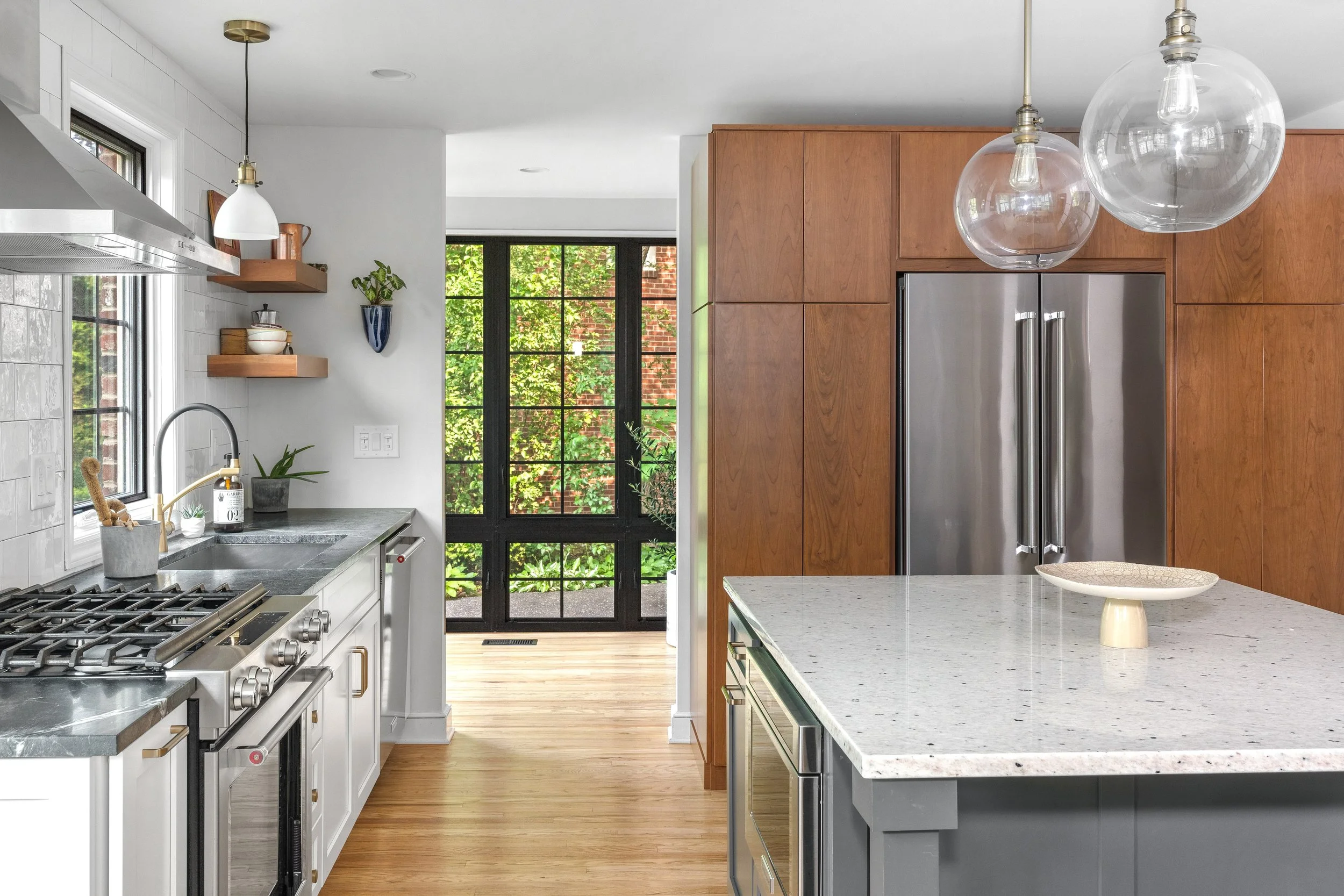
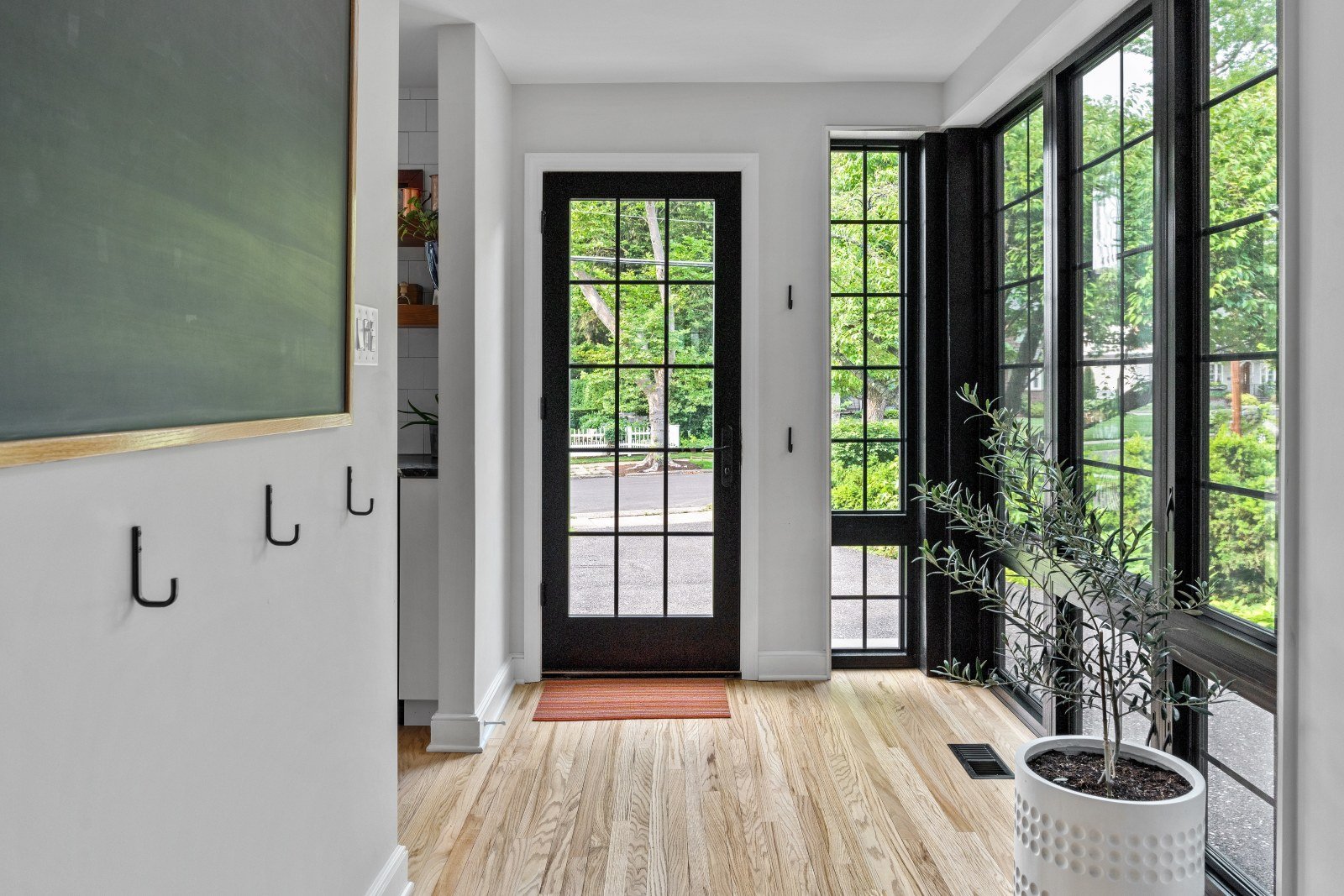
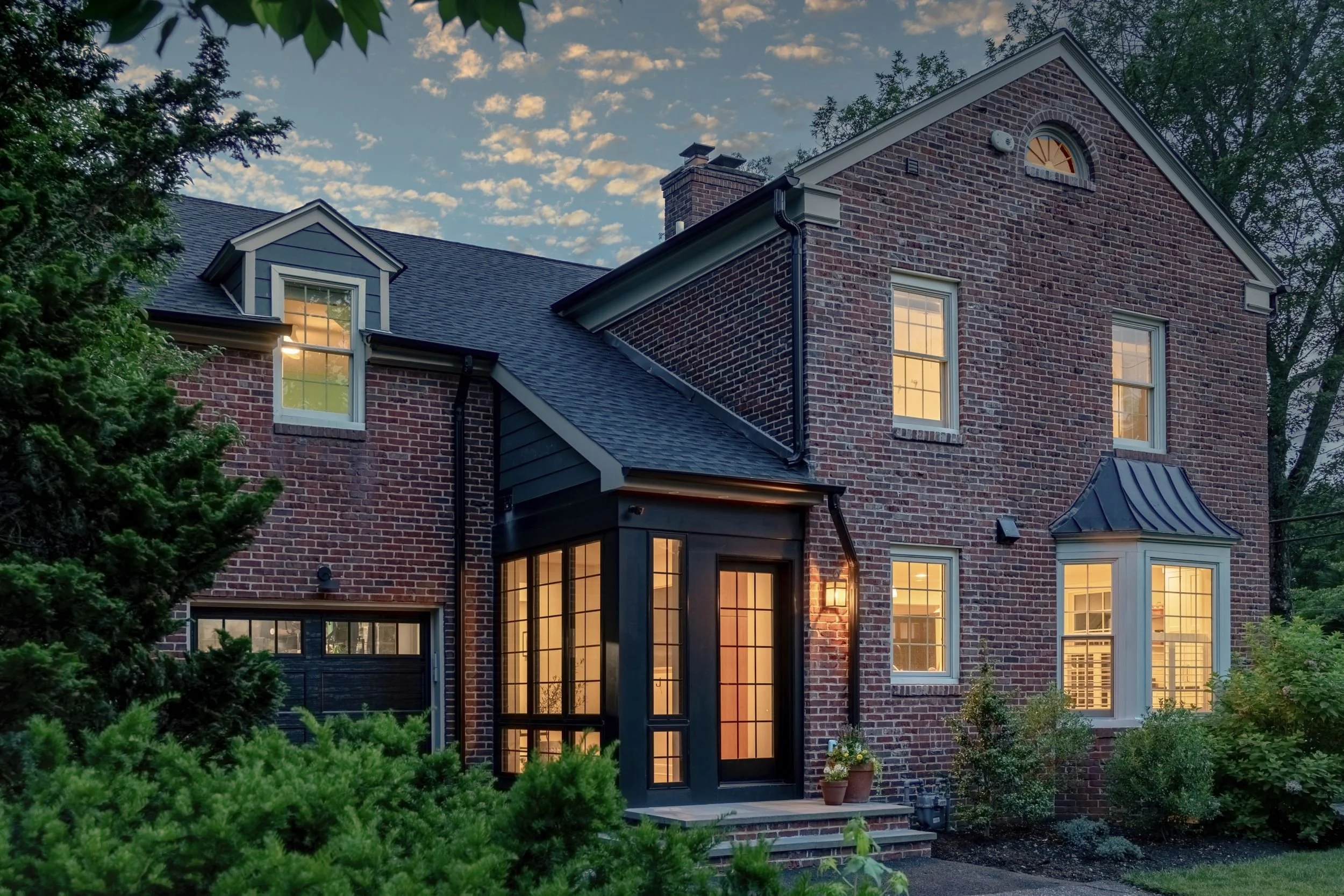
This new path reorganizes the house—connecting the driveway entry through a new side entry sequence, into the mudroom, past the kitchen, through the family room, and outward to the yard.

What was once fragmented becomes ordered.

As you move through the home:

  • Spaces align and reveal one another

  • Light enters from both ends

  • Circulation becomes direct and intuitive

What once required navigating through and around rooms now becomes a clear progression—replacing friction and confusion with structure, sequence, and ease.


after- Corner window side entry allows light to flow into the home, welcoming both the sun and guests


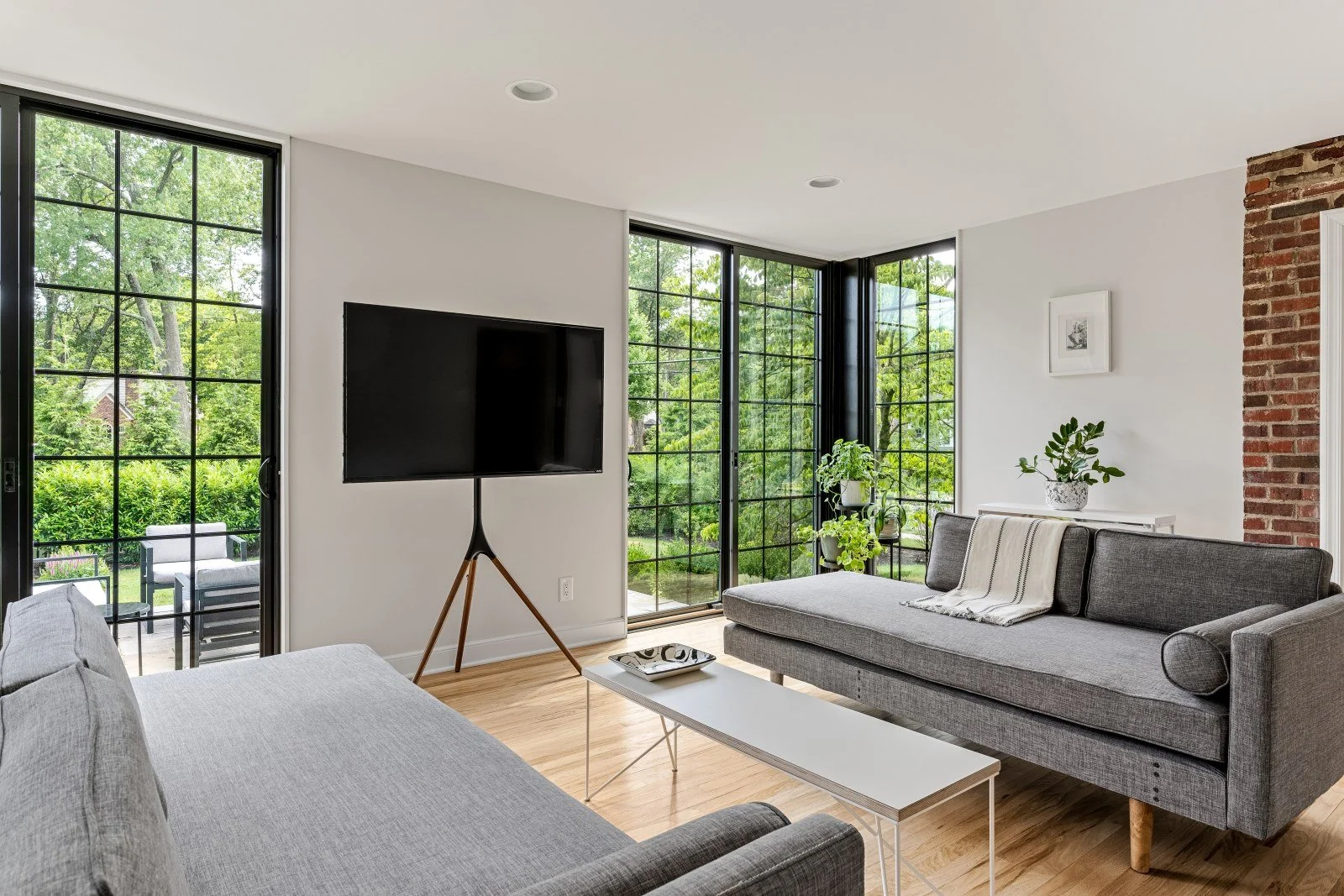
after - interior axis maintians natura light, provides privacy for powder room, and connects the side entry and kitchen to the family

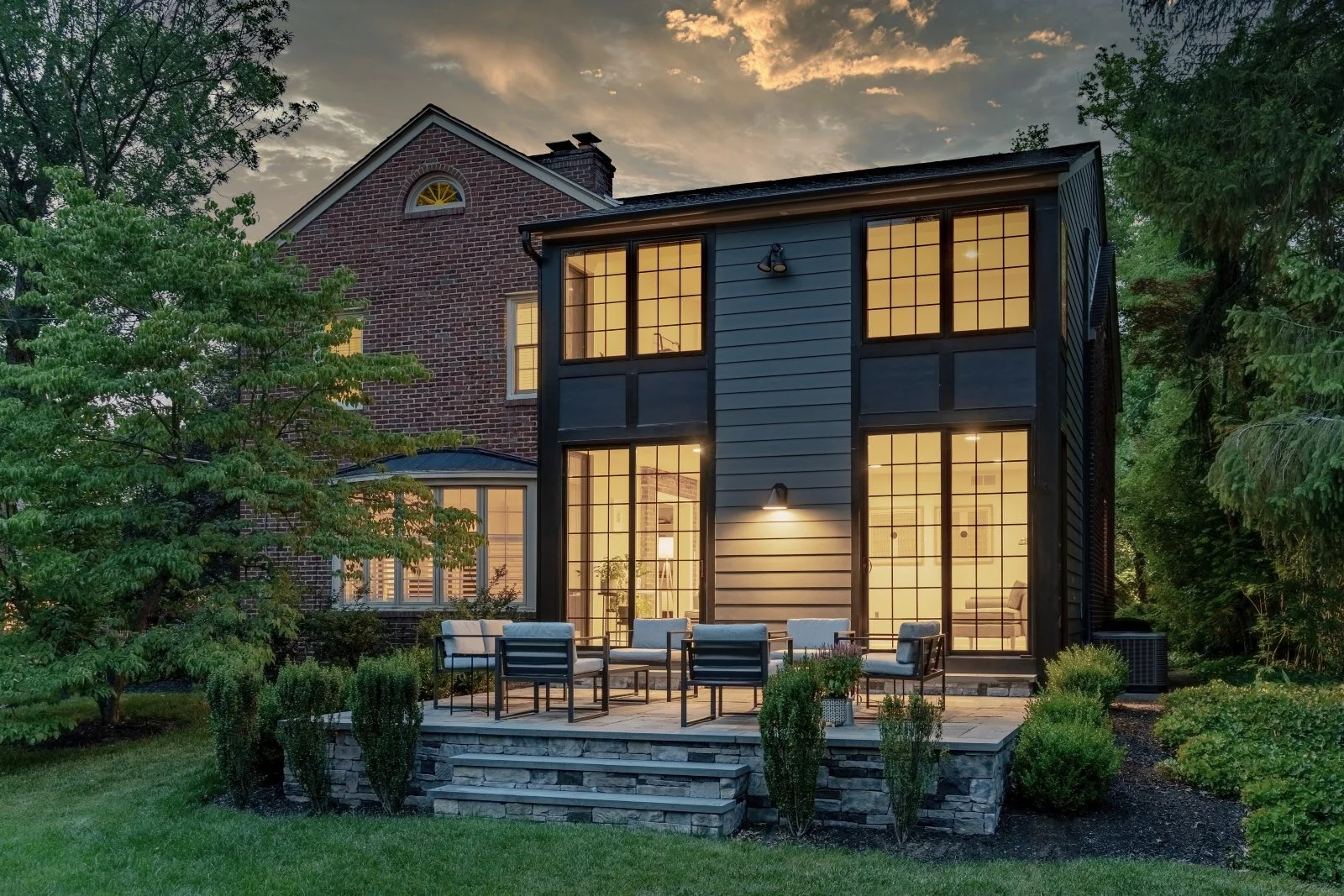
the cross axis terminates in the yard on the back side of the home.


Guided Intervention

As the project moved from damage evaluation through design and into construction, each decision was tested—ensuring it was intentional, appropriate, and meaningful.

Because the existing brick was essential to the character of the home, all material that had fallen or been damaged was carefully removed, examined, cleaned, and stacked for reuse. Matching older masonry can be difficult and costly, so confirming that enough original brick could be salvaged allowed repairs—and the relocation of the kitchen window—to feel seamless.

New work was introduced with an understanding of how the house was originally built—and how it needed to evolve—so that changes like relocating a window in a masonry wall makes as much sense financially as it does for the design of the elevation.


Industrial Minimalism — Expressed Through Light and Construction

The architectural language of the project is defined by restraint.

“Industrial” is not applied as a style—it emerges through clarity of construction, material, and light.

Steel and glass introduce precision and openness.
Openings are placed intentionally—shaping how light moves through the home and how spaces relate to one another.

Traditional brick colonials often feel enclosed. Here, carefully positioned openings bring light deep into the plan—transforming the interior from a series of rooms into a connected environment.

Moments like the glass corner in the kitchen introduce transparency within a traditionally solid form—changing how the house is experienced throughout the day.

Minimalism, in this context, is not about less—it is about the right things, working together with clarity and purpose.


Restoring and Repositioning the House

Over time, previous renovations had compromised both the interior and the relationship between the house and its additions.

On the second floor, a hallway was closed off and a defining circular window disconnected—diminishing both light and spatial clarity. Reopening these relationships restores the original logic of the home, allowing light to return and spaces to feel proportionate and complete.

At the rear, the existing addition attempted to replicate the original house—but never fully integrated. Its forms and details imitated rather than responded.

The new approach is intentionally different.

The addition is clearly contemporary, yet secondary—allowing the original brick structure to remain primary. Darker materials recede, while clean lines and carefully placed openings respond to use rather than imitation.

This contrast creates a more coherent relationship—one that allows both old and new to feel resolved.


Before - Family Room Addition by Prior Owners

The traditionaladdition attemps to blend with the original structure—poorly


After - Family Room Addition with Strategic Design Intervention

The addition recedes—allowing the original home to remain primary


Before - Driveway entry directly into kitchen

After - Driveway entry into cross axis space behind the kitchen


Before - 2nd floor hallway closed off.


After - 2nd floor hall open to the front circle window and full of light.


The Result

The project is not defined by a single move, but by a series of deliberate decisions—each shaped by the realities of the existing house and how the homeowners needed it to perform in daily life.

What began as damage revealed deeper issues.
What followed was not simply repair, but a rethinking of how the house should support them.

Circulation is now clear and direct—no longer requiring them to move around obstacles or through rooms that didn’t connect.
Light reaches into spaces that were once closed off—bringing a sense of calm and awareness to everyday routines.
New work integrates with the existing structure—allowing the house to evolve without losing what made it feel like home.

The result is not a different house, but one that works the way it always should have.

A home that feels ordered, connected, and intuitive—quietly supporting the way they live now, and adaptable to how they will live over time.


For many homes like this in Haddonfield, the opportunity isn’t to add more—but to make what’s already there work the way it should.


Project Team & Credits