
McMansion Makeover
Mullica Hill, New Jersey
Adapting a Generic Developer House Into a Site-Specific Home
Custom residential renovation in Mullica Hill, NJ transforming a 1990s developer home into a more intentional, connected, and environmentally responsive place for contemporary family living.
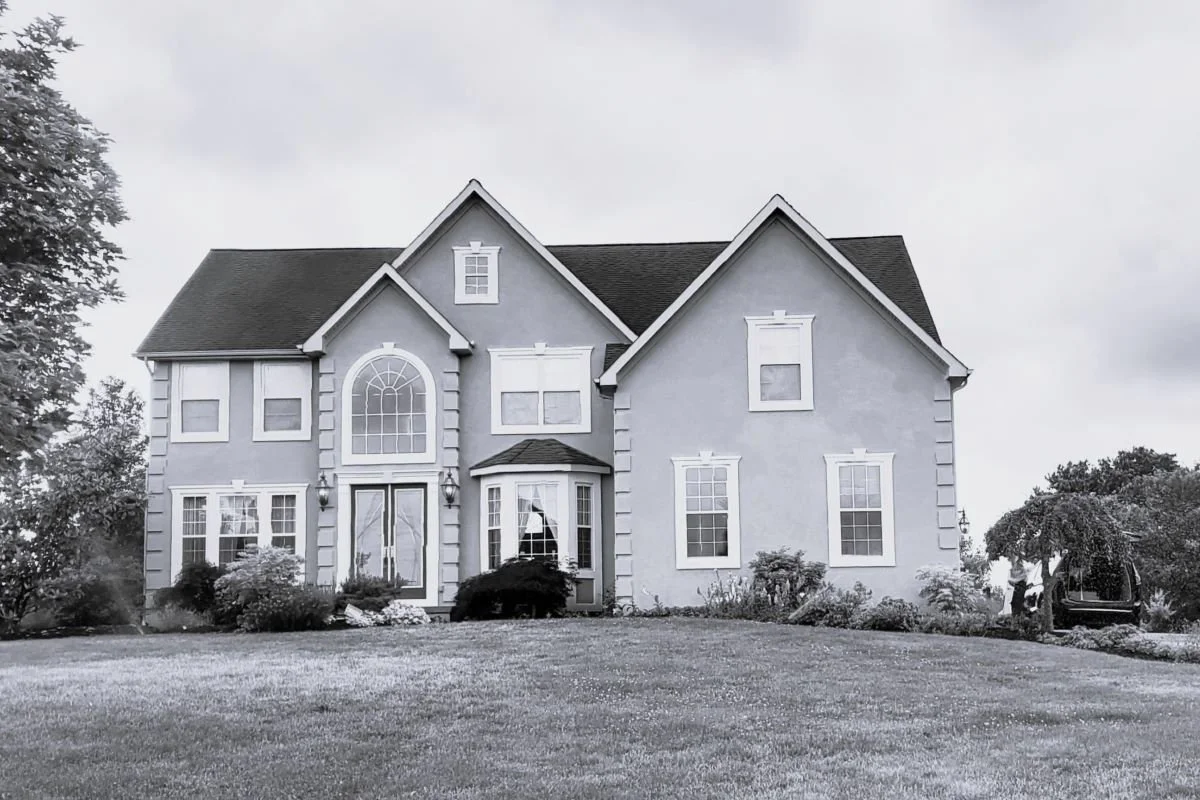
The original Mullica Hill home reflected a familiar 1990s developer-house vocabulary—arched windows, oversized gestures, and ornamental detailing—before the renovation introduced a clearer architectural order and stronger connection to the site.
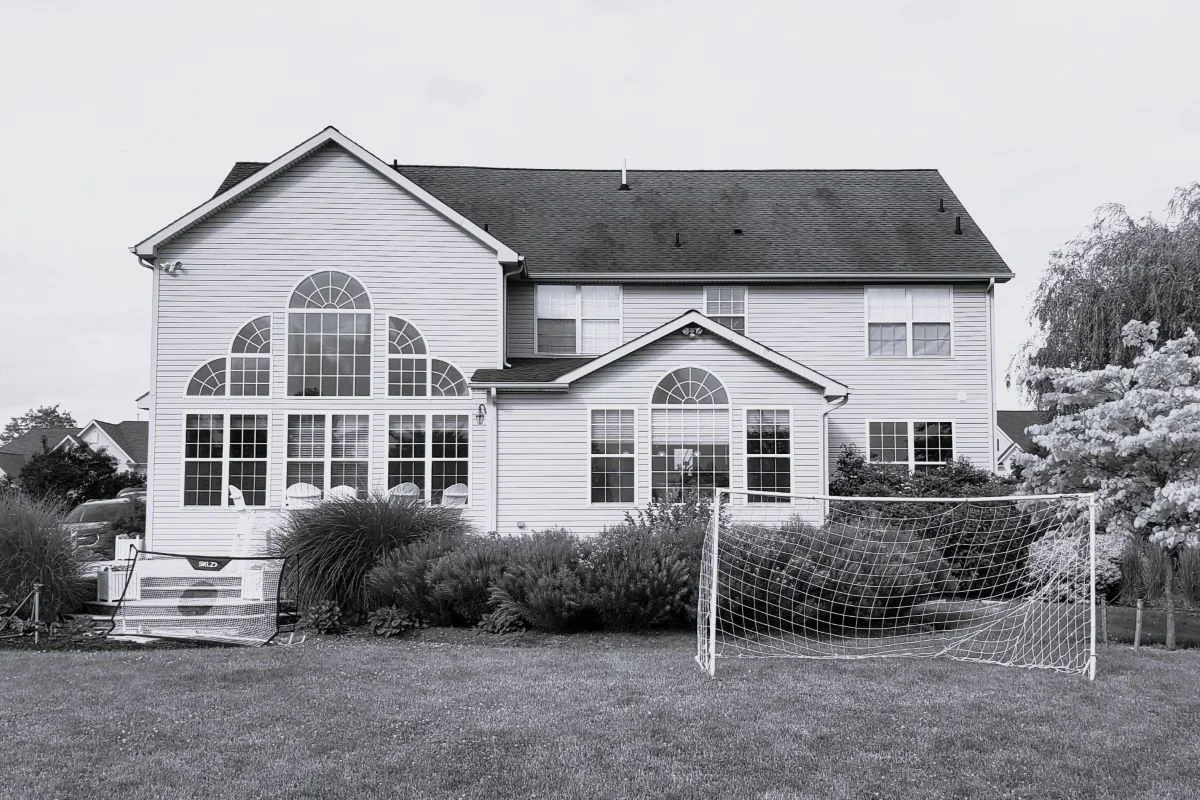
The rear of the original house revealed the project’s central problem: large south-facing windows and oversized gestures created visual drama, but little comfort, shade, or meaningful connection between the interior and the yard.
The Introduction
This Mullica Hill renovation began with one of the most common housing types in South Jersey: the 1990s developer home.
Set on a cul-de-sac in the middle of former farmland, the house had many of the familiar gestures of that era—an inflated footprint, a double-height living room, arched windows, ornamental columns, and a plan organized more around image than daily life.
But the project was not about dismissing the house entirely.
Beneath the stylistic excess and inefficient planning was a sound structural system. That existing framework became the starting point for a more disciplined architectural response—one that could bring order to the interior, strengthen the connection to the yard, improve comfort and performance, and create a home that felt more aligned with the family who lived there.
Rather than erase the house, the design reclaims it.
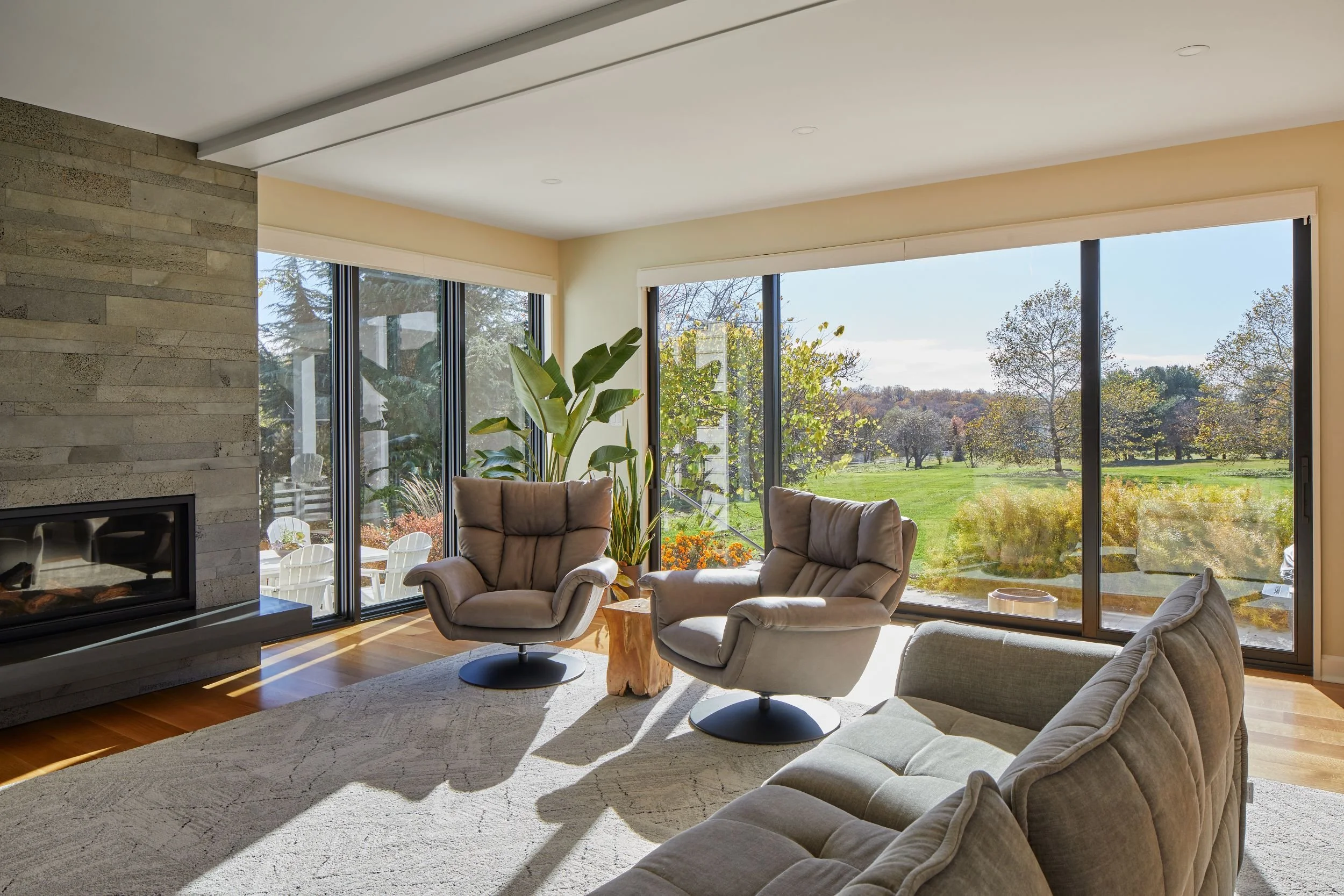
The renovated family room replaces scale-for-scale’s sake with a calmer, more intimate living space—framed by broad views to the yard, a refined lava-stone fireplace, and direct connection to the patio beyond.
The Opportunity
The original home offered size without comfort.
The two-story living room was intended to feel grand, but the space was difficult to inhabit. Large south-facing windows brought in excessive heat and glare. The kitchen, dining area, family room, and patio were disconnected from one another, even though the family wanted a home that supported gathering, entertaining, and everyday movement between inside and outside.
The house also had very little relationship to its site. Behind it was an expansive yard and long views across open green space, yet the plan did not take full advantage of that setting.
The opportunity was to work within the existing footprint and structure while fundamentally changing how the house lived.
That meant making the plan more coherent, turning unused volume into meaningful space, creating better circulation, and transforming the south-facing rear of the home from a liability into one of its greatest strengths.
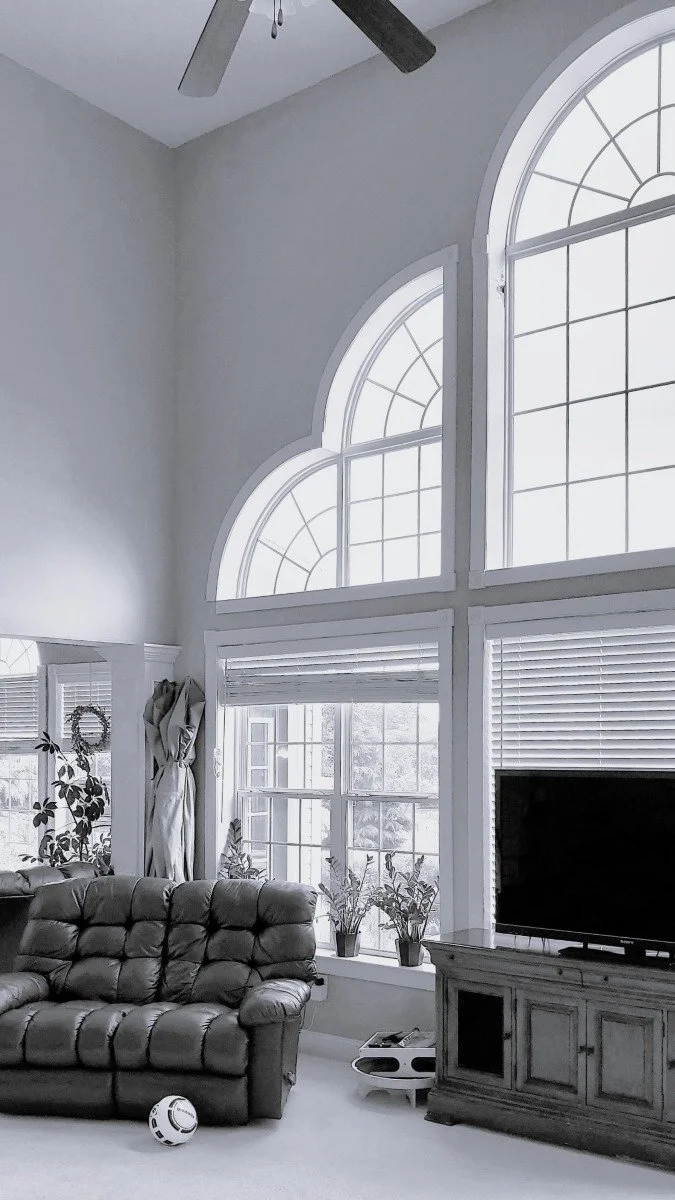
The original double-height living room offered height and drama, but little intimacy or comfort—one of the key opportunities in reworking the home around proportion, light, and how the family actually lived.
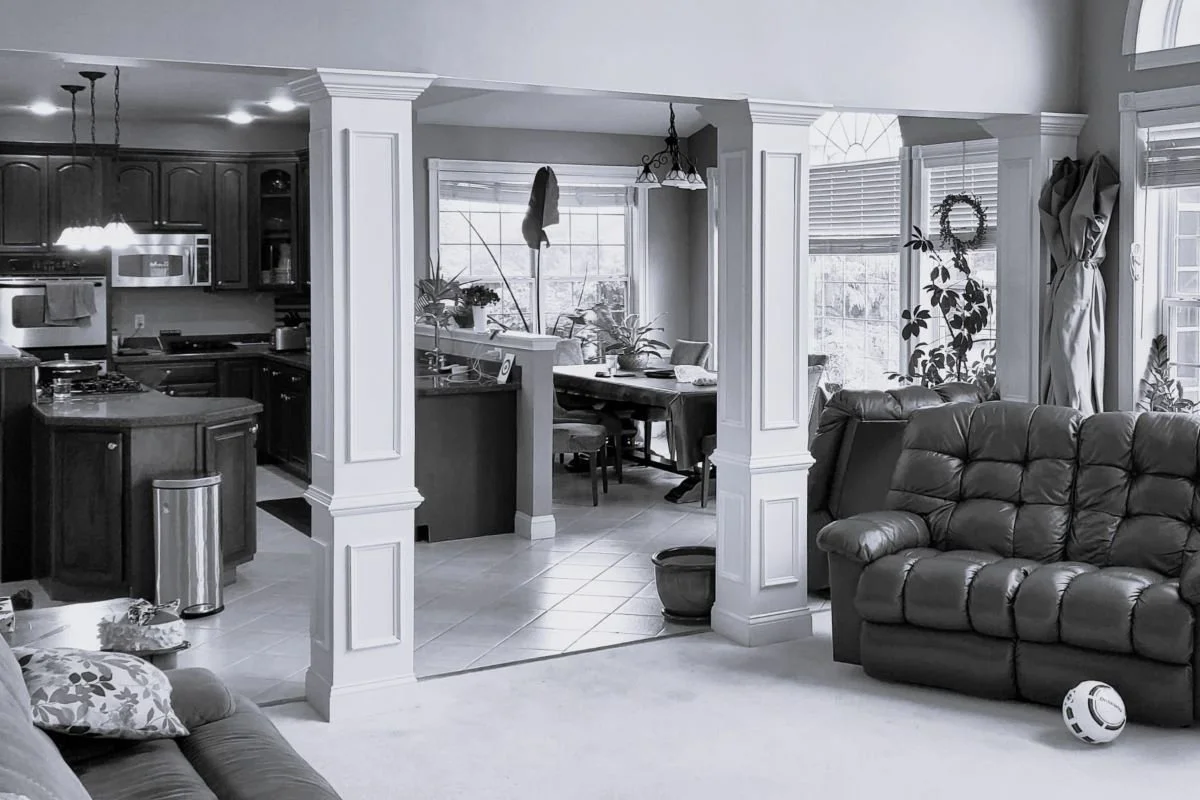
Before renovation, the kitchen, dining area, and family room were visually connected but spatially unresolved—divided by ornamental columns, partial walls, and builder-grade gestures that limited flow and comfort.
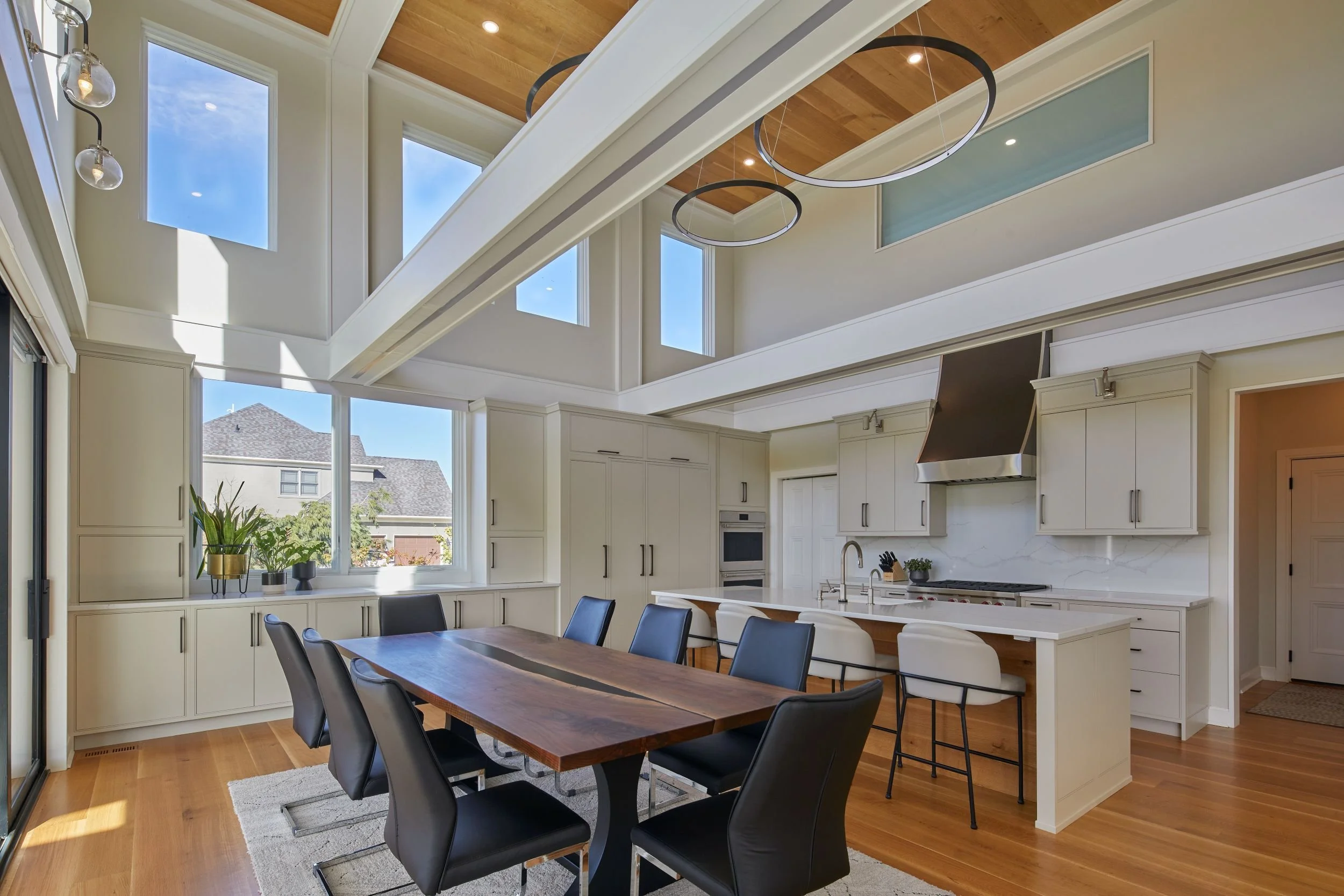
The former double-height living room became the kitchen and dining volume, using the home’s existing structure to create a brighter, more ordered space that connects daily life to the patio and yard.
The Design Move
The design move was to use the existing structural logic of the house as the basis for a new architectural order.
A continuous grid of columns, beams, trim, openings, and exterior structure organizes the renovation from inside to outside. Rather than allowing each room to act independently, the grid creates a clear sequence through the kitchen, dining area, family room, pergola, patio, and yard.
The former double-height living space was reimagined as the kitchen and dining area, giving the most active part of the home the height, light, and connection it deserved. The family room was relocated into a lower, more intimate volume where sitting, gathering, and conversation feel naturally comfortable.
The stair was also reconsidered. Instead of treating the basement stair as a closed-off utility element, the new open stair creates light, movement, and a visual connection between levels. Riser-less treads, glass railings, and carefully scaled trim allow the stair to become part of the experience of the house rather than an interruption.
Outside, a new sawtooth-roof pergola extends the architectural grid into the landscape. Located on the sun-struck southwest side of the house, it provides shade while allowing heat to escape through the open clerestory. New high-performance windows and custom doors improve comfort, support cross-ventilation, and allow people to move easily between the kitchen, family room, patio, fire pit, and yard.
Material choices reinforce the transformation. Natural white oak floors, durable wood trim, custom doors, and a honed lava-stone fireplace surround replace the disposable feeling of the original builder-grade finishes with something more permanent, tactile, and authentic.
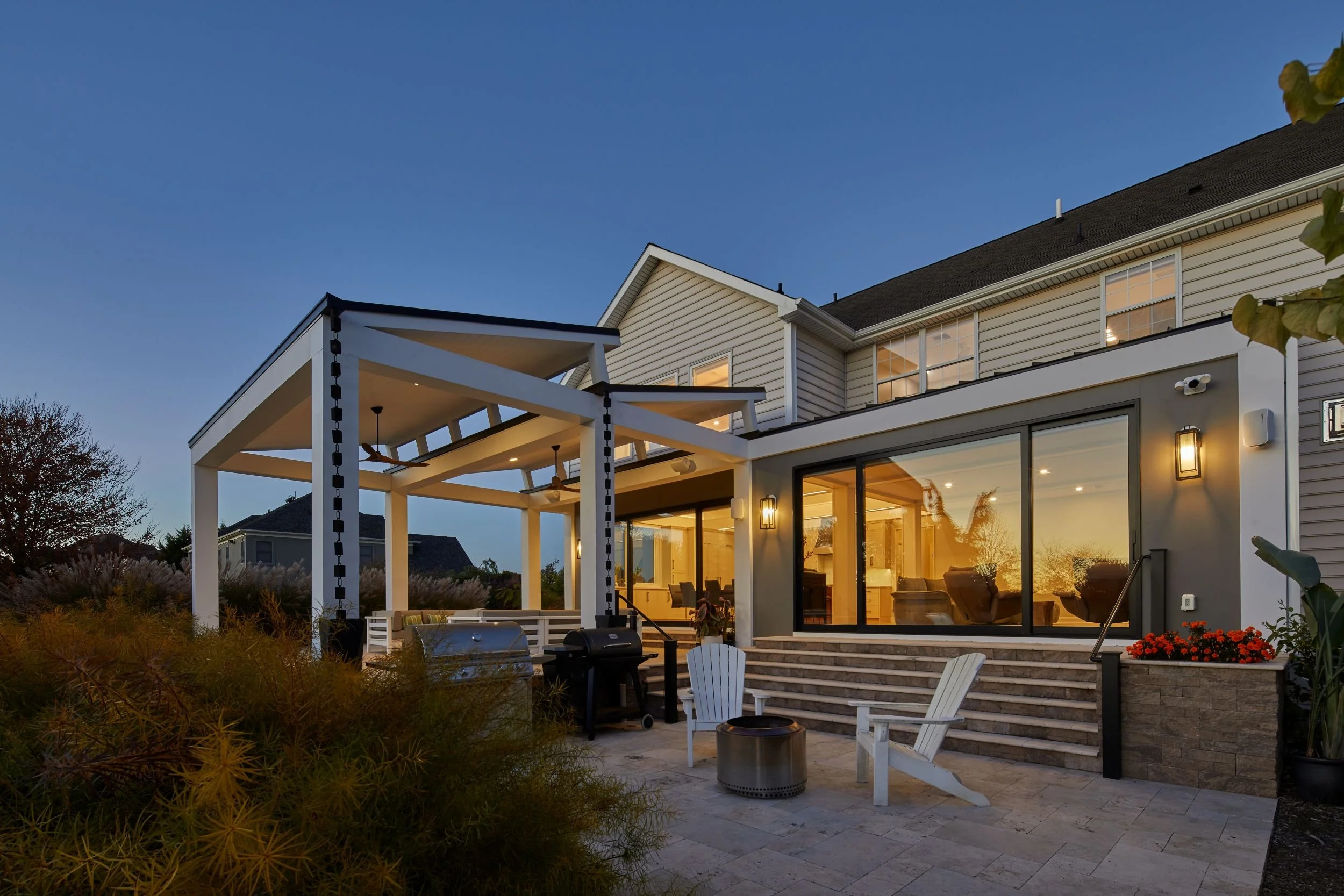
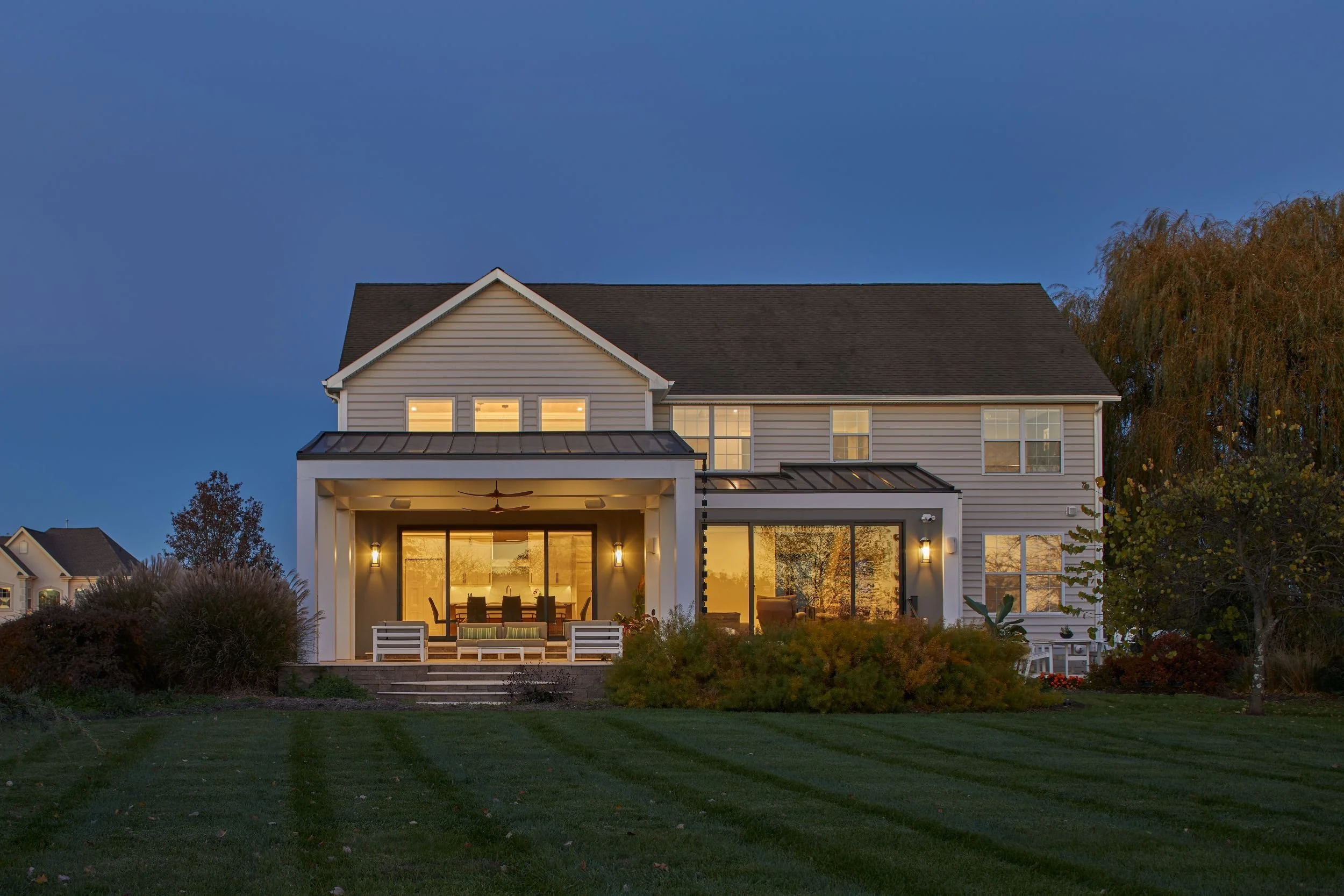
The new rear elevation transforms the once-overheated patio into a true outdoor living space, using a sawtooth pergola, broad glass openings, and a continuous architectural grid to connect the kitchen, family room, and yard.
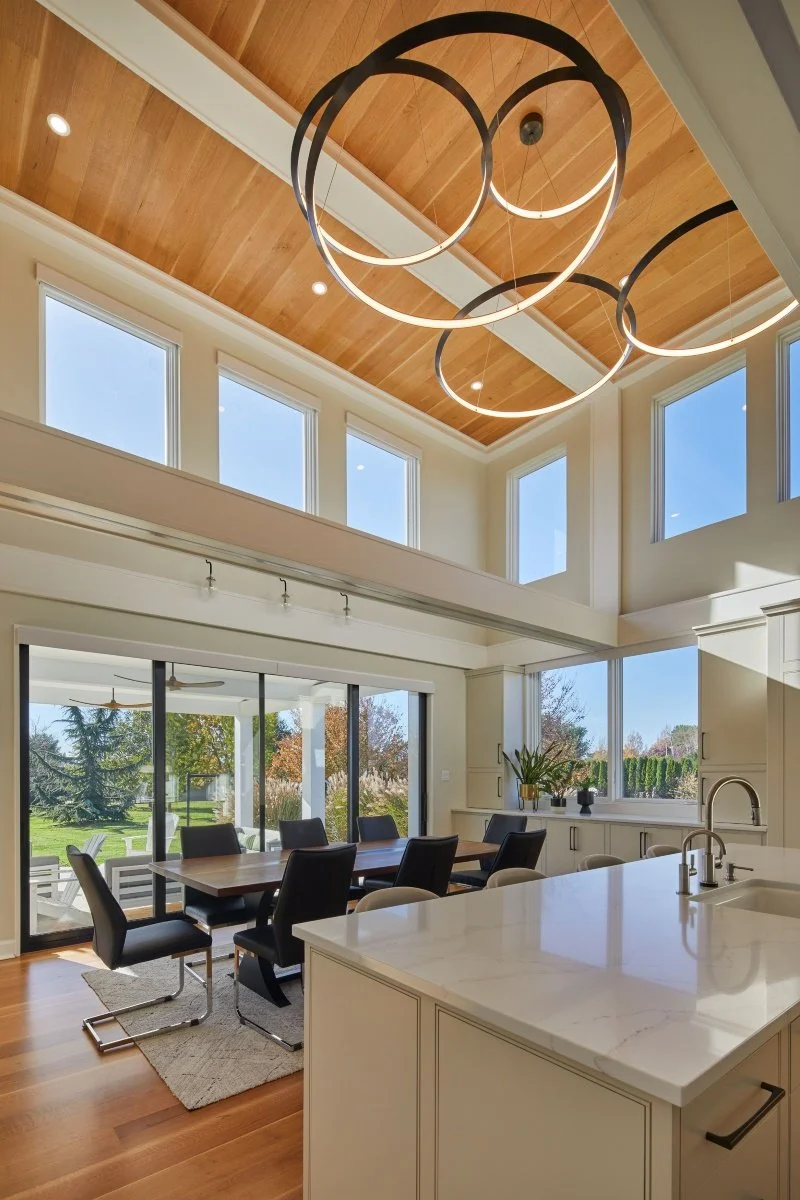
Clerestory windows, warm wood ceilings, and broad openings to the patio turn the former oversized living room volume into an ordered kitchen and dining space filled with controlled natural light.
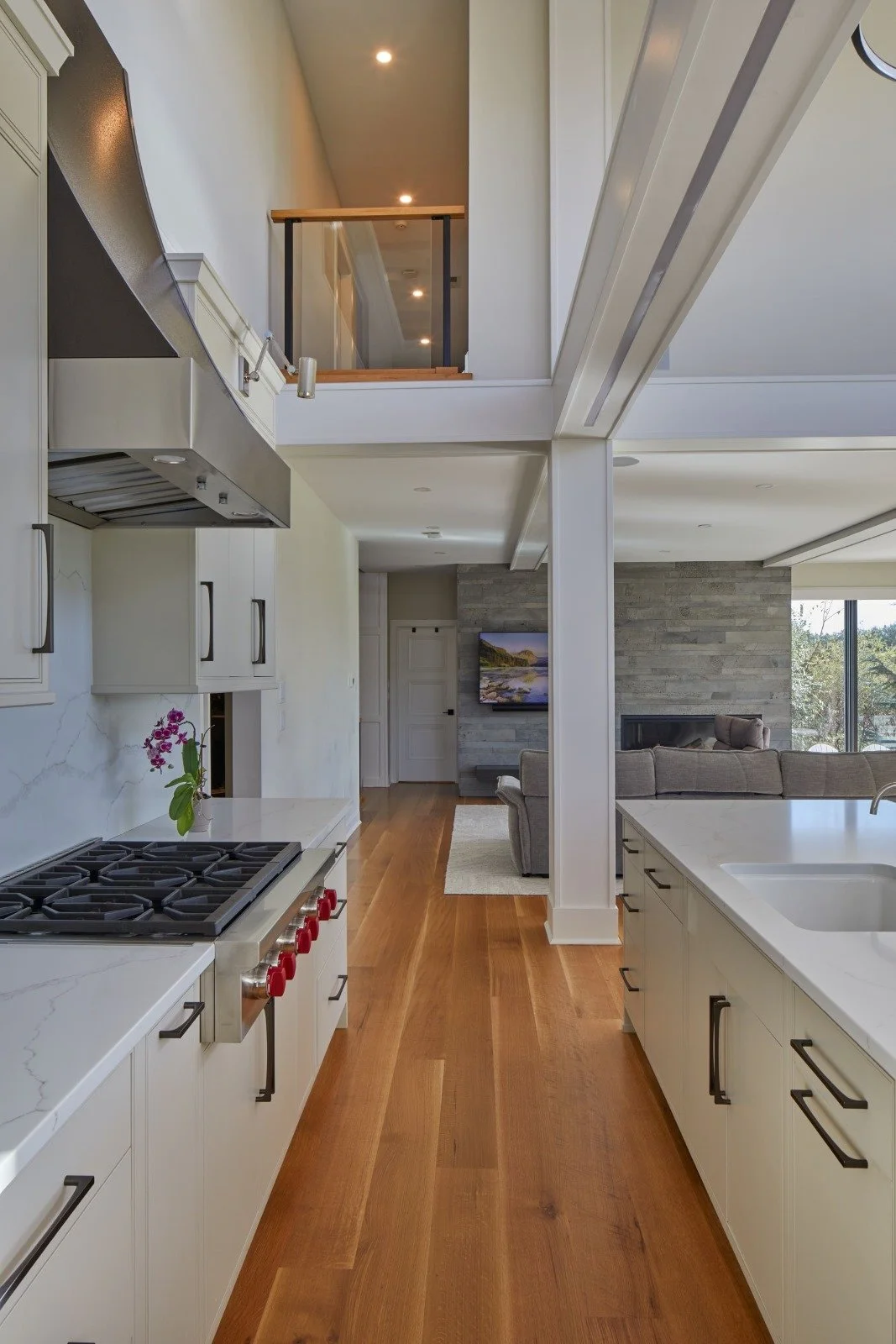
Renovated kitchen in a Mullica Hill, New Jersey home with white cabinetry, white oak floors, structural columns, and a view into the family room beyond.
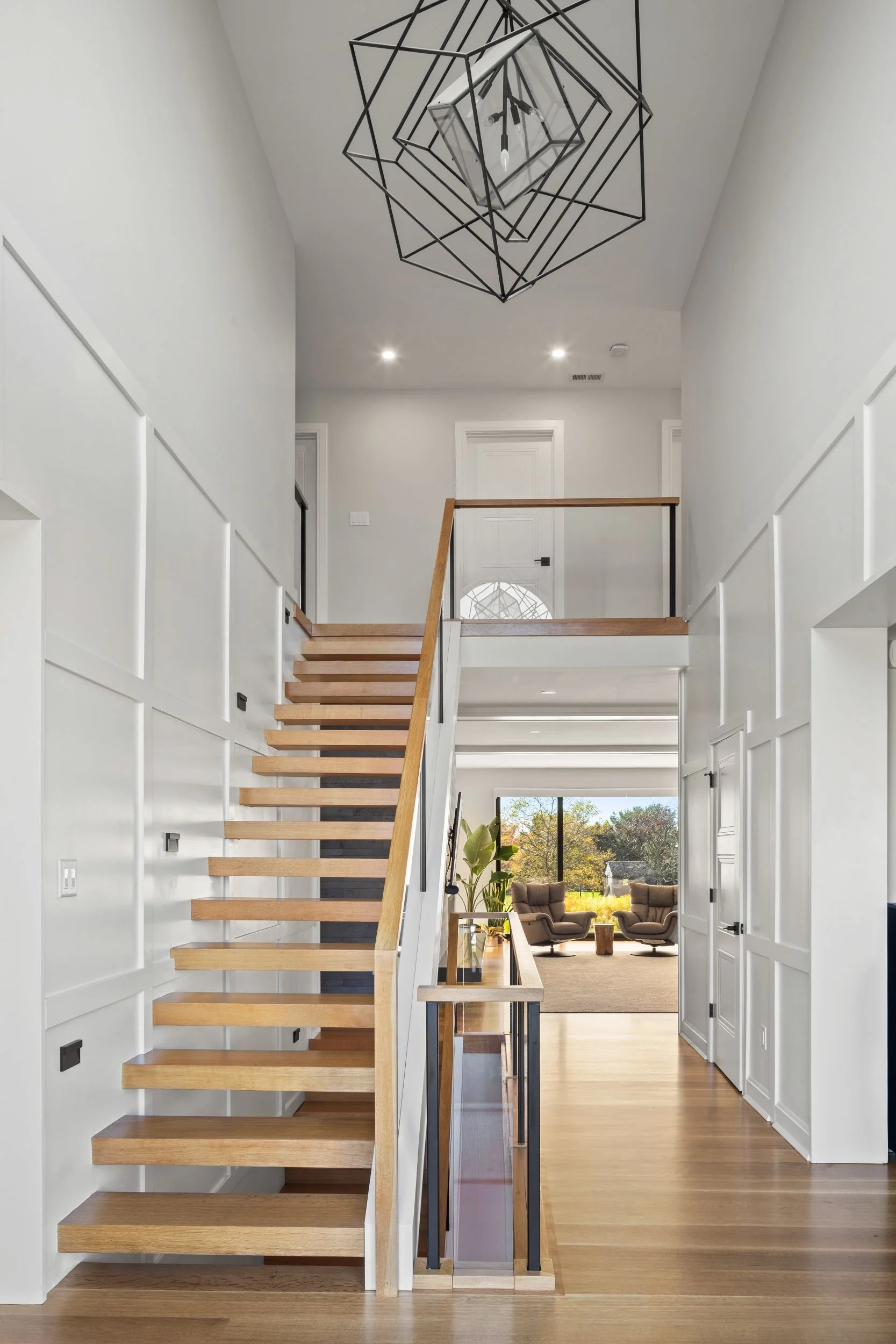
The relocated open stair turns circulation into part of the experience of the home, drawing light through the foyer and creating a clear sightline from the entry to the family room and landscape beyond.
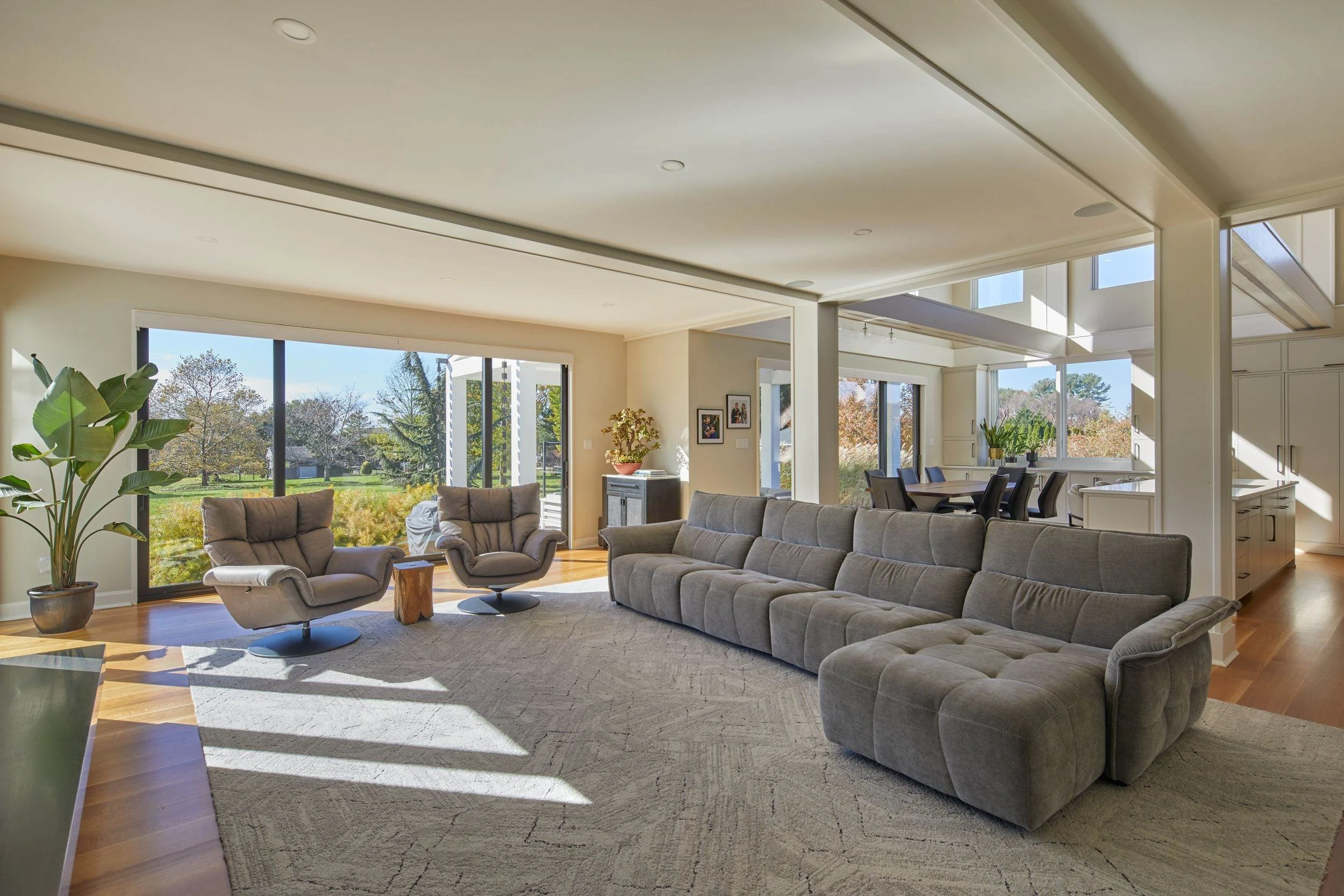
The renovated family room now anchors the home’s daily living space, connecting the kitchen, dining area, patio, and yard through a calmer open plan organized by the new structural grid.
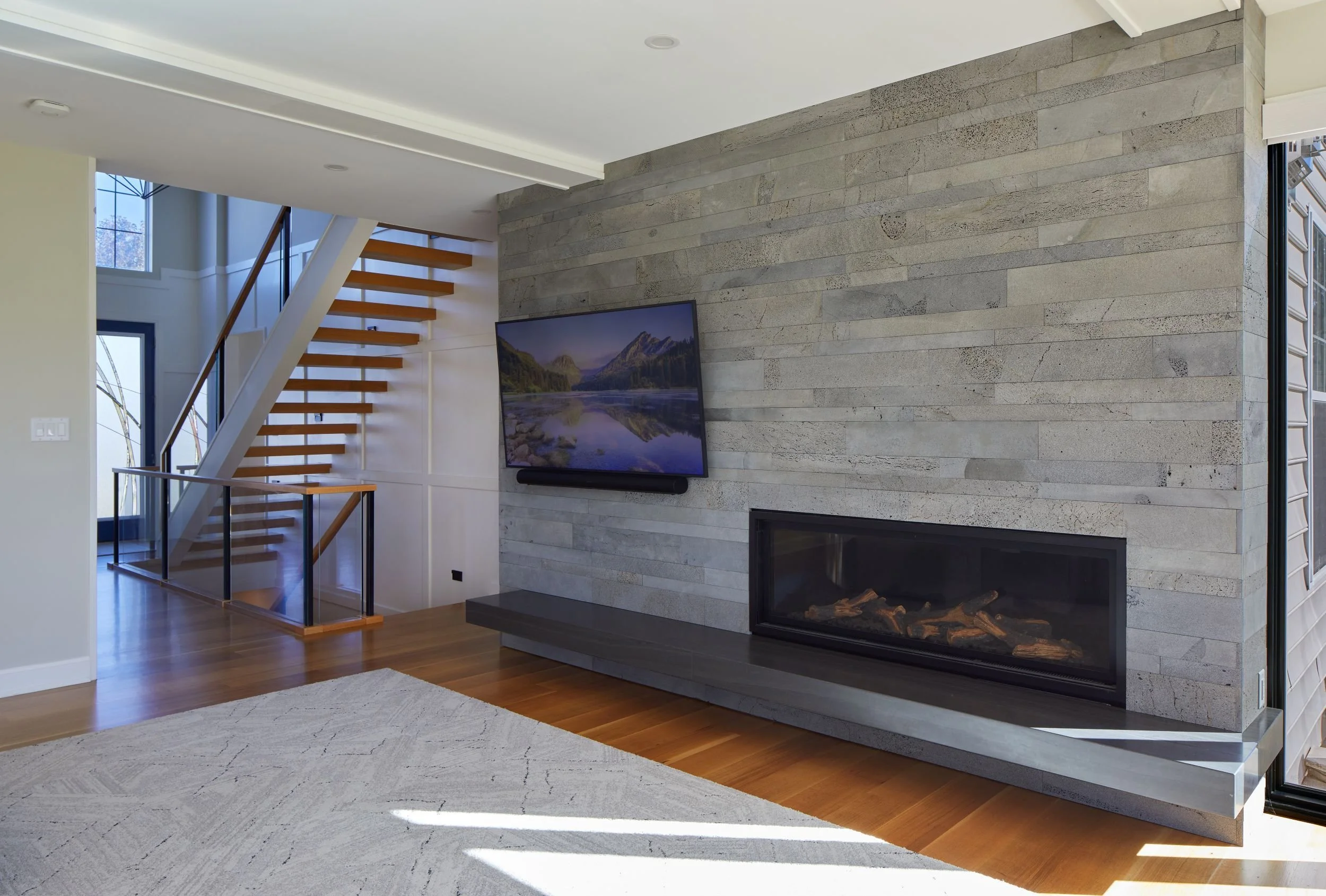
A honed lava-stone fireplace wall gives the family room a quieter, more permanent center, while the open stair beyond connects the renovated living spaces through light, structure, and movement.
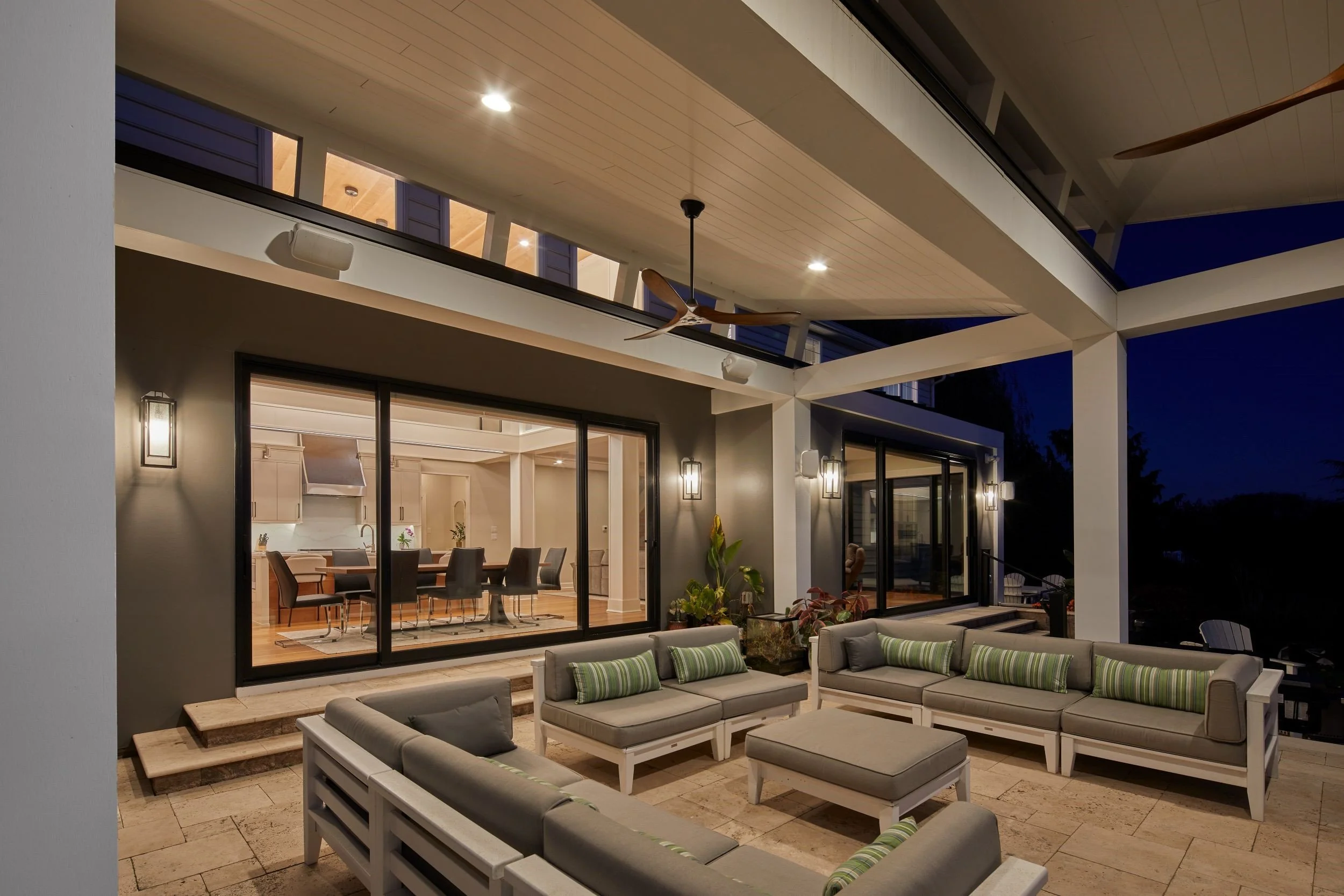
At night, the pergola becomes an outdoor room—shaded, ventilated, and directly connected to the kitchen and family room through large sliding glass doors.
The Result
The result is a home that feels larger in experience without becoming larger in footprint.
Spaces that once felt disconnected now flow together. The kitchen, dining area, family room, pergola, patio, and yard operate as one continuous living environment, supporting the way the family cooks, gathers, entertains, and spends time outdoors.
The house still carries traces of its original suburban typology, but those elements are no longer in control. A more intentional architectural system now gives the home structure, clarity, and calm.
Where the original house offered scale without intimacy, the renovation creates generous but comfortable places to sit, talk, cook, read, look out across the fields, or gather around the fire.
This project also suggests a broader possibility. Across South Jersey and throughout the country, countless developer houses are dismissed as too generic to be meaningful. This renovation shows another path. With strategic design, environmental intelligence, and a willingness to work with what already exists, the ordinary can become enduring.