Mid-Century Modern Reclaimed, a Cherry Hill, NJ renovation restoring the character of a 1960s modern home while adapting it for contemporary family living.

MID-CENTURY MODERN – REVISITED

Cherry Hill, NJ

Restoring Authenticity to a Mid-Century Modern Home on the Golf Course

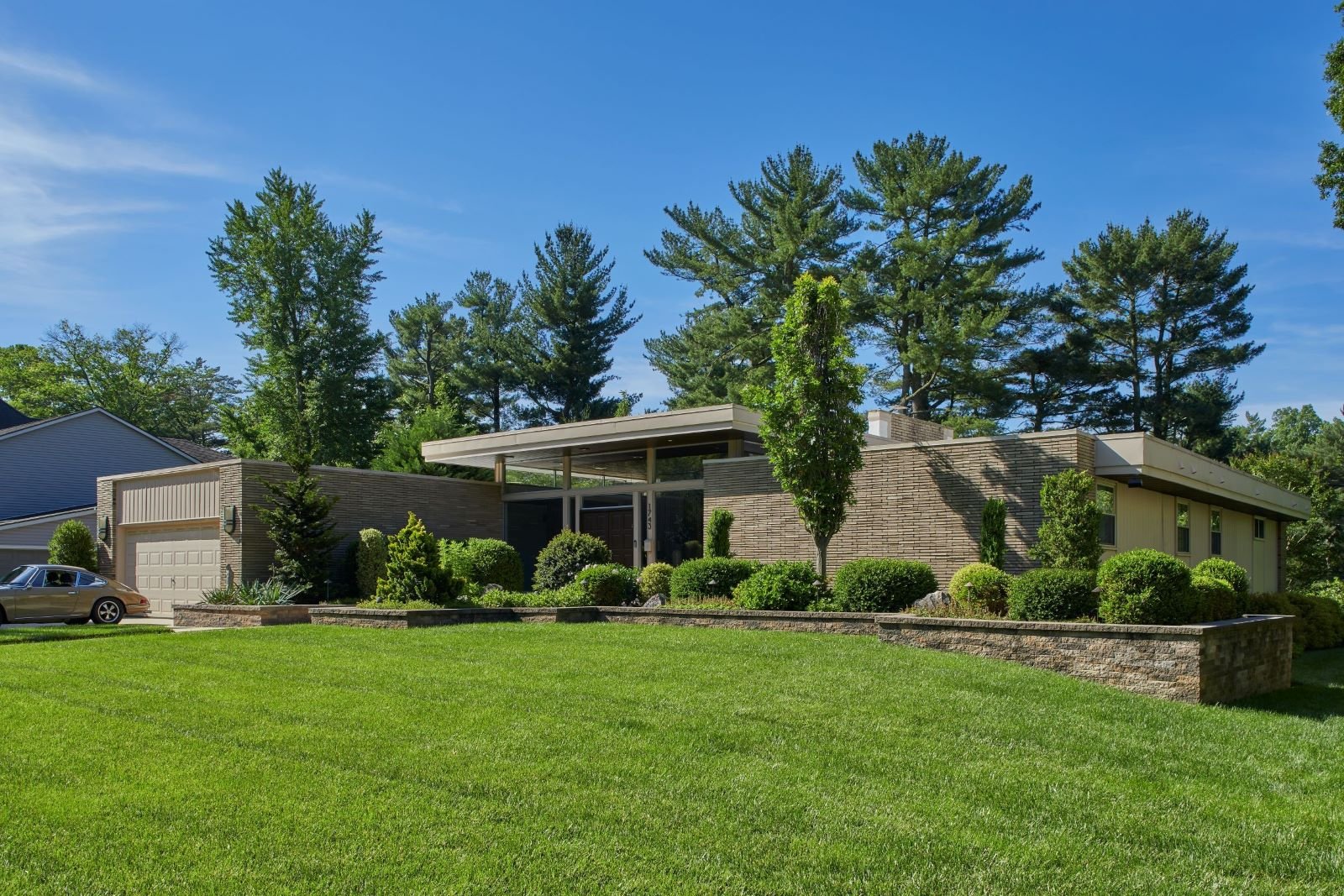
Renovated 1964 mid-century modern home in Cherry Hill, NJ with glass front entry, floating roof plane, oak slat screen, landscape lighting, and horizontal masonry.
Custom residential architect in Cherry Hill, NJ reimagining a 1964 mid-century modern home—restoring its original architectural intent while reshaping it for contemporary family living.

THE INTRODUCTION

Some houses are more than real estate opportunities—they are part of a larger architectural story tied to a specific moment, place, and way of living.

This project began when a young family contacted J Reinert Architecture to discuss renovating their existing home. During those conversations, another opportunity emerged: a 1964 mid-century modern house overlooking the former Woodcrest Country Club golf course in Cherry Hill, New Jersey.

For Jay, the house already held meaning. Growing up in Cherry Hill and passing the home regularly on the way to school, he had long admired its low horizontal form, floating roof planes, and restrained modern character. The house stood apart from the more conventional homes surrounding it—not simply because of its appearance, but because it explored a different relationship between architecture, landscape, and daily life.

The clients ultimately chose to purchase the home rather than renovate their previous house—recognizing that this property offered something more difficult to create from scratch: an authentic architectural foundation connected to place.

Before photo of a Cherry Hill, NJ mid-century modern living room with red accent wall, clerestory windows, wood ceiling, built-in display cabinetry, and open interior connections.
The existing living room already carried many of the qualities that made the house worth saving: layered views, built-in display, clerestory light, and a strong ceiling plane. The renovation sought to edit, clarify, and restore—not erase—the mid-century modern character of the home.

At the same time, decades of renovations had significantly altered the home’s original character. Interior spaces had been divided awkwardly, finishes introduced in the 1990s conflicted with the architecture, and many of the home’s strongest ideas had become obscured over time.

The project became less about imposing a new style and more about uncovering the logic already embedded within the original design—while adapting the house for the way a contemporary family lives today.

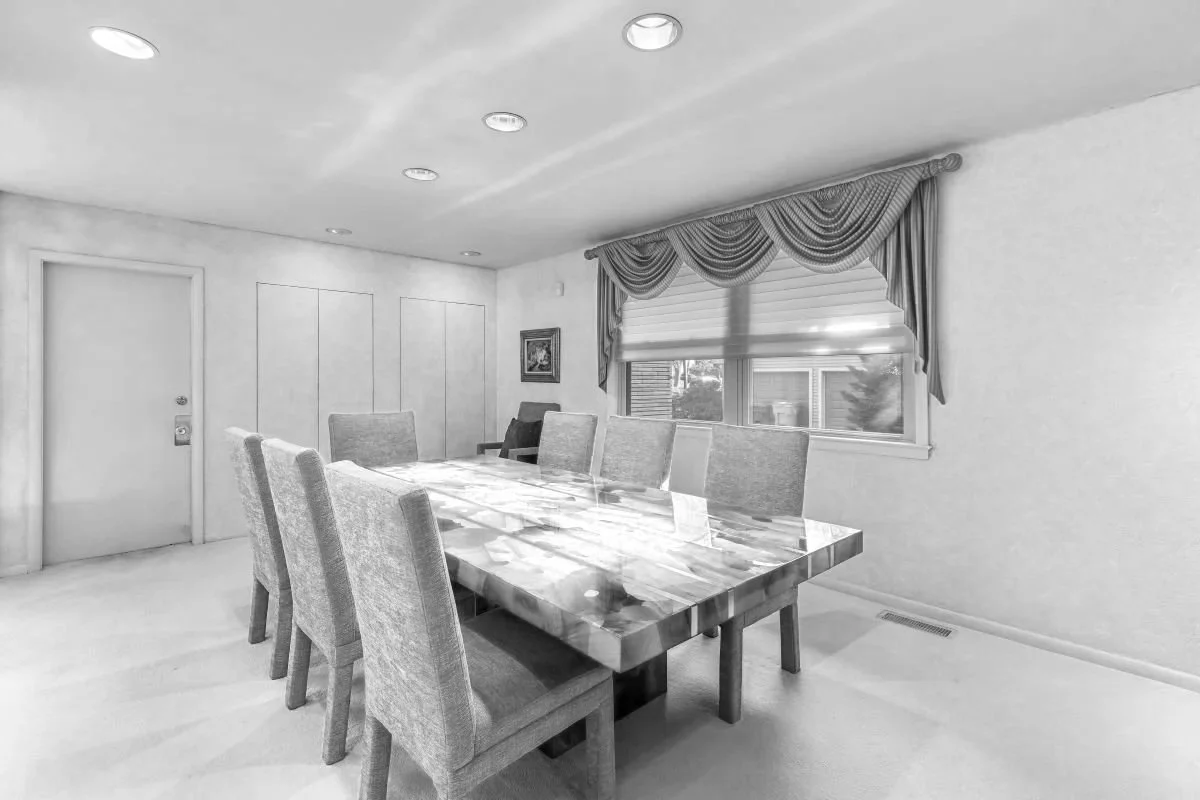
Before photo of the dining room in a Cherry Hill, NJ mid-century modern home before renovation, showing dated finishes, carpet, drapery, and an enclosed room layout.
Before renovation, the dining room held onto many later-era finishes that softened the clarity of the original mid-century modern architecture. The renovation began by studying what was original, what had been altered, and where the home’s architectural intent could be reclaimed.
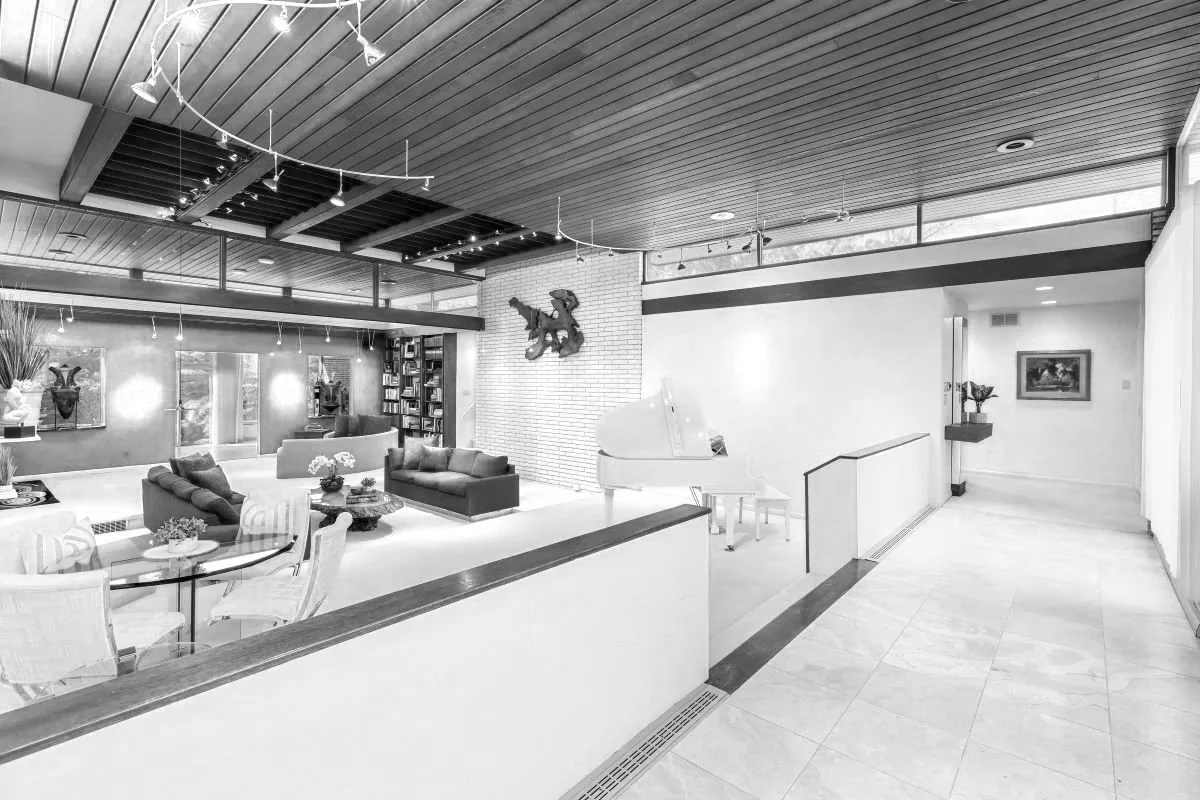
Before photo of the open living room in a Cherry Hill, NJ mid-century modern home, showing clerestory windows, wood ceiling, white brick wall, and open interior volume before renovation.
Even before renovation, the main living space revealed the strength of the original architecture: clerestory light, long horizontal lines, exposed structure, and a remarkable wood ceiling. The work began with recognizing what was already powerful and protecting it.
Before photo of a primary bathroom in a Cherry Hill, NJ mid-century modern home before renovation, showing dated tile, vanity, mirrors, and shower enclosure.
The existing primary bathroom reflected decades of updates that no longer supported the character of the house. The design challenge was not simply to modernize the room, but to bring the renovation back into conversation with the home’s mid-century modern origins.
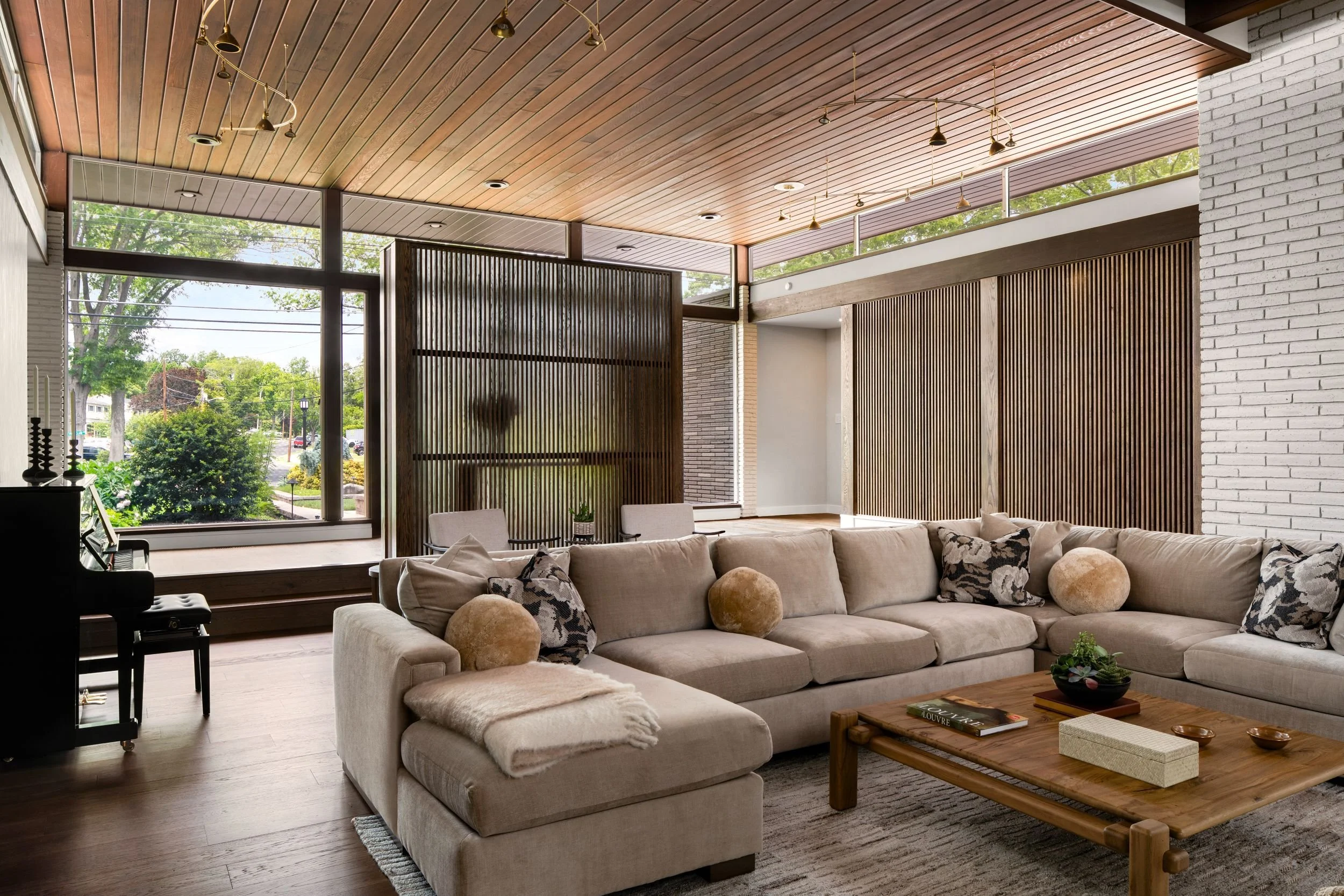
Renovated mid-century modern family room in Cherry Hill, NJ with oak slat screen walls, clerestory windows, wood ceiling, white brick, piano, and open seating area.
Oak slat screens help define the family room without closing it off, preserving the openness of the original mid-century modern home while creating a more comfortable scale for daily living.

THE OPPORTUNITY

The original architect had designed the house as two masonry masses separated by a glazed central living volume beneath a floating roof plane. Glass at the front and rear allowed the space between those masses to feel suspended between indoors and outdoors.

The concept was powerful. But over time, alterations weakened the clarity of the design.

Previous renovations enclosed exterior spaces poorly, interrupted connections between rooms, reduced visibility to the golf course, and introduced stylistic elements disconnected from the original architecture. While the house still possessed extraordinary spatial qualities, many of its best ideas had become hidden beneath layers of modification.

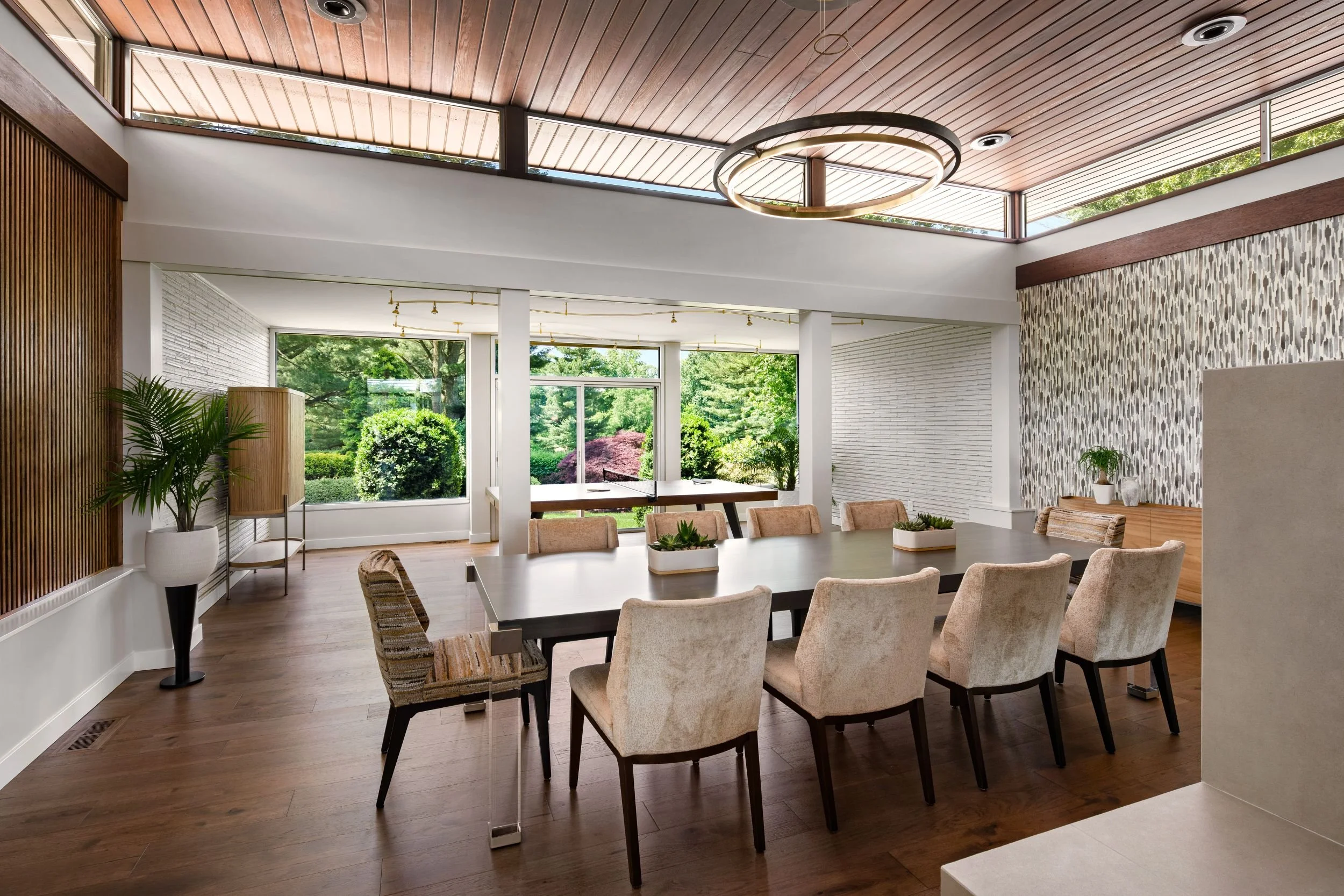
The dining area becomes part of the home’s larger mid-century modern sequence, with clerestory light, warm wood ceilings, oak slat screening, and long views reconnecting the interior to the landscape beyond.

The opportunity was not simply to modernize the house.
It was to restore coherence.

The clients also needed the home to support contemporary family life:

·         stronger interior connectivity

·         better relationships between kitchen and living spaces

·         dedicated family entry and storage areas

·         flexible gathering spaces

·         a private guest suite

·         improved connection to the landscape and golf course

·         spaces for children, work, music, and multi-generational living

The challenge became balancing preservation and intervention—allowing the home to remain authentically mid-century modern while evolving naturally for contemporary living.

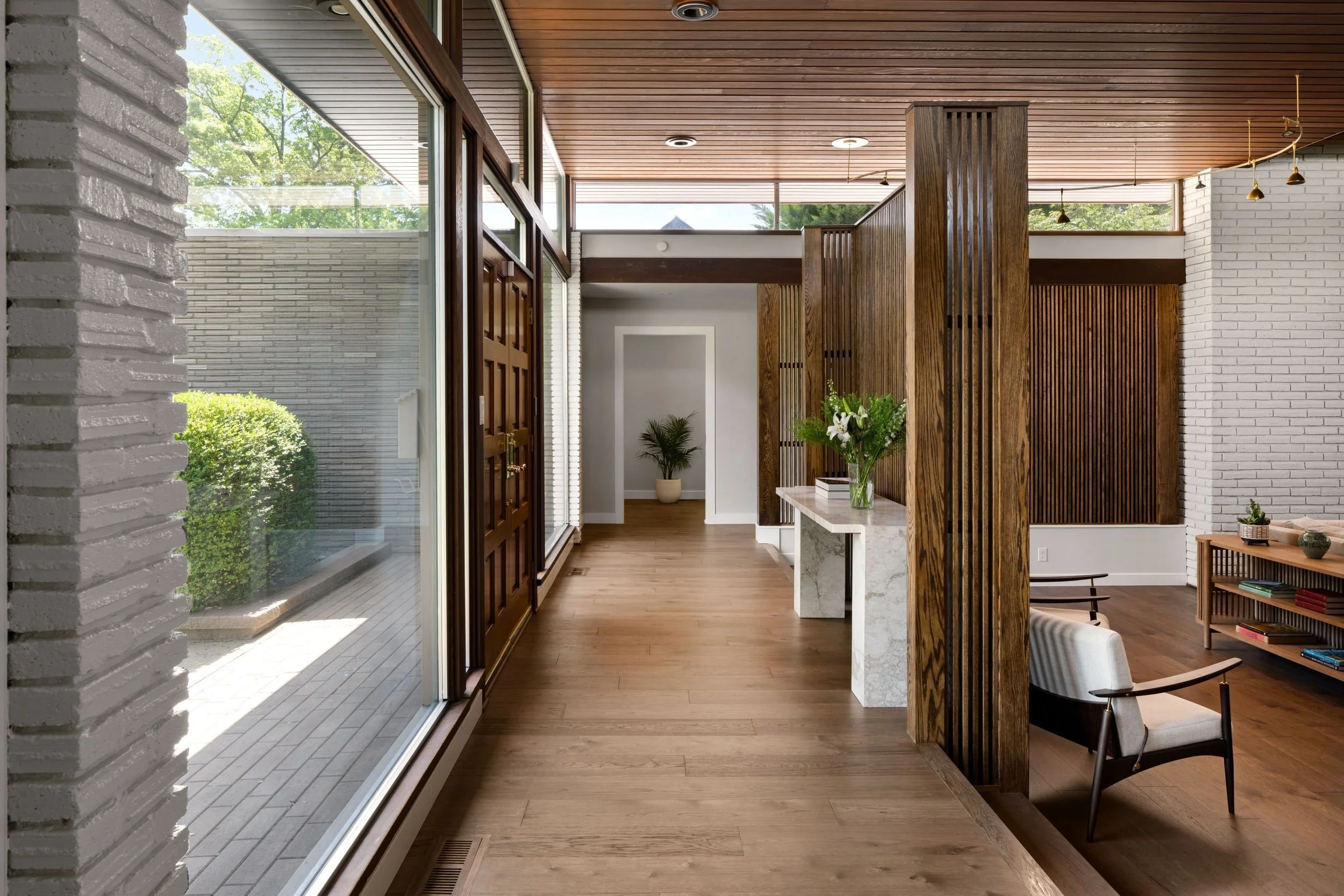
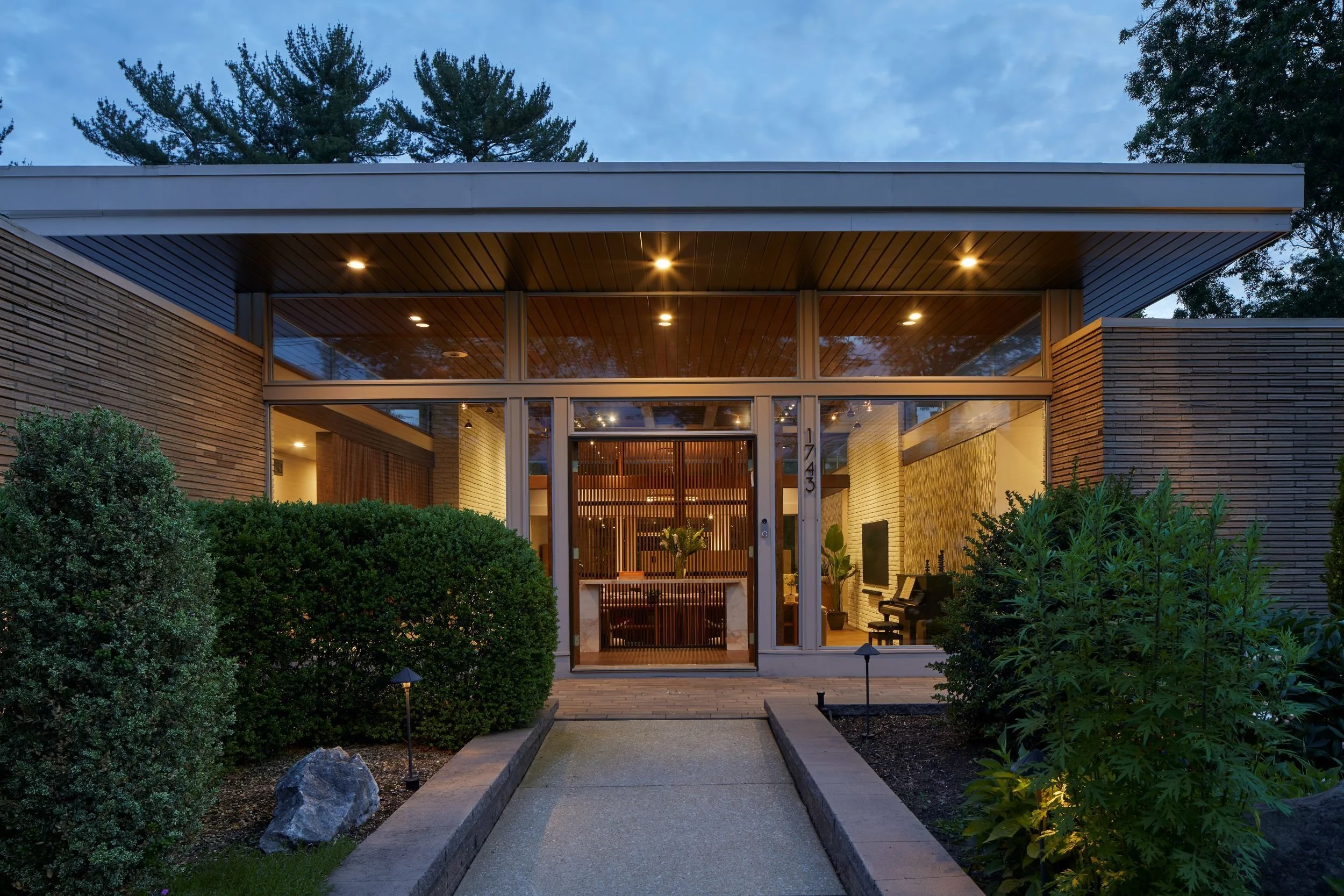
Renovated mid-century modern entry in Cherry Hill, NJ with oak slat screen walls, clerestory windows, wood ceiling, white brick, and layered views through the home.
A new oak slat screen transforms the entry sequence, filtering views into the main living spaces while preserving the openness, light, and horizontal rhythm of the original mid-century modern home.

THE DESIGN MOVE

Rather than treat the house as a collection of rooms, the project reorganized it into three clear zones:

The Service Zone — garage, mudroom, pantry, kitchen, bathroom, and office

The Living Zone — the large central volume for gathering, dining, music, games, and family living

The Sleeping Zone — bedrooms, guest suite, bathrooms, and laundry spaces.

This organizational clarity restored order to the home and reinforced the strength of the original architectural concept.

At the front entry, one of the most significant interventions was the introduction of a custom oak slat screen wall. Originally, visitors entered the house and immediately experienced the full volume all at once. The new screen creates a layered sequence of arrival—filtering views, softening transitions, and allowing the architecture to reveal itself gradually.

The screen acts as both divider and veil:
partially open, visually connected, yet protective and intimate at the same time.

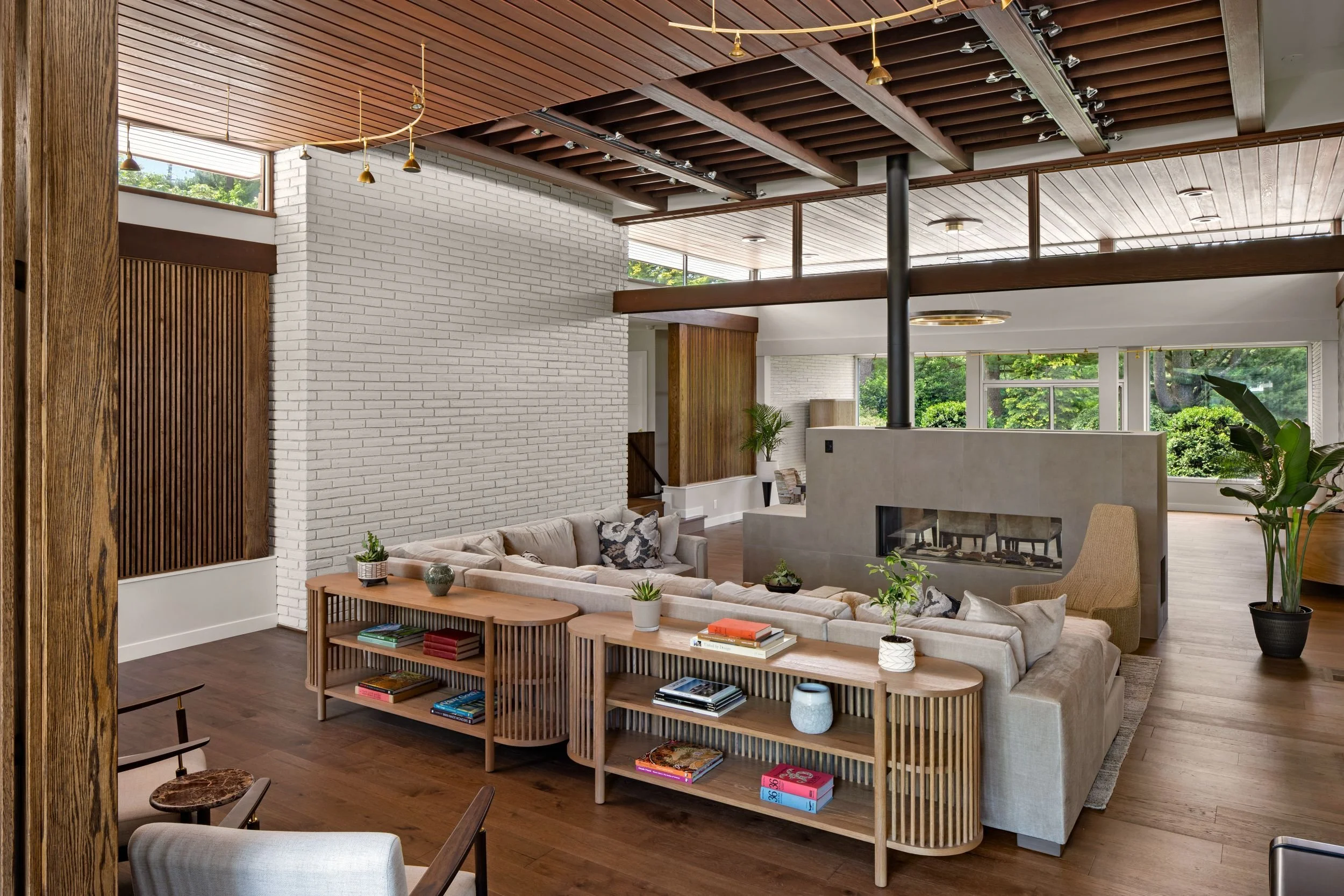
Within the central living space, the design removed walls and alterations that interrupted openness and connection. A floating two-sided fireplace mass was introduced to organize the large volume into layered living zones without closing the space off completely.

Renovated mid-century modern living room in Cherry Hill, NJ with floating two-sided fireplace, white brick walls, clerestory windows, wood ceiling, exposed beams, and oak slat details.
A floating fireplace organizes the large central living volume into connected gathering areas, adding intimacy and structure without compromising the openness of the original mid-century modern design.

The former enclosed porch at the rear of the house was reopened and integrated into the primary living volume, reconnecting the interior directly to the backyard and golf course beyond. Structural rhythm and original roof geometry were preserved and emphasized, reinforcing the spatial cadence intended by the original architect.

Throughout the project, oak slat elements were used strategically to create filtered connections between spaces—allowing light, views, and movement to pass through while maintaining a sense of organization and scale.

The kitchen’s basic organization was maintained but cabinetry and walls were removed to create a better connection to the adjacent rooms. The original dining room became a mudroom and pantry sequence better aligned with how families live today, while dining shifted into the central living volume where it could participate in the larger spatial experience of the home.

Renovated mid-century modern dining room in Cherry Hill, NJ with floating fireplace, oak slat screen wall, clerestory windows, white brick, wood ceiling, and open kitchen connection.
The dining area is connected to the larger living volume through a floating fireplace, clerestory light, and oak slat screening—restoring the home’s mid-century modern openness while giving each space a clearer sense of purpose.
Renovated mid-century modern kitchen in Cherry Hill, NJ with open connection to dining room, oak slat screen wall, clerestory light, wood flooring, and large kitchen island.
The kitchen was reorganized to support contemporary family living while maintaining visual connection to the dining area, entry sequence, and larger mid-century modern living volume.
Renovated mid-century modern family room in Cherry Hill, NJ with oak slat screen wall, white brick fireplace wall, clerestory windows, wood ceiling, and open seating area.
The family room balances openness and intimacy, using a custom oak slat screen to filter the entry sequence while preserving the clerestory light, horizontal lines, and indoor-outdoor character of the original mid-century modern home.

The lower level stair enclosure was opened completely, visually and spatially connecting the basement play area to the main floor rather than treating it as a separate hidden level.

In the primary suite, the layout was reversed entirely. The bathroom moved to the exterior wall, allowing the bedroom and bath to connect directly to the rear landscape through expansive glazing. Natural light, views, and the rhythm of the rear façade now extend continuously across the suite—strengthening the relationship between architecture and site.

Every intervention aimed to clarify the original architectural language while adapting the home thoughtfully for contemporary family life.

Oak slat screen walls in a renovated mid-century modern living room in Cherry Hill, NJ with clerestory windows, wood ceiling, white brick, and open family seating areas.
Custom oak slat screens create filtered separation within the restored mid-century modern living space, allowing light, views, and movement to continue through the home while giving each area a more intentional sense of scale.
Two-sided fireplace in a renovated mid-century modern living room in Cherry Hill, NJ with exposed beams, clerestory windows, white brick, wood ceiling, and open family seating area.
The two-sided fireplace anchors the restored living room, creating a more intimate gathering space while allowing the original beams, clerestory light, and open mid-century modern volume to remain connected.
Renovated primary bedroom in a Cherry Hill, NJ mid-century modern home with large windows, golf course views, natural light, wood floors, and direct connection to the landscape.
The primary suite was reorganized to strengthen its connection to the rear landscape, allowing natural light and golf course views to become part of the daily experience of the room.
Renovated primary bathroom in a Cherry Hill, NJ mid-century modern home with large windows, landscape views, wood cabinetry, glass shower, soaking tub, and natural light.
Relocating the primary bathroom to the exterior wall allowed the suite to engage the landscape directly, bringing natural light, garden views, and a calmer sense of retreat into the renovated mid-century modern home.

THE RESULT

The completed home feels simultaneously restored and renewed.

What once had become fragmented through years of alteration now feels cohesive, calm, and intentional again. The original mid-century modern architecture is no longer hidden beneath competing stylistic layers—it is celebrated.

The house now engages the golf course and landscape as an active part of daily living rather than distant scenery. Interior spaces feel open and connected while still offering moments of privacy and separation appropriate for family life.

Light moves deeply through the house.
Views unfold gradually.
Circulation feels intuitive and layered rather than rigid or compartmentalized.

The project also reflects a broader idea about mid-century modern preservation.

Many homes from this period are undervalued or misunderstood—not because the architecture lacks quality, but because years of insensitive renovation have obscured the original intent. This project demonstrates how thoughtful intervention can recover the spatial clarity, openness, and relationship to nature that made these houses special in the first place.

Rather than replicating the past, the goal was to continue the architectural conversation the original house had already begun—allowing it to evolve honestly for another generation of family life.