A Home Inspired by Discovery

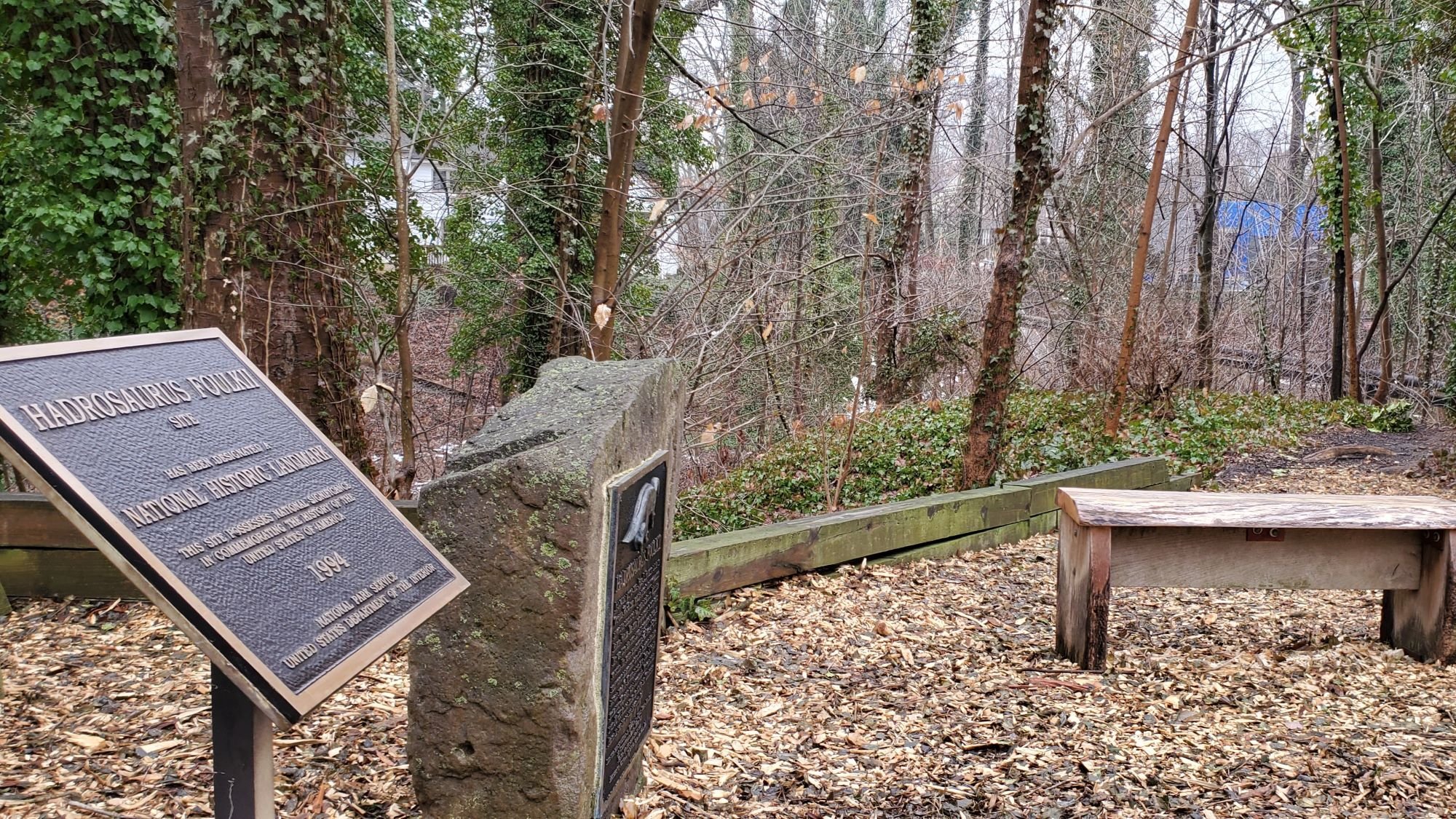
Just beyond this site in Haddonfield, in 1858, the first nearly complete dinosaur skeleton ever discovered was unearthed—bone after bone, each piece revealing something larger, something previously unknown.

That idea—discovery over time—became the foundation for this home.

Hadro House is not meant to be understood all at once.
It is designed to reveal itself gradually, through movement, light, and connection to the landscape.

The Challenge

The homeowners came to us with a clear goal:
stay in Haddonfield, close to family, while creating a home that could support them for the long term.

The site offered both beauty and complexity:

  • A steep slope overlooking a wooded stream and park

  • Immediate adjacency to the Hadrosaurus Foulkii landmark site

  • A traditional neighborhood context

  • The need for aging in place, without sacrificing design

An unexpected environmental issue requiring full soil remediation eliminated the option to renovate—forcing a complete rethinking of the project.

Like the first discovery at the marl pit, the project began with uncertainty—and possibility.

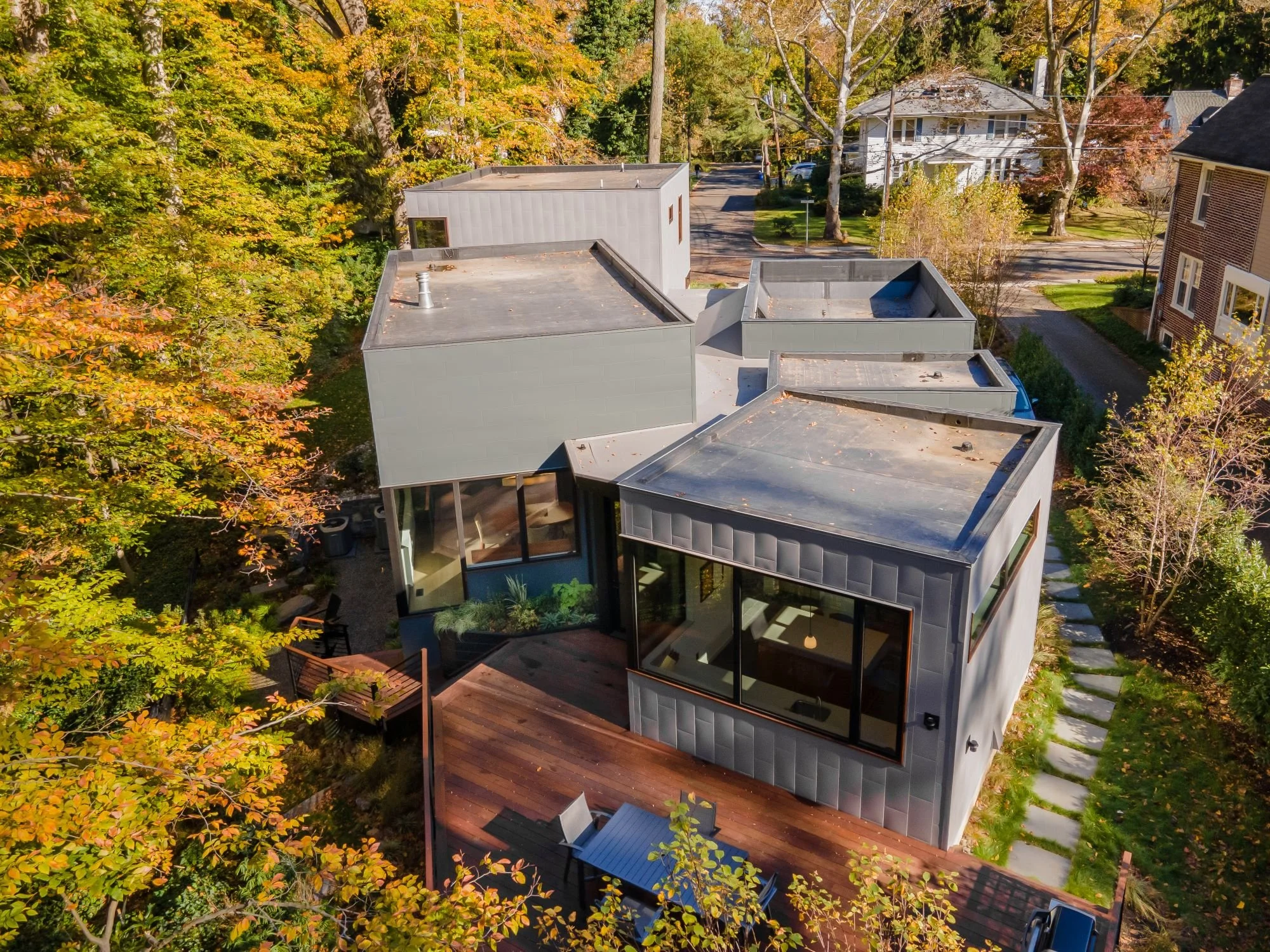
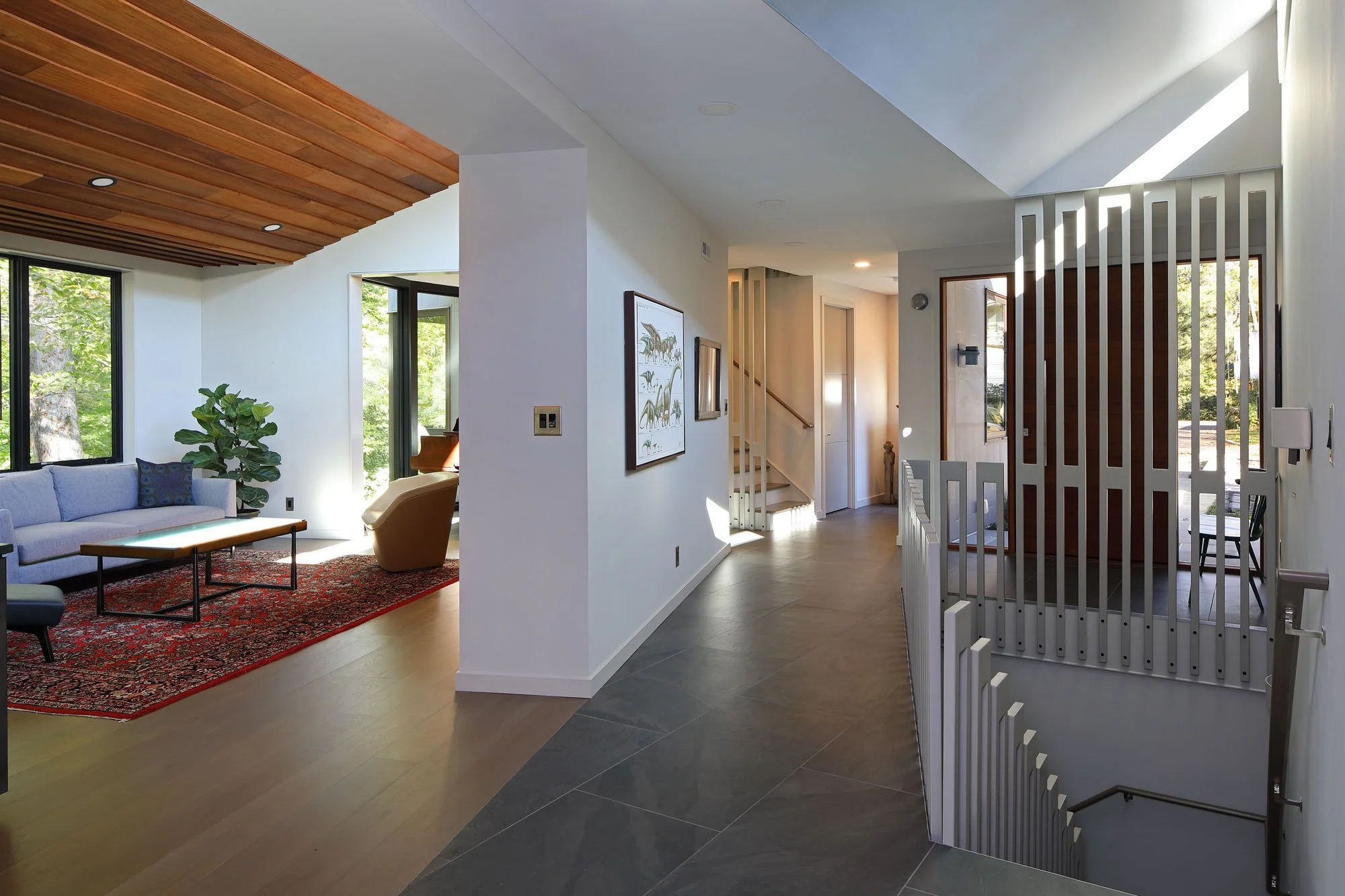
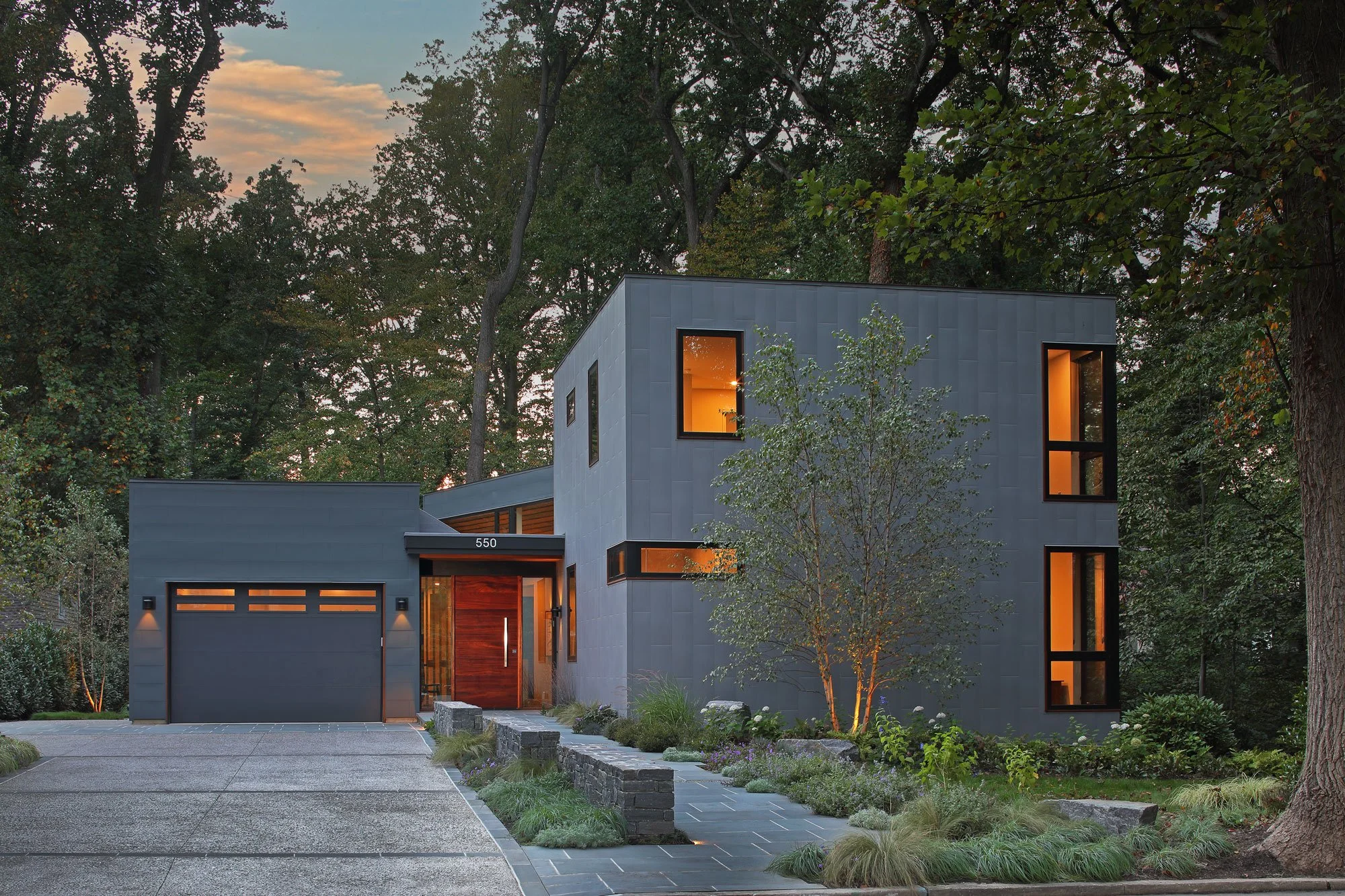
A series of connected volumes creates a sequence of spaces—each revealed in relation to the next.

Reclaiming the Site

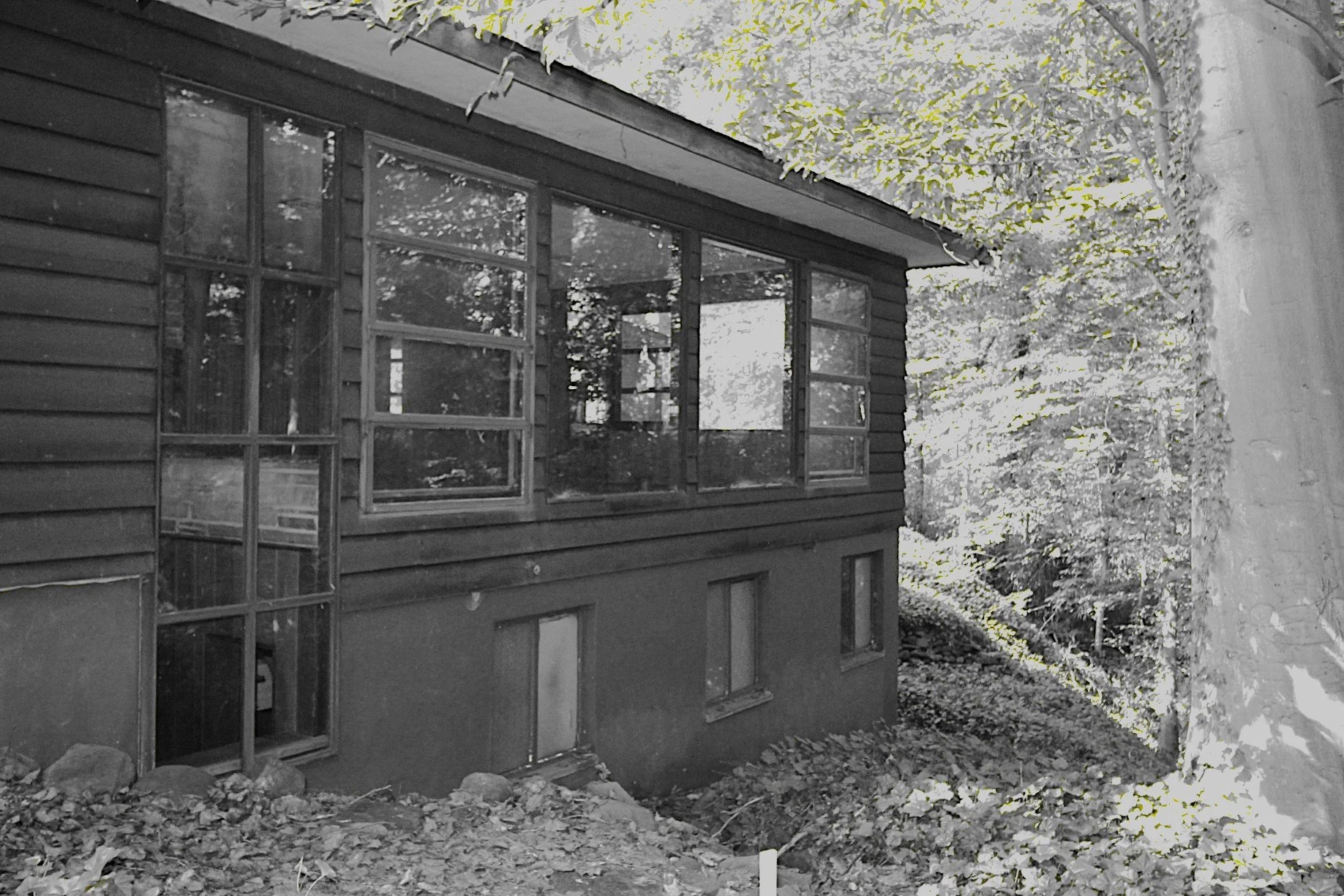
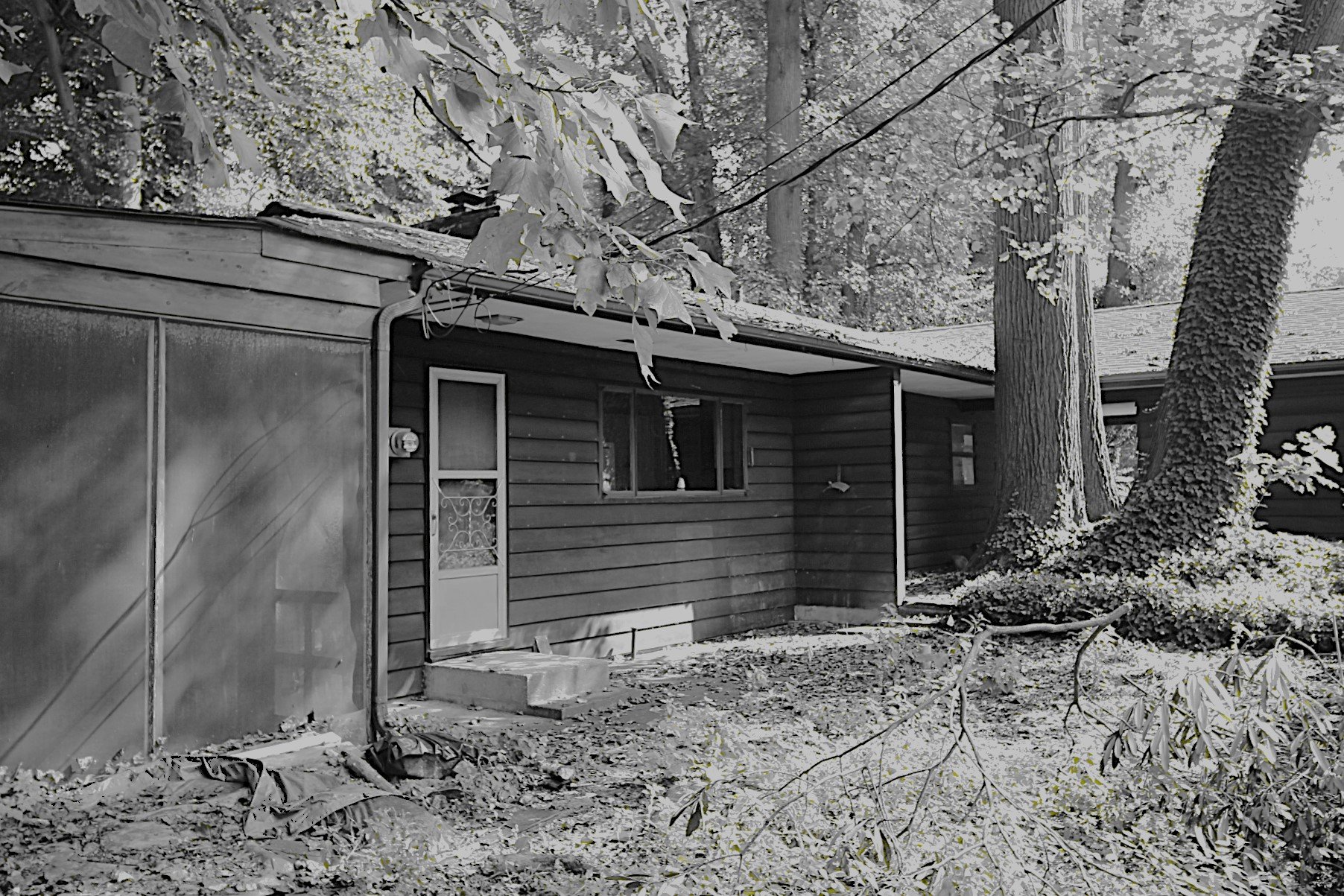
What began as a renovation shifted unexpectedly when a leaking oil tank was discovered on site, requiring full environmental remediation and the removal of the existing home.

While initially a setback, this moment became a turning point in the project.

Clearing the site allowed the design to respond more directly to the land—repositioning the house to better engage the stream, protect the surrounding ecosystem, and fully realize the opportunities the property offered. It also reinforced a central idea of the project: that meaningful architecture often emerges not from control, but from responding thoughtfully to what is uncovered.

Like the discovery that inspired Hadro House, the process began with uncertainty—but led to greater clarity and intention.

The original home, clad in mahogany siding, required demolition to remediate the contaminated soil beneath. the siding was carefully reclaimed for use in the new home.

The Design Approach

The house is organized as a series of distinct volumes—placed carefully across the site.

Like scattered vertebrae, each element is positioned in relation to the next.

Connecting them is a continuous path—the “ligament”—that allows movement through the home to feel natural, intuitive, and fluid.

As you move through the house:

  • Spaces are revealed one after another after another

  • Views unfold toward the landscape

  • Light shifts throughout the day and seasons

What begins as a simple composition becomes increasingly layered—mirroring the experience of uncovering something piece by piece.

Primary living spaces are organized on the main level—supporting ease of movement today and into the future.

Light, Landscape, and Orientation

Each volume is positioned to engage the site deliberately:

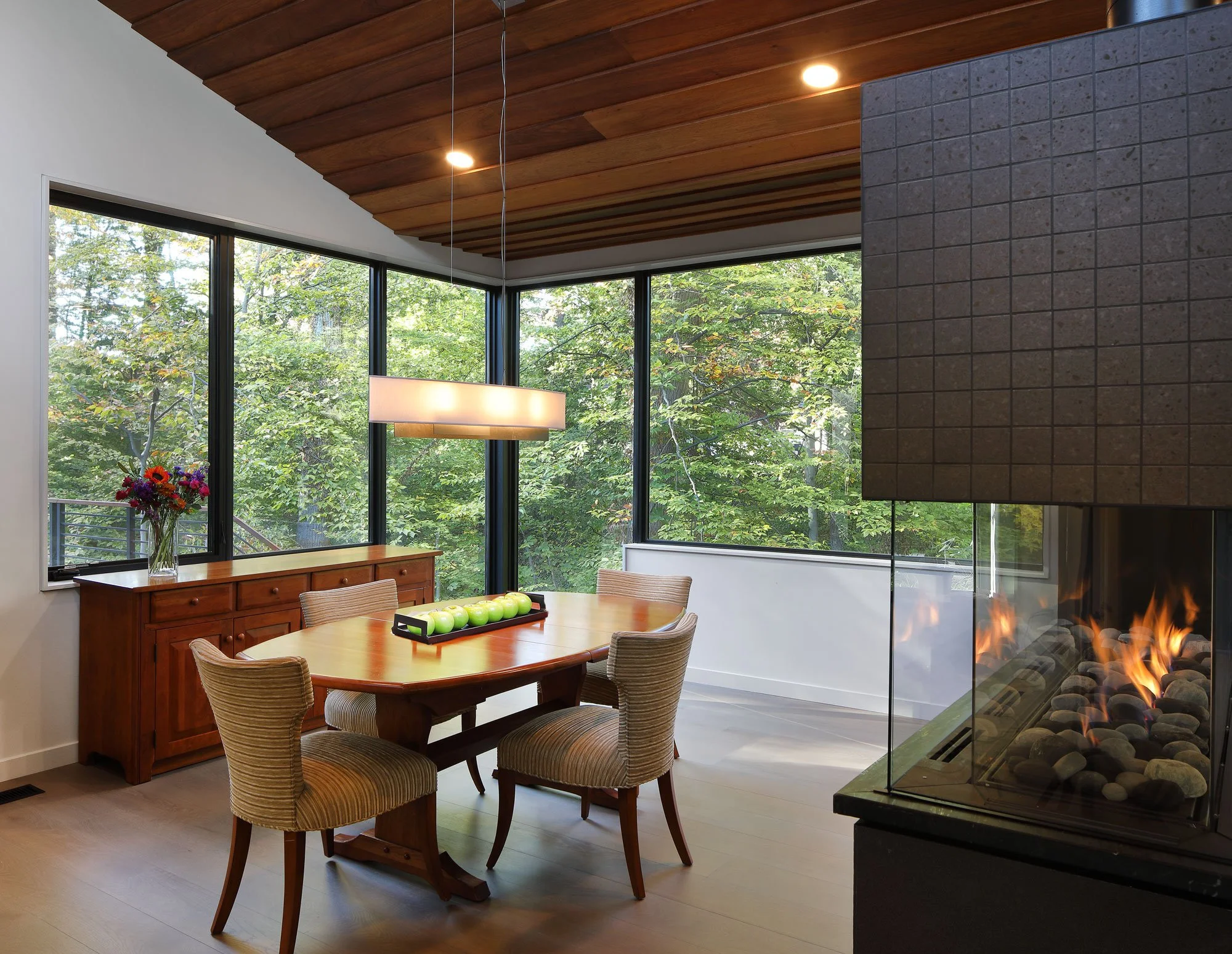
  • Large north-facing glass walls open toward the woods and stream

  • Clerestory windows bring in southern light while maintaining privacy

  • Carefully framed openings create a balance between exposure and refuge

The house does not sit on the land—it responds to it, adjusting to its slope, light, and views.

“Spaces open to the landscape—framing light, view, and movement.”

Designed for Living—Now and Over Time

While the concept is rooted in discovery, the home is grounded in real life.

It was designed to support the owners as they age, without ever feeling like it was designed for aging.

  • Primary living spaces are located on the main level

  • Level thresholds and generous circulation support ease of movement

  • The lower level can evolve into a caregiver or guest suite

  • Upper bedrooms are reserved for children and grandchildren

The home adapts over time—just as its meaning deepens over time.

Level thresholds and continuous connections between interior and exterior spaces support ease of movement over time.

Contemporary Home That Belongs

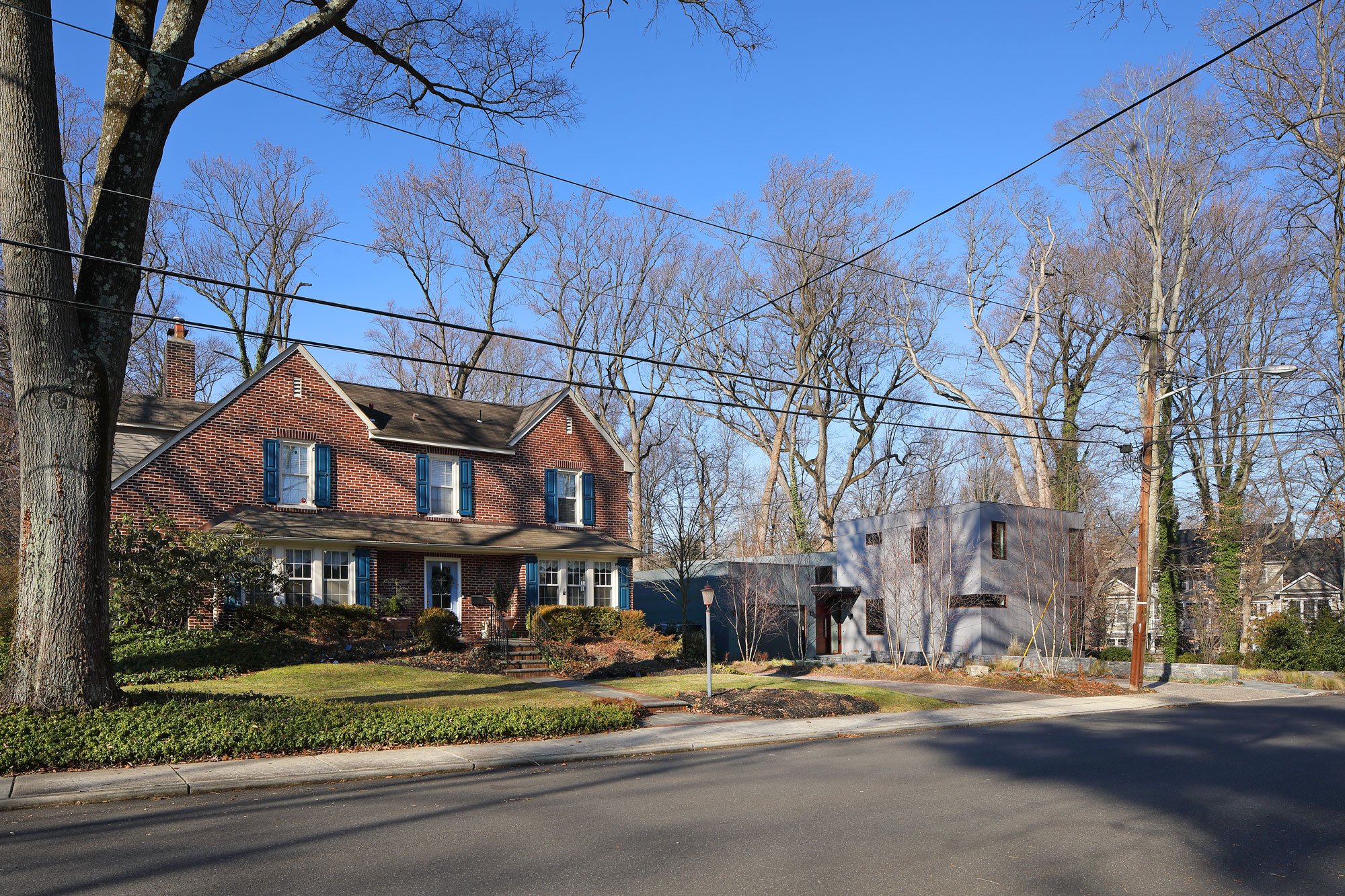
Hadrohouse is clearly modern—but it is not disconnected from its context.

Its forms, proportions, and material rhythms respond to the surrounding neighborhood—subtly referencing the patterns of traditional homes without replicating them.

Like the discovery that inspired it, the house is unexpected—but not out of place.

Contemporary in expression, the home aligns with the scale and rhythm of its Haddonfield neighborhood.

Material Continuity

While the original house could not be preserved, parts of it were carefully carried forward.

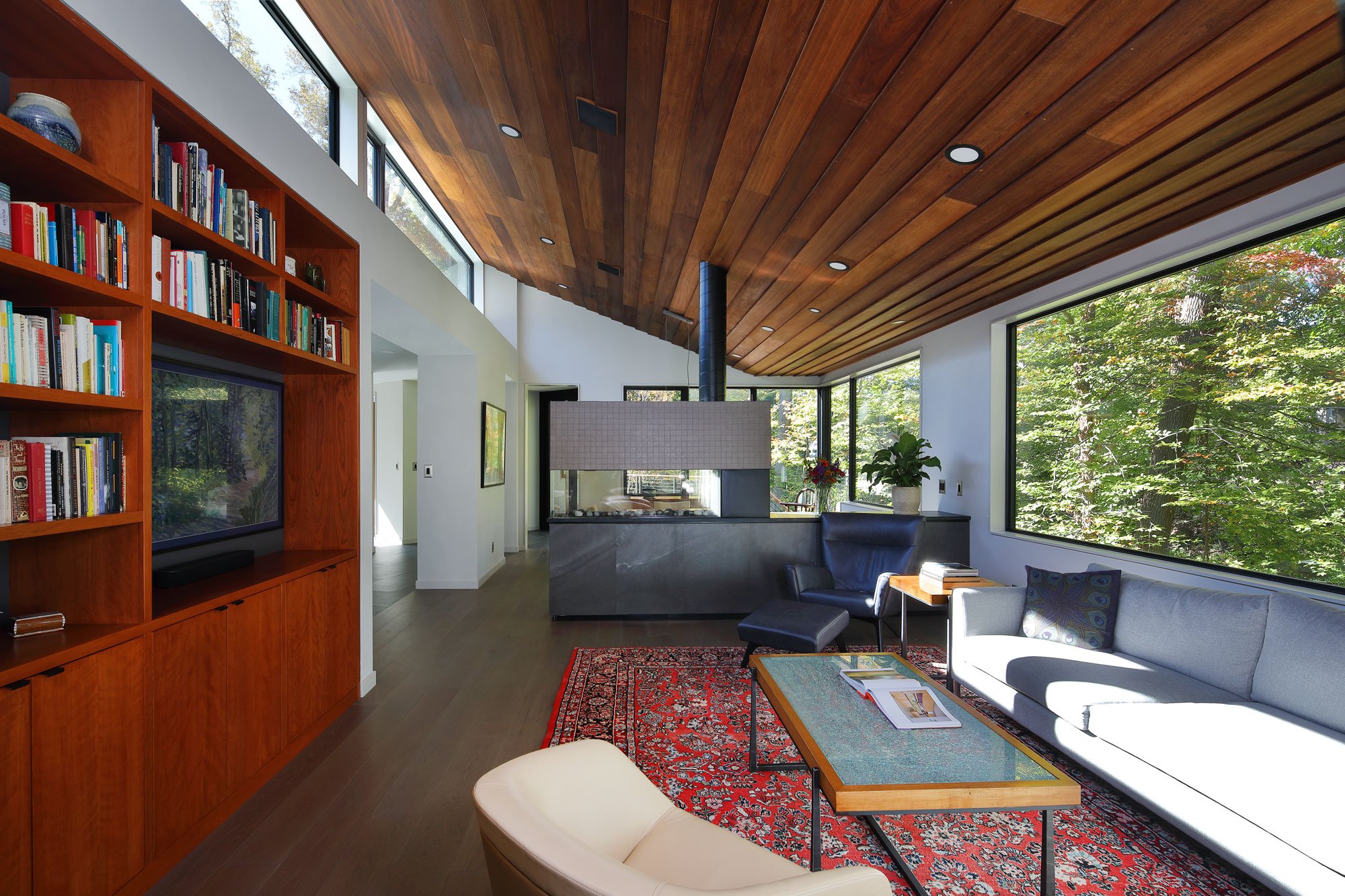
Mahogany siding from the existing structure was salvaged and repurposed as the ceiling of the main living space—reintroducing material from the past into the daily experience of the home.

This move creates a quiet continuity between what was and what is now. It also reinforces the broader intent of the project: not to erase history, but to reinterpret and extend it.

Set against the clean lines and contemporary materials of the new construction, the wood adds warmth, texture, and memory—connecting the home to its origins in a way that is both subtle and lasting.

Mahogany salvaged from the original home is reintroduced—bringing warmth, texture, and continuity into the new space.

Stewardship of Site and History

The project also reflects a responsibility to both environment and history:

  • Roofs collect and manage stormwater to protect the stream

  • Native plantings stabilize the landscape and reduce runoff

  • Salvaged materials from the original home are reintroduced

  • Durable, recyclable materials ensure longevity

Even the planting palette connects to deep time—incorporating species with origins tracing back to the prehistoric landscape once inhabited by the Hadrosaurus.

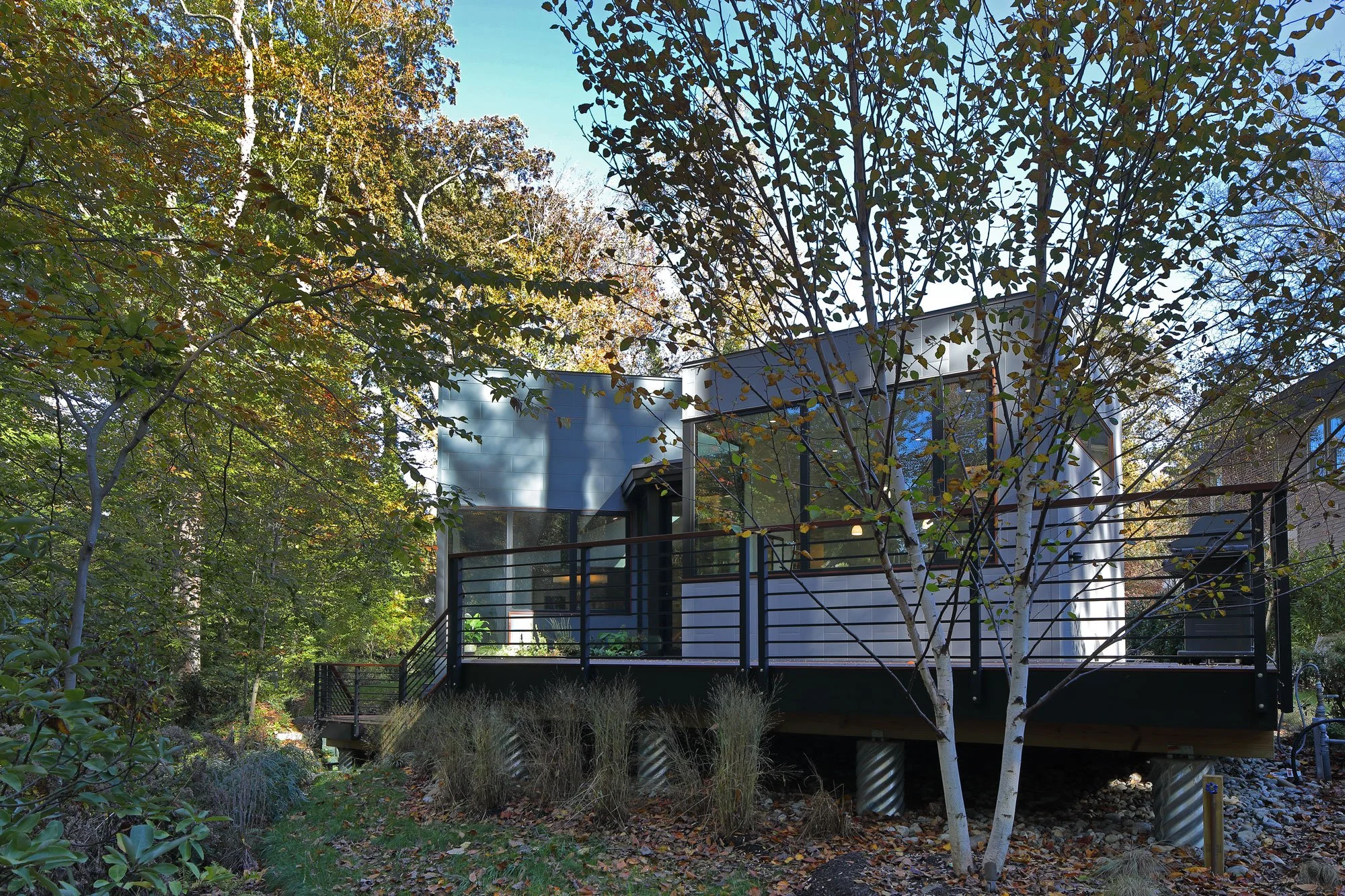
Shaped by the stream bank and environmental setbacks, the home extends naturally into the landscape.

The Result

Hadro House is a home that unfolds.

It is experienced not in a single moment—but over time:

  • Through movement

  • Through light

  • Through changing seasons

  • Through the life lived within it

Like the bones discovered nearby, it is not immediately obvious in its entirety—but becomes more meaningful the more it is understood.

“The most meaningful architecture isn’t something you take in all at once—it’s something you discover over time, piece by piece, until it begins to feel inevitable.”


Gallery

Continue Exploring Hadro House

Photo Gallery: Matt Wargo, Photography

Drone Photo Gallery: Joe DiDario Photography, llc


Project Team & Credits