STUDIO JOURNAL / CASE STUDY NO. 02
MID-CENTURY MODERN - REVISITED: The Project Story
Cherry Hill, New Jersey
The Challenge — Restoring the conceptual clarity of a 1964 mid-century modern home after sixty years of accumulated alterations had obscured its original architectural intent — while reorganizing the plan to support the way a contemporary family actually lives.
The Scope — Complete interior renovation: three-zone plan reorganization, floor level unification at the family level, entry sequence redesign, dining room relocation, floating fireplace introduction, rear porch integration, guest suite and powder room creation, basement stair opening, primary suite redesign, and kitchen reconfiguration — while preserving original masonry, wood ceiling, clerestory windows, and structural expression.
The Philosophy — Two parallel intentions held simultaneously: recover what the original architect put there, and add what the original architect didn't — but would have recognized as right.
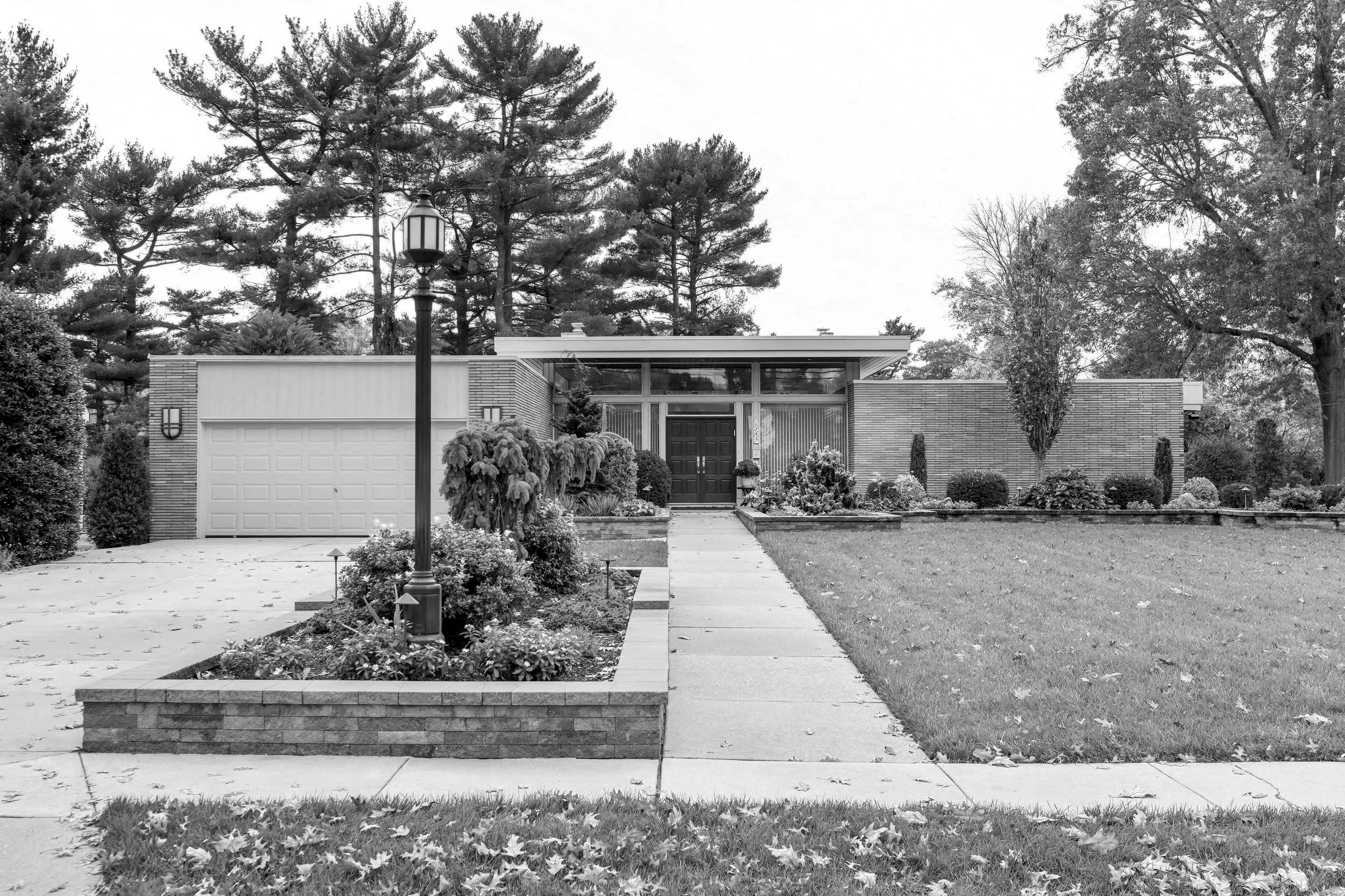
This 1964 mid-century modern home overlooking the former Woodcrest Country Club golf course in Cherry Hill had been altered significantly over six decades. The original architecture — two masonry masses separated by a glazed central living volume under a floating roof plane — was still there. It had just been made hard to see. Jay Reinert had grown up in Cherry Hill and passed this house regularly on the way to school. When a young family came to JRA looking to renovate their existing home, a different conversation opened — and the clients ultimately chose to purchase this property instead, recognizing what its authentic foundation could offer. The project became less about imposing a new style and more about uncovering the logic already embedded within the original design — while making moves the original architect didn't make but would have recognized as right.
BEFORE
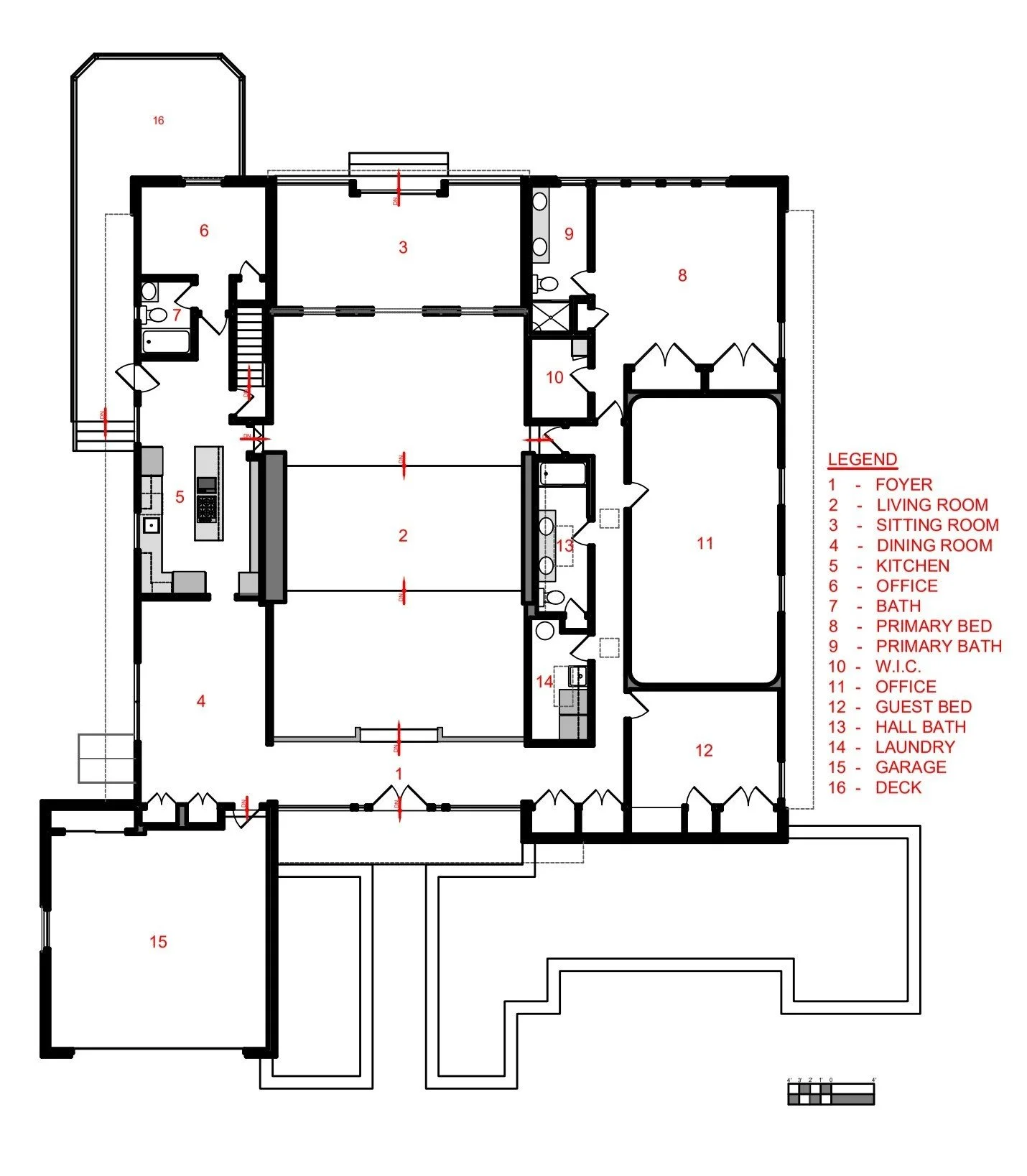
FIRST FLOOR — 1964 ORIGINAL PLAN
AFTER
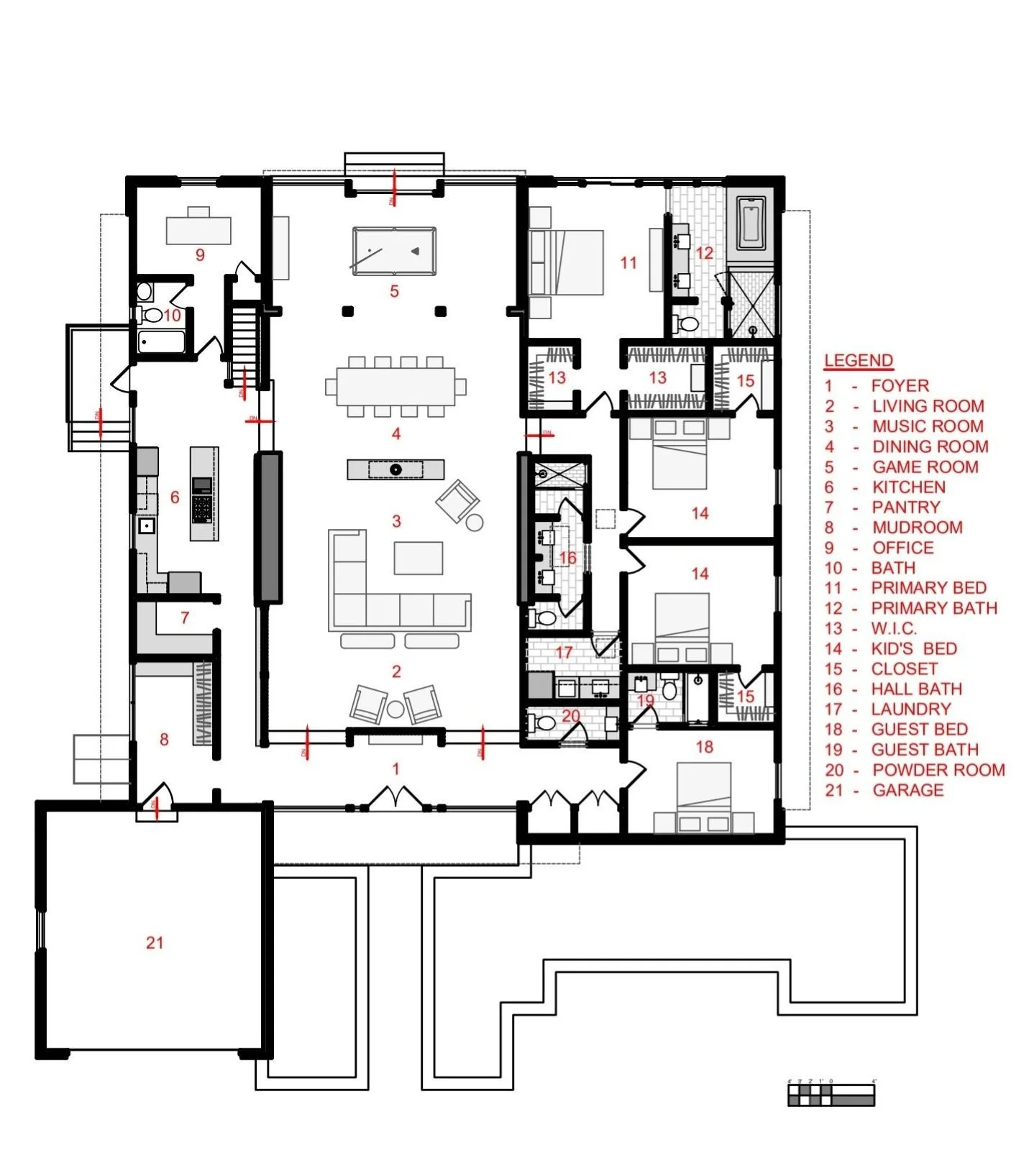
FIRST FLOOR — RENOVATED PLAN
Sixteen rooms reorganized into twenty-one — not by adding square footage but by clarifying how the house was organized. The dining room moves to the atrium. The service side gains a mudroom and pantry. The sleeping zone gets a proper guest suite separation. The family level loses its steps and gains a continuous floor. Every room on the after plan traces back to a specific decision about how this family actually lives.
The original plan organized the house into service and living zones but did so without clear boundaries — rooms bled into each other awkwardly, circulation paths were undefined, and the sleeping zone had no separation from the rest of the house. The renovation established three clear zones: Service — garage, mudroom, pantry, kitchen, bathroom, and office; Living — the large central volume for gathering, dining, music, games, and family life; and Sleeping — bedrooms, guest suite, bathrooms, and laundry. This organizational clarity restored order to the home and reinforced the strength of the original architectural concept. Within the sleeping zone, an original corridor had run along the right front corner of the house connecting front to rear and providing access to all bedrooms. The guest suite and new powder room were created by using existing space in that corner to block the corridor — creating a private guest space separated from the family bedrooms and giving both guests and family the independence that multi-generational living requires.
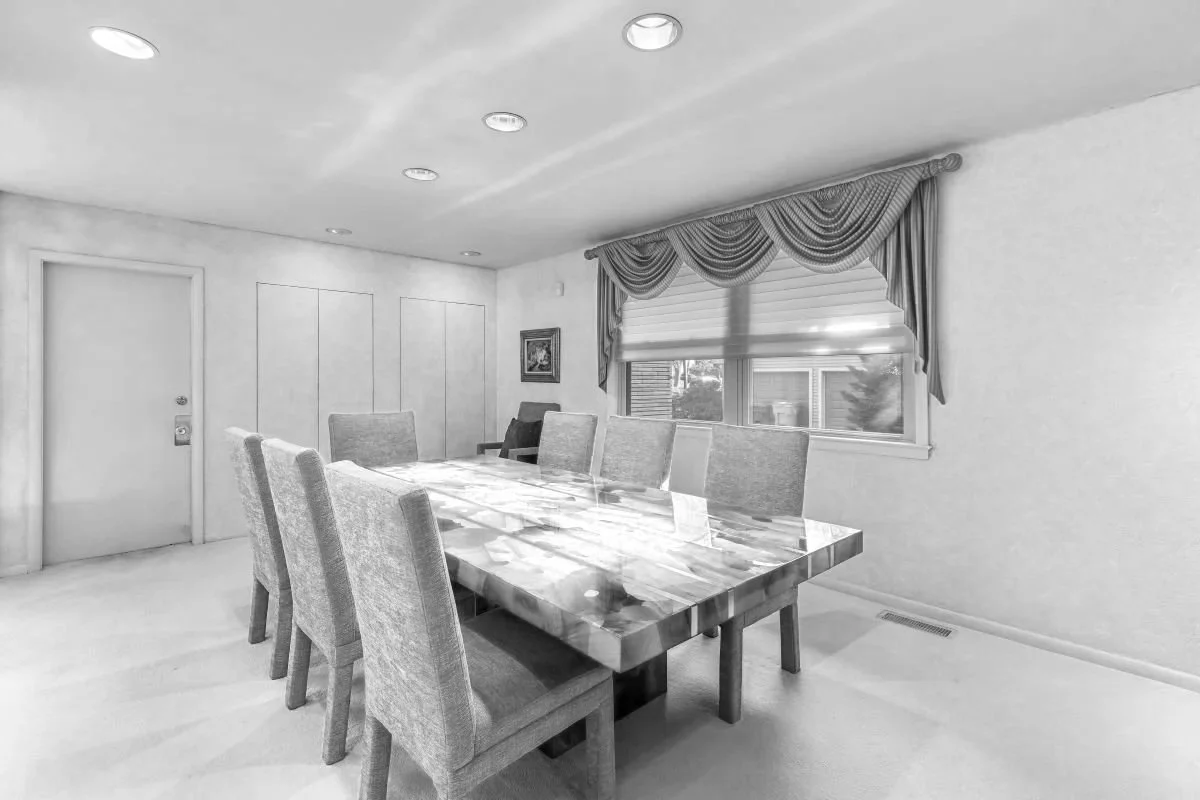
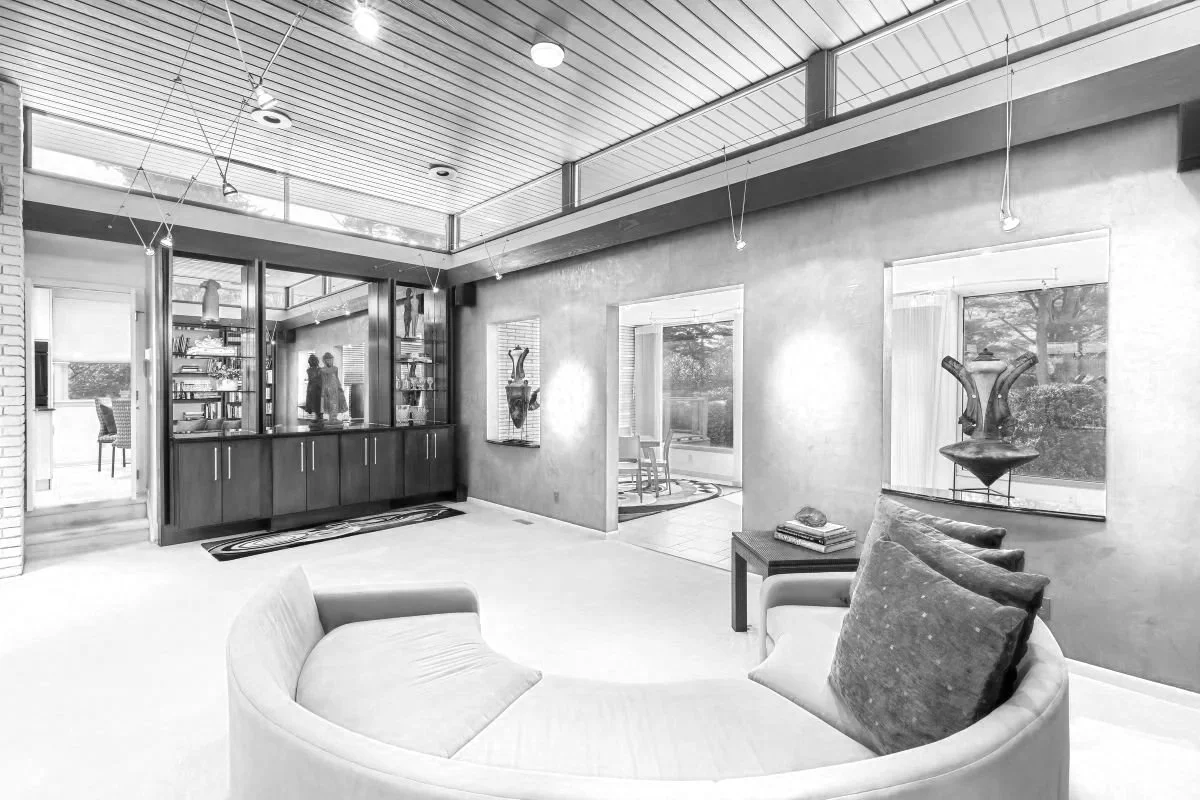
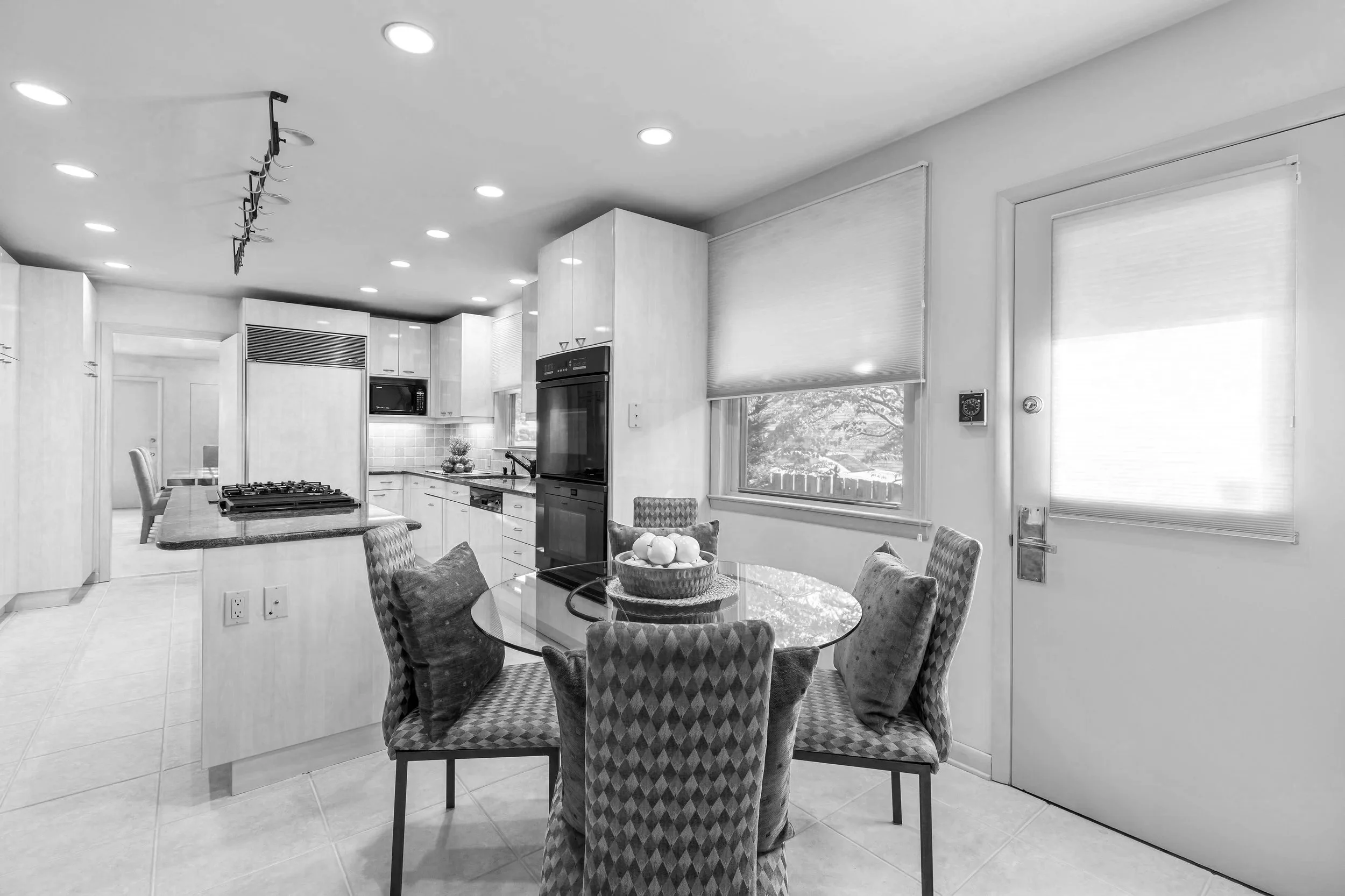
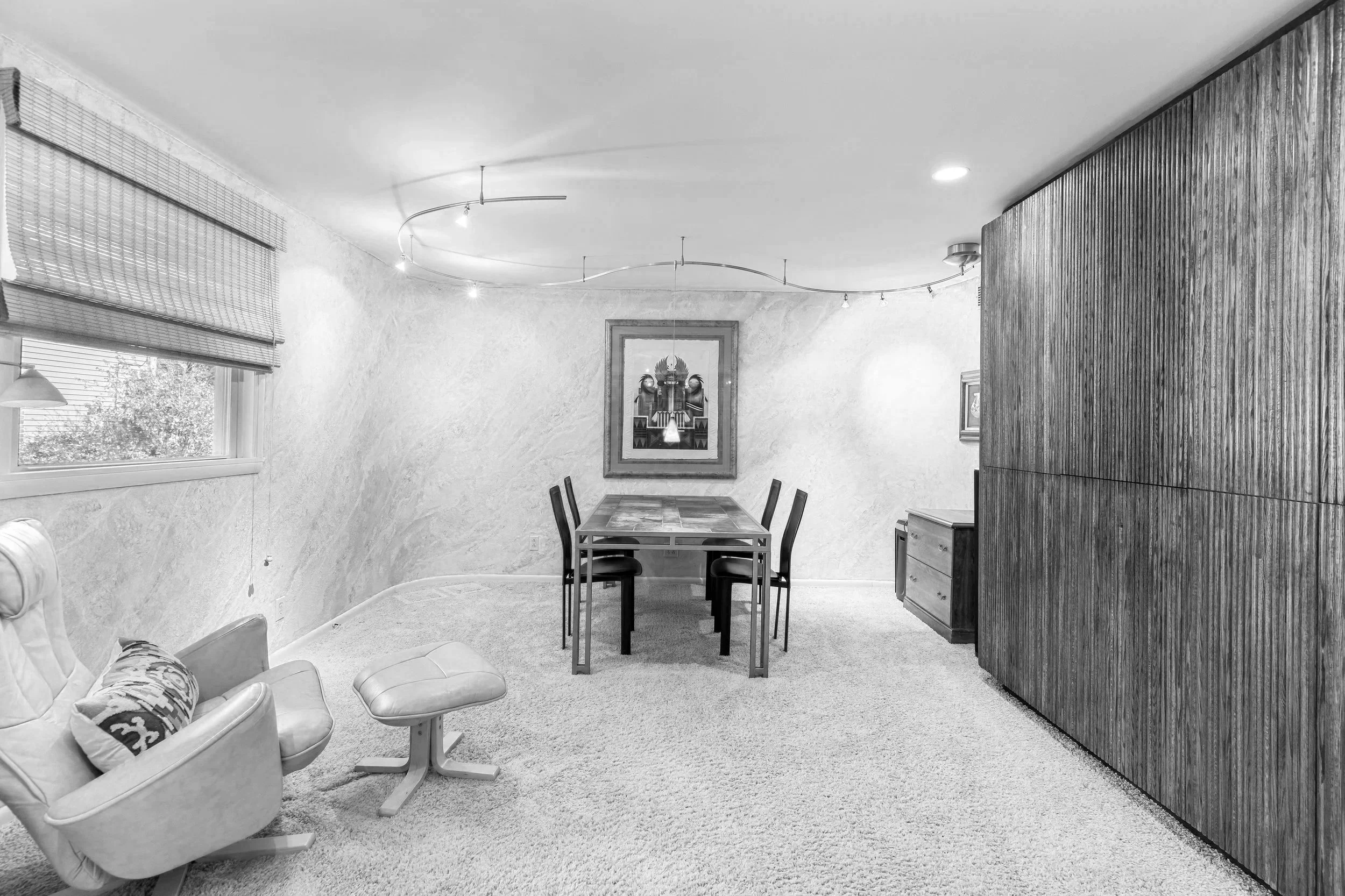
Before renovation — the service-side dining room and the family living zone before the floor was leveled and the spaces unified
The lower level off the stair landing had been divided into three distinct zones by single-step level changes — a common mid-century device for implying spatial separation without walls. But those level changes did two damaging things simultaneously. They fragmented what should have been a continuous family and dining area into spaces that could never quite function as one. And they created an implied circulation route that further divided each level, forcing furniture layouts to each side and making the zones feel like corridors rather than rooms. Leveling the entire floor plane unified these three zones into a single flexible space that can accommodate dining, family gathering, music, games, or multi-generational living in whatever configuration the family needs. The sense of openness this created — floor running continuously from the stair to the rear glazing — reinforces the horizontal quality that defines the best mid-century modern interiors.
The most significant enhancement to the original design was not a restoration — it was an addition of something the house had always been capable of.
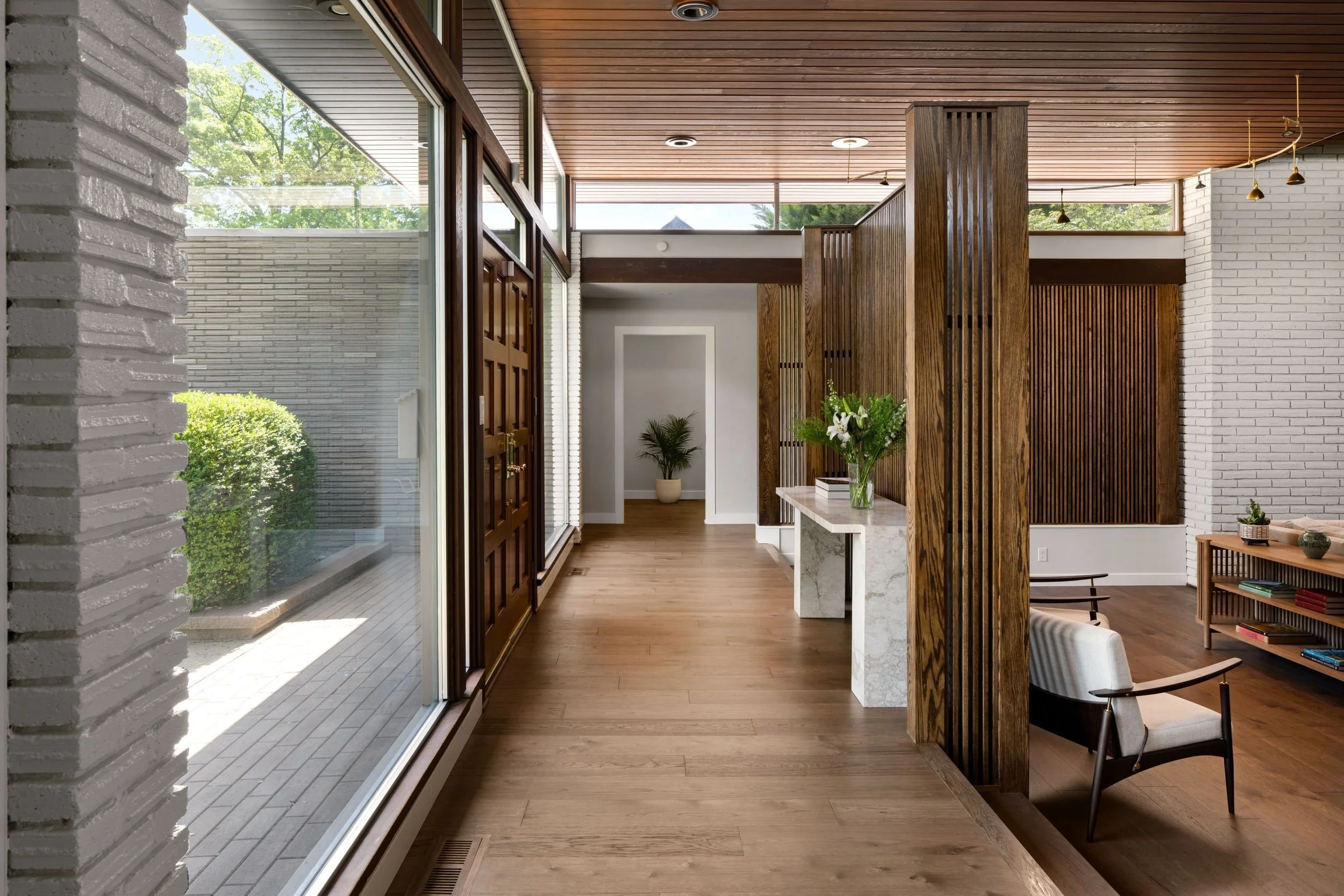
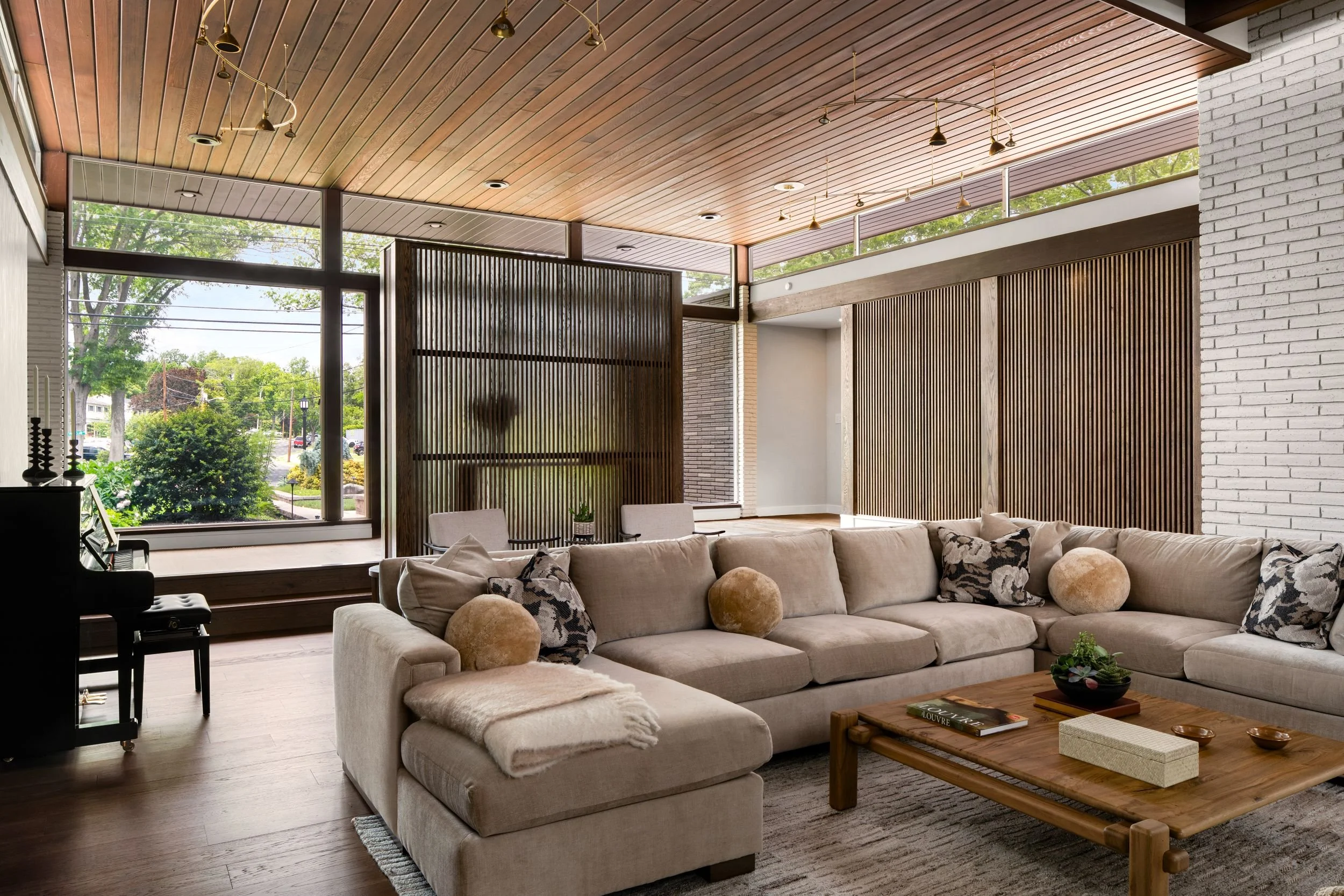
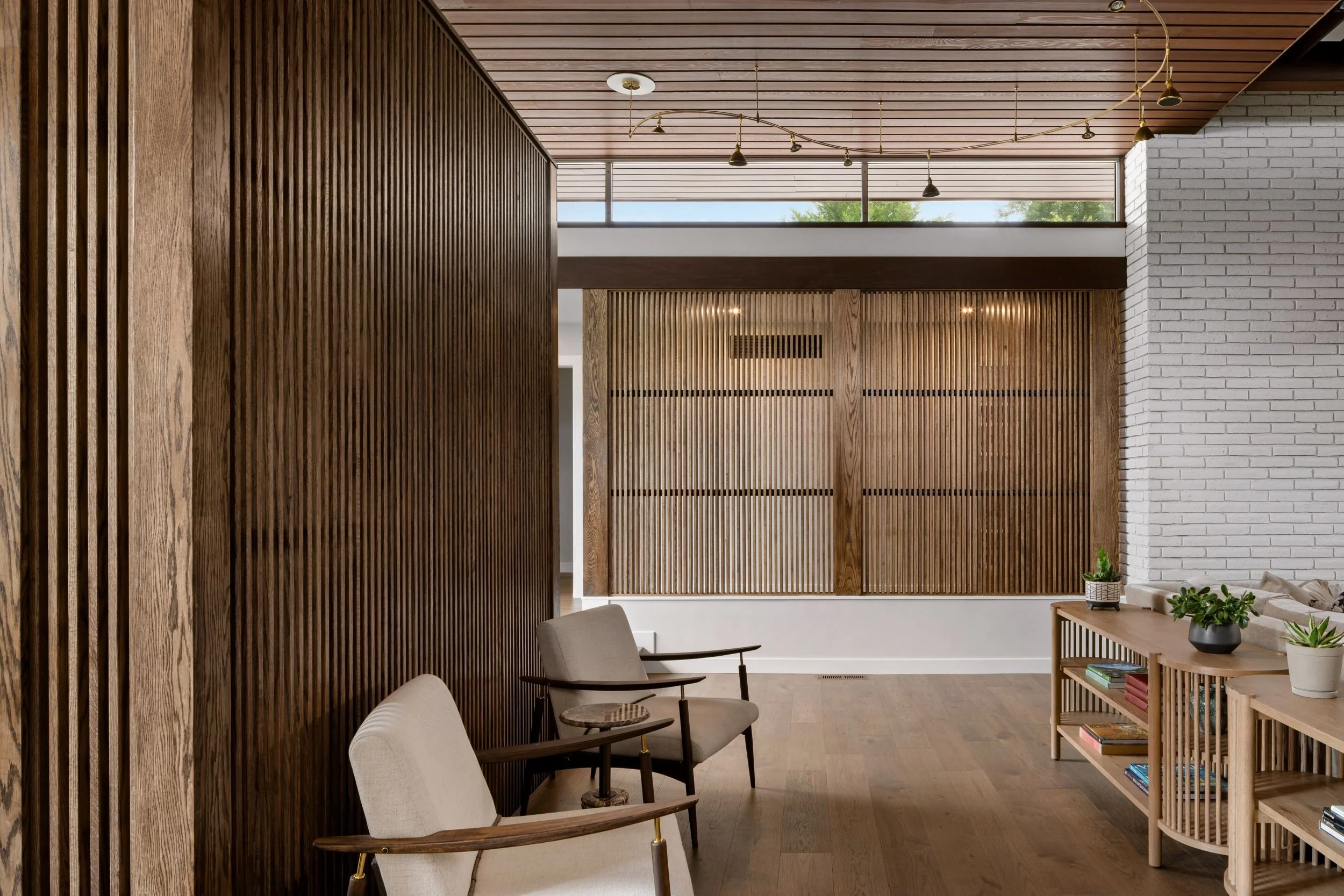
The oak slat screen became the organizing idea for the whole house — defining spaces without closing them, filtering light without blocking it, giving the interior the same layered quality the original architect put into the exterior.
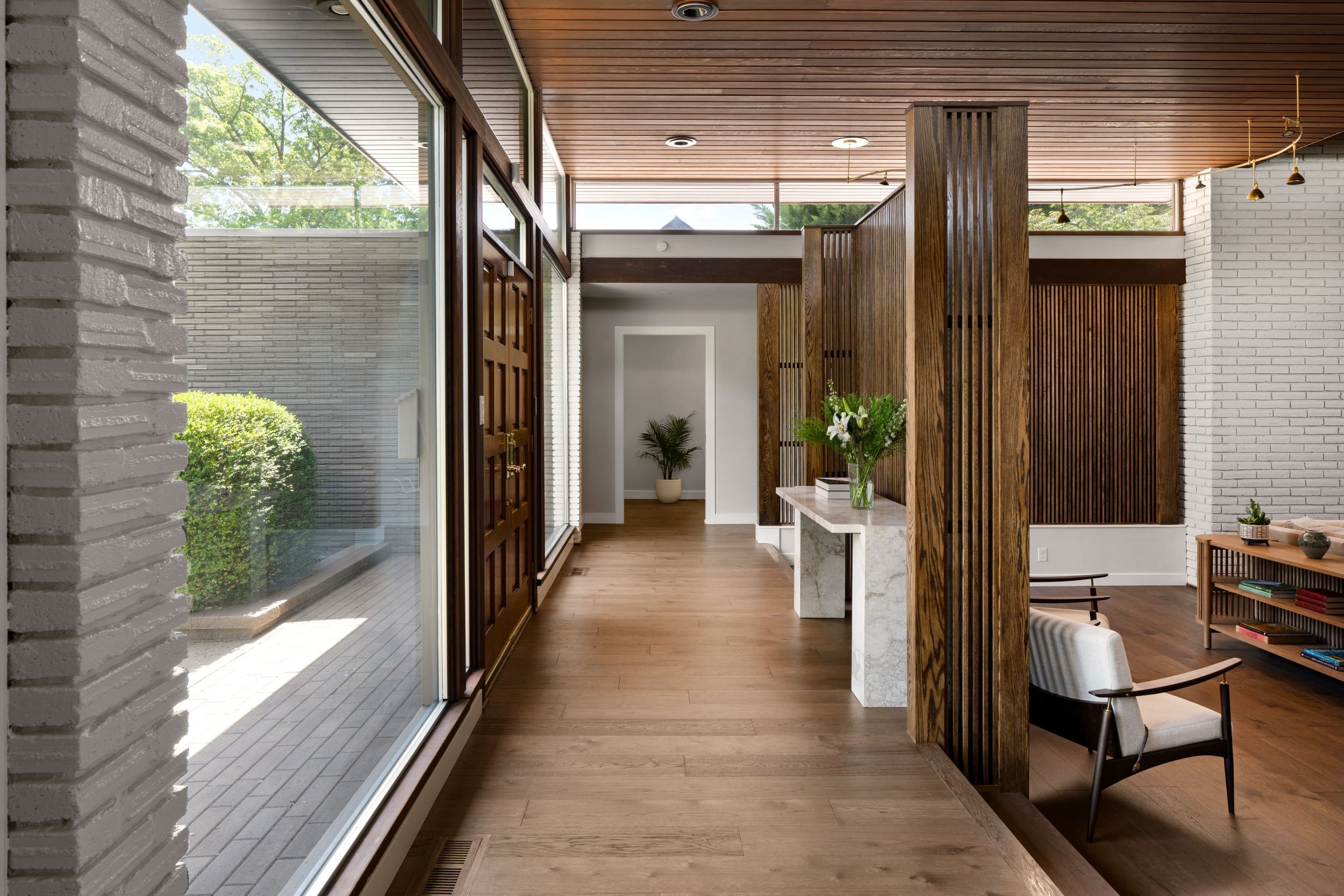
The original plan placed the entry at the threshold of the full living volume — visitors walked in and experienced everything at once. The spatial idea of the house was revealed immediately with no sequence, no discovery, no sense of arrival that built toward something. The oak slat screen changed that completely. Positioned at the threshold between the entry corridor and the central living volume, it acts as a veil — visitors glimpse the spaces beyond through the vertical slats before the screen steps aside and the house opens up. The arrival becomes a spatial experience rather than simply a door opening into a room. The original plan also forced furniture layouts to each side of an implied circulation route that bisected the living zone visually and practically — never a physical corridor but just as constraining. The new entry sequence redirects that circulation along the glazed front wall, liberating the living volume to be organized on its own terms.
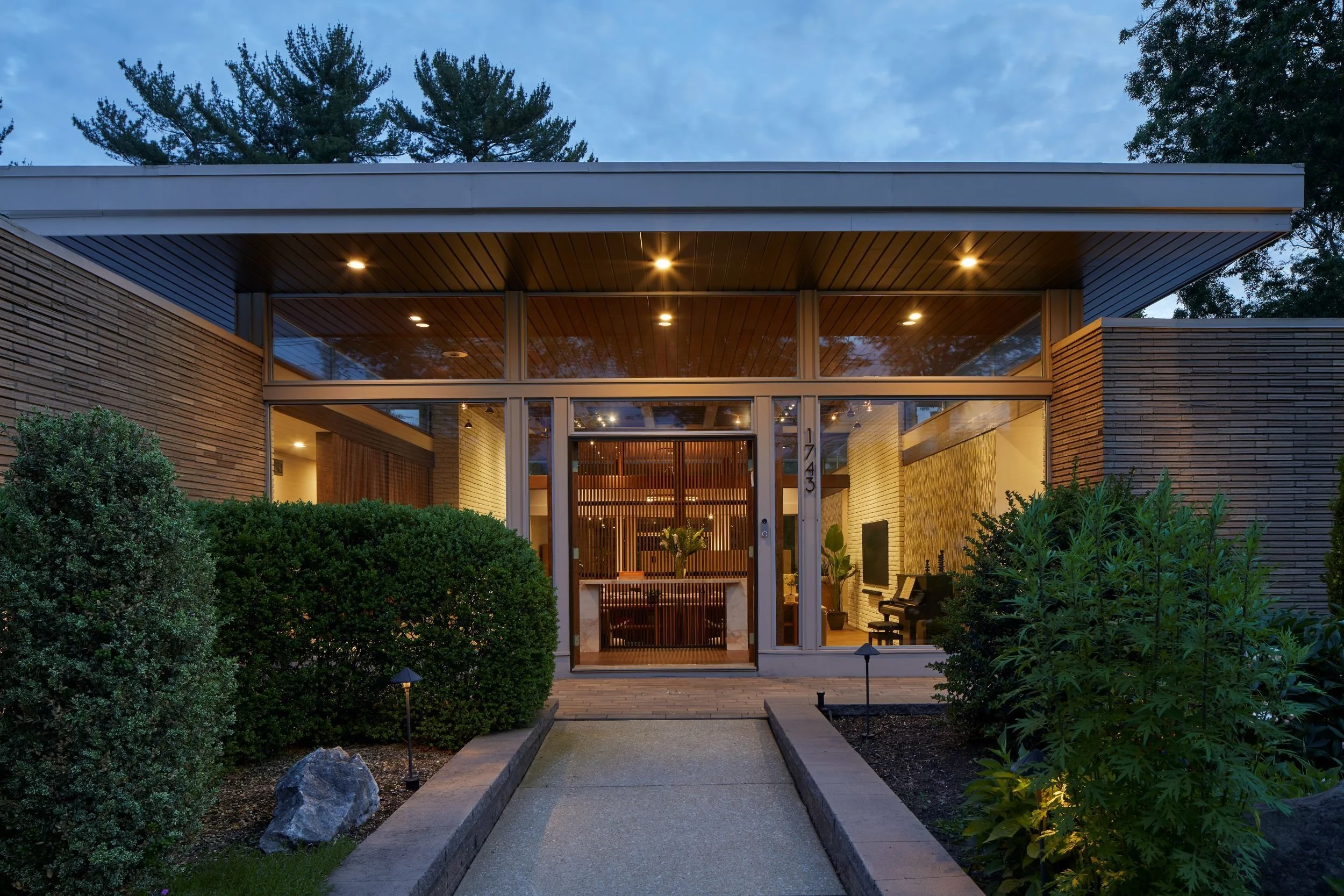
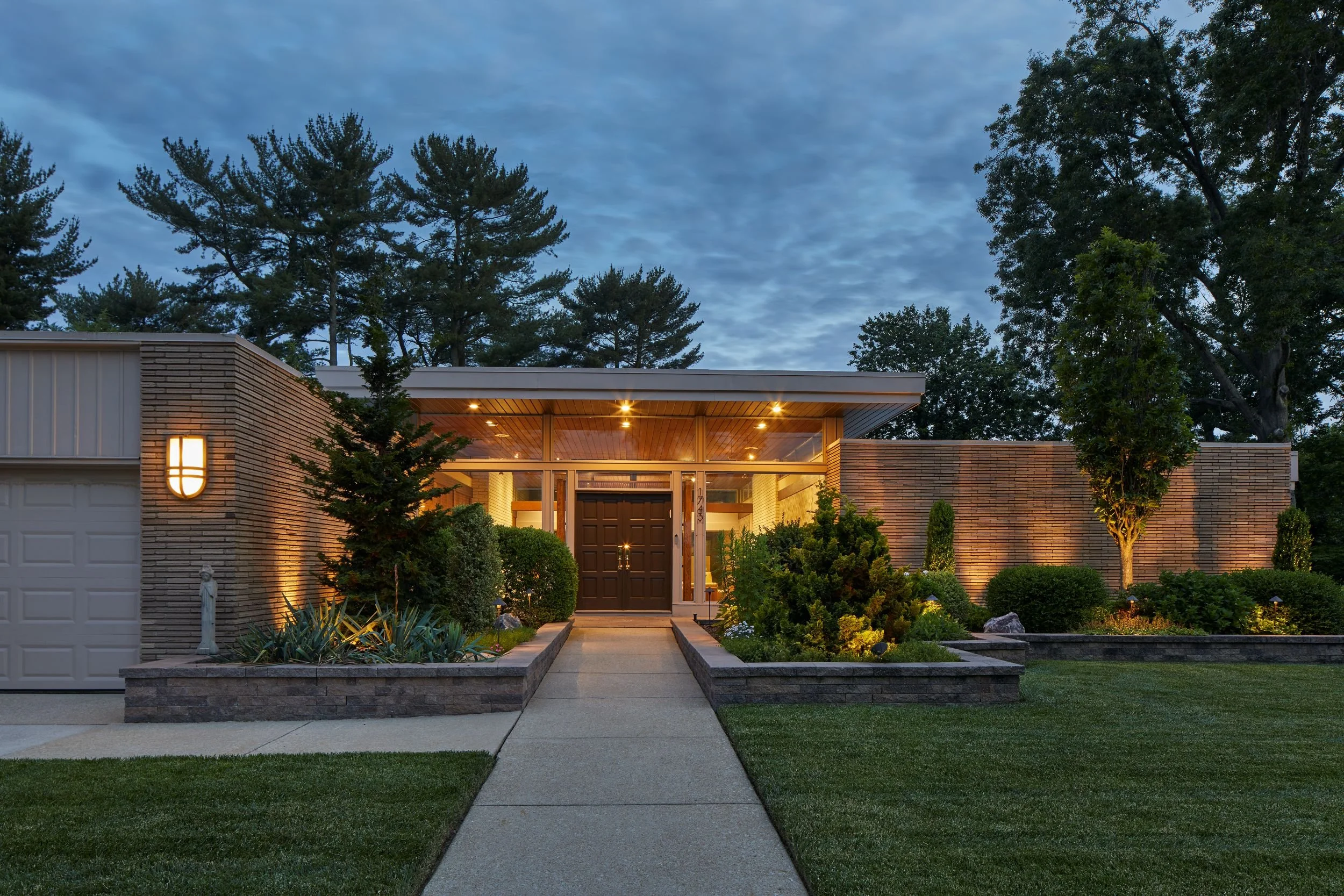
From outside, the oak slat screen is already visible through the glass facade — the sequence of arrival begins before the front door opens.
The central living volume is the heart of the original design. The renovation restored it — and then gave it something new.
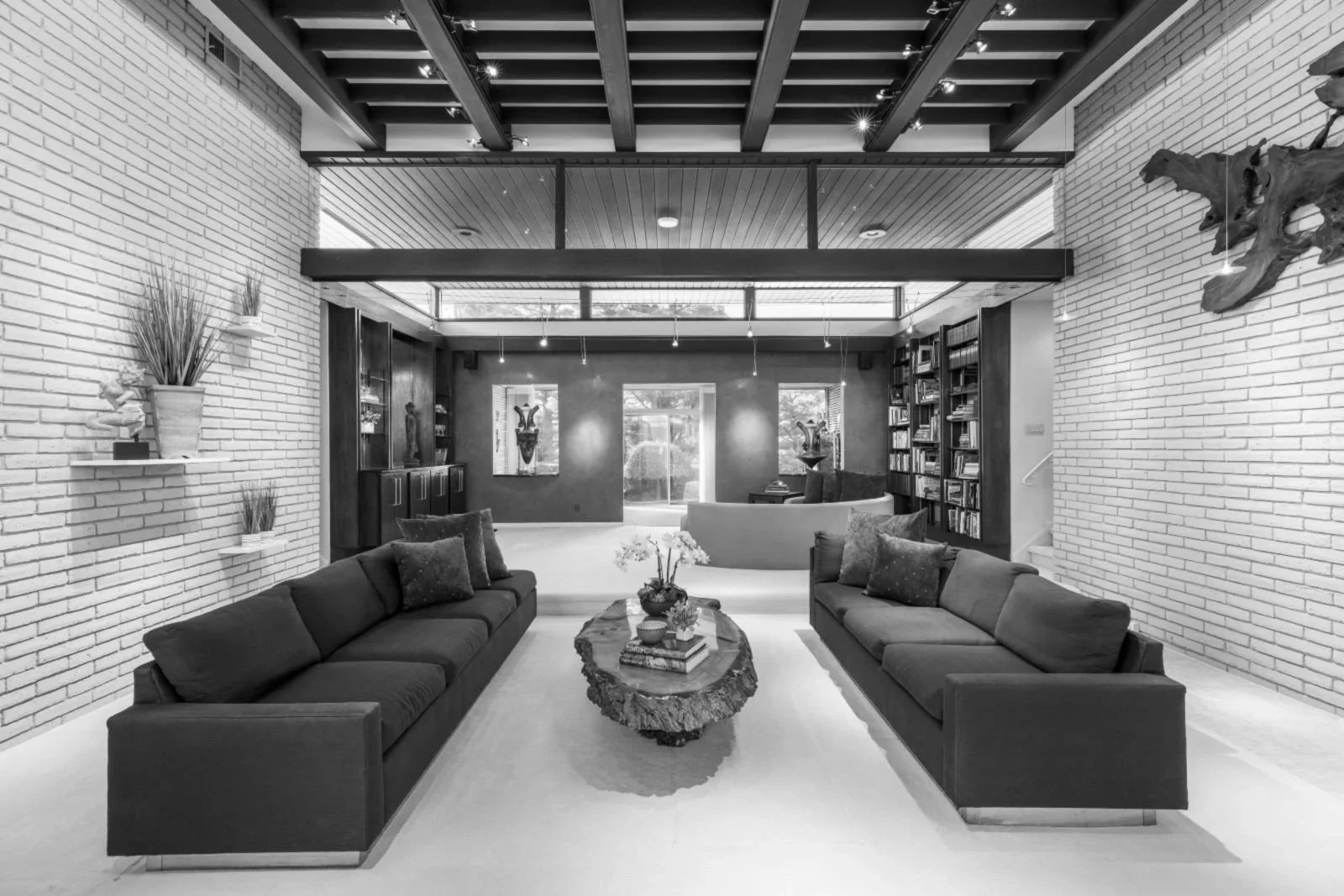
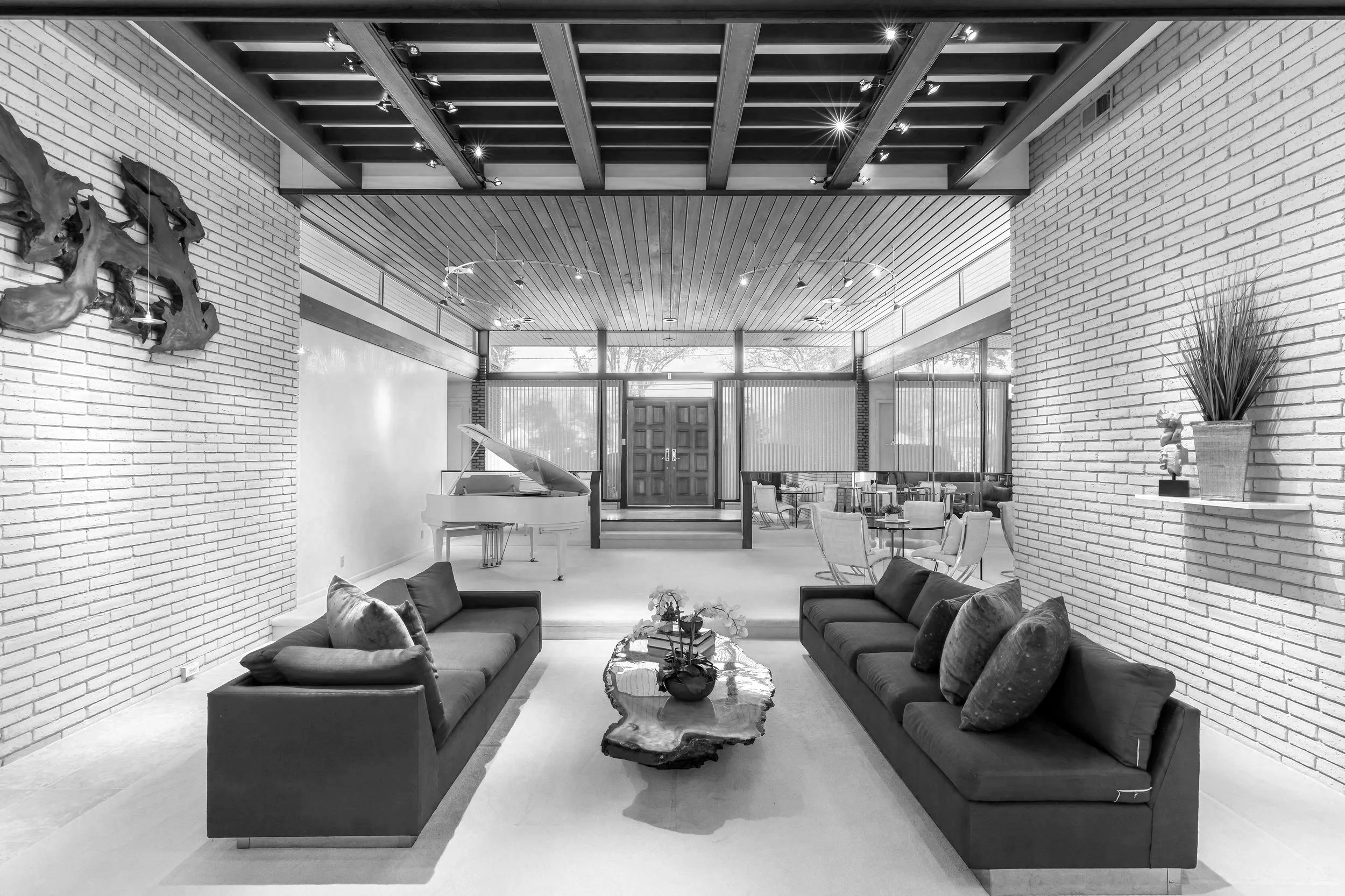
The original living volume before renovation — the clerestory light and wood ceiling already powerful, but walls, enclosures, and a poorly integrated rear porch interrupting the openness the original architect intended.
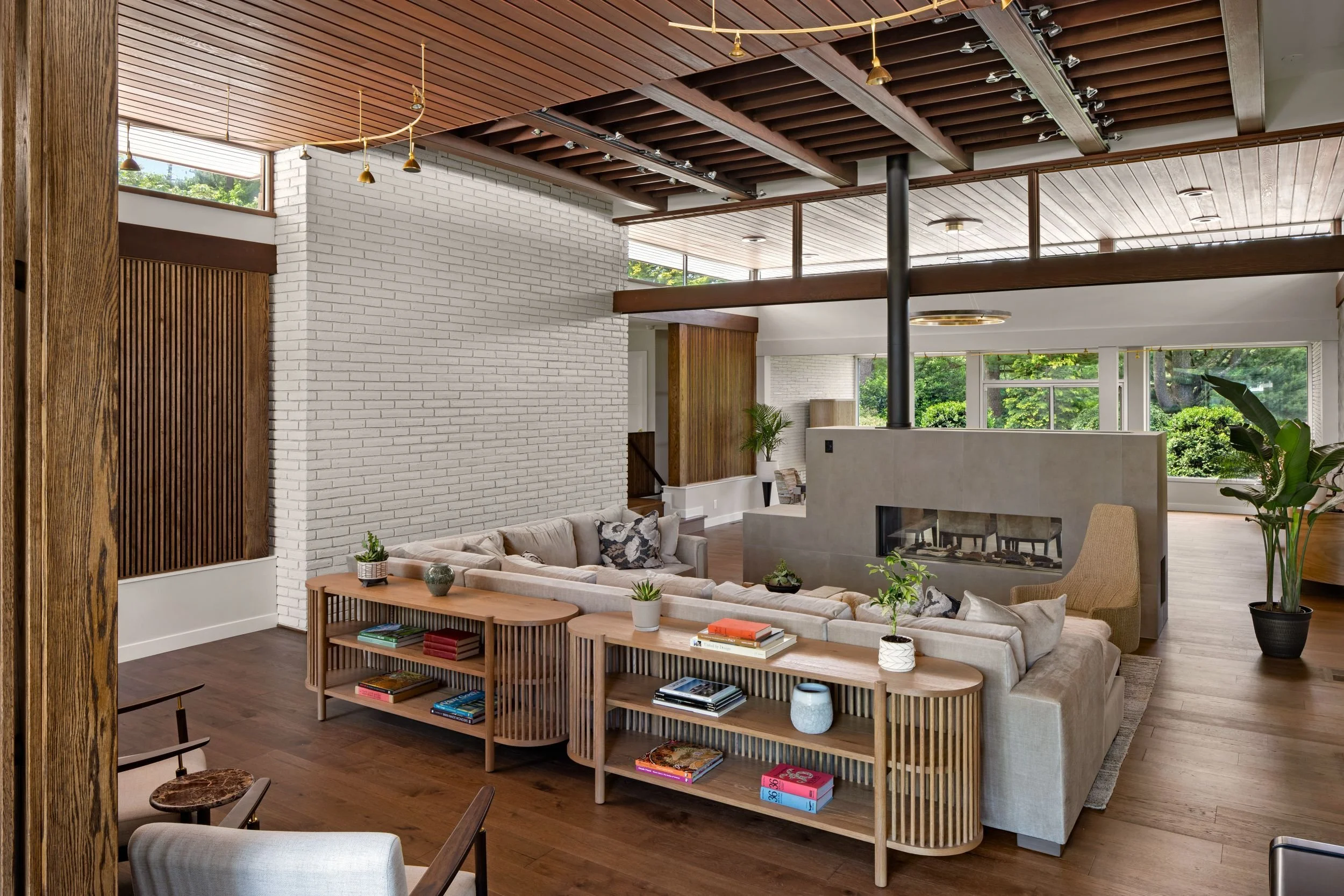
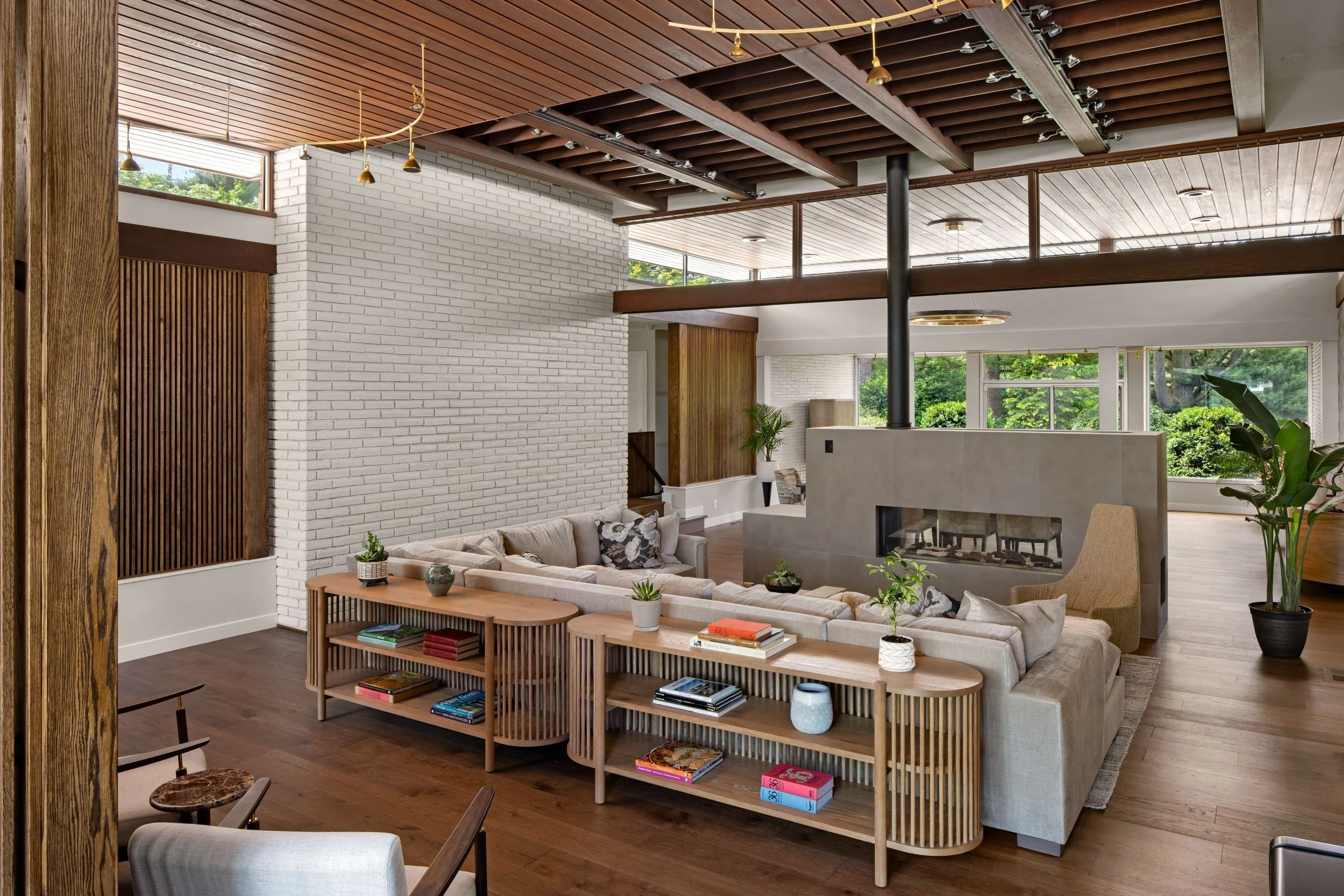
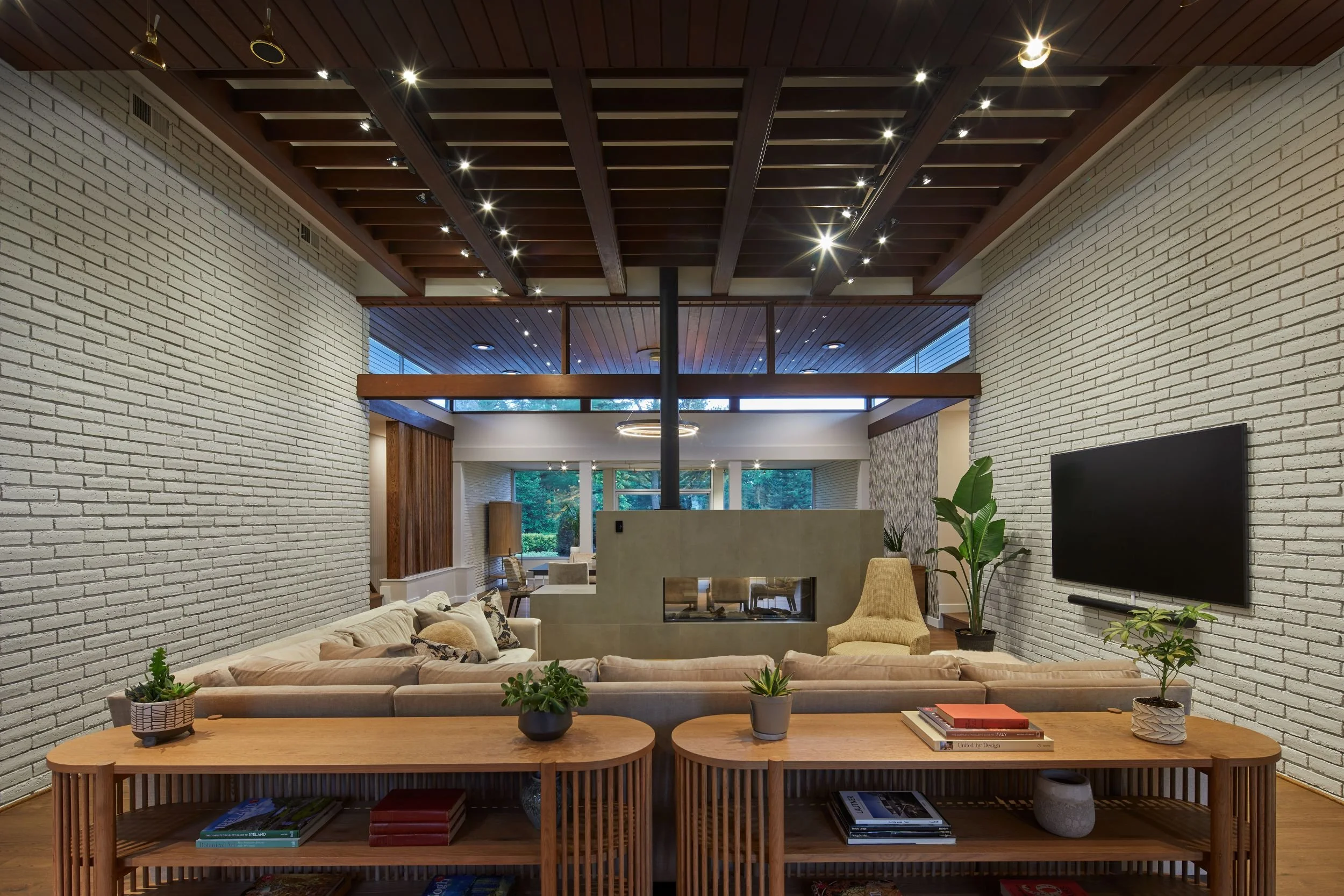
The enclosed rear porch reopened and integrated into the primary living volume. A floating two-sided concrete fireplace organizing the large space into layered gathering zones without closing it. The structural rhythm and original roof geometry preserved and emphasized.
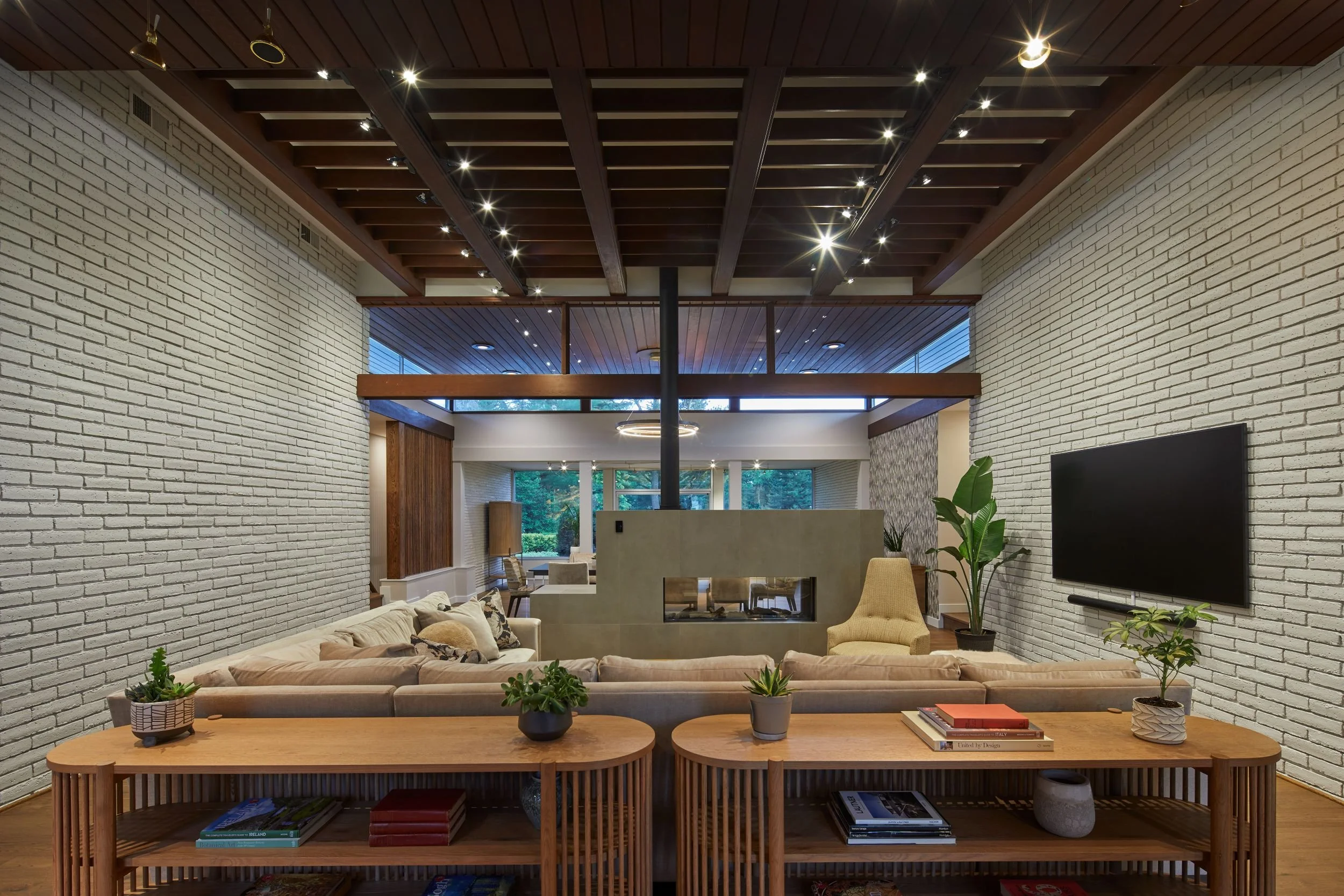
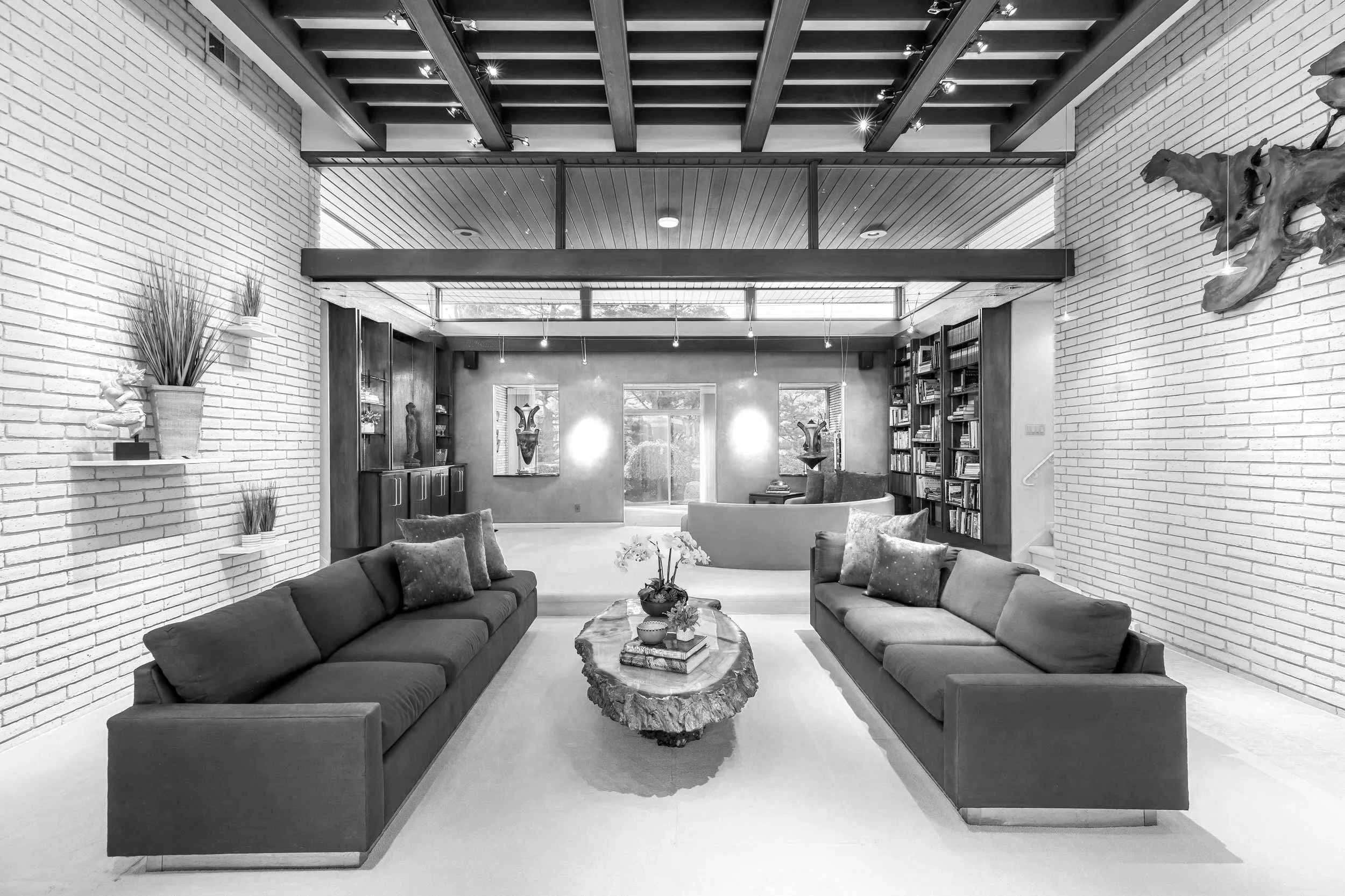
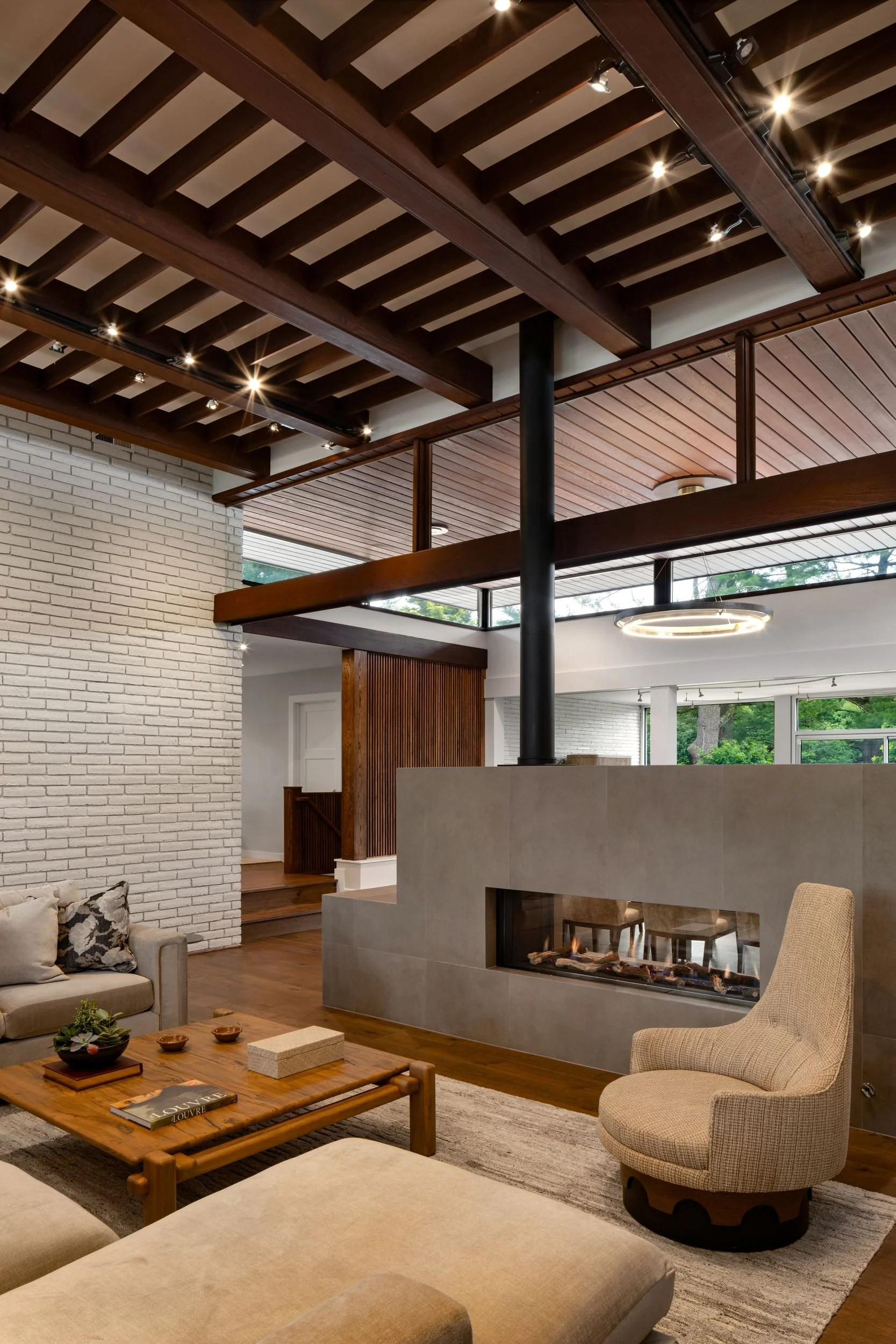
The central living volume — white brick on both sides, the floating fireplace organizing the space without closing it, the garden visible through the rear glazing. The original architectural idea, fully realized.
The central living volume had been compromised by a series of renovations that enclosed the rear porch, added walls that interrupted the openness, and introduced finishes disconnected from the original architecture. The renovation removed all of it. The enclosed porch was reopened and integrated directly into the primary living volume, reconnecting the interior to the backyard and golf course beyond. A new floating two-sided concrete fireplace was introduced to organize the large volume into layered living zones — family gathering on one side, more formal living on the other — without using walls to make the separation. The fireplace achieves what the original step level changes were trying to do but never quite managed: it defines zones while keeping the floor plane and the spatial experience continuous.
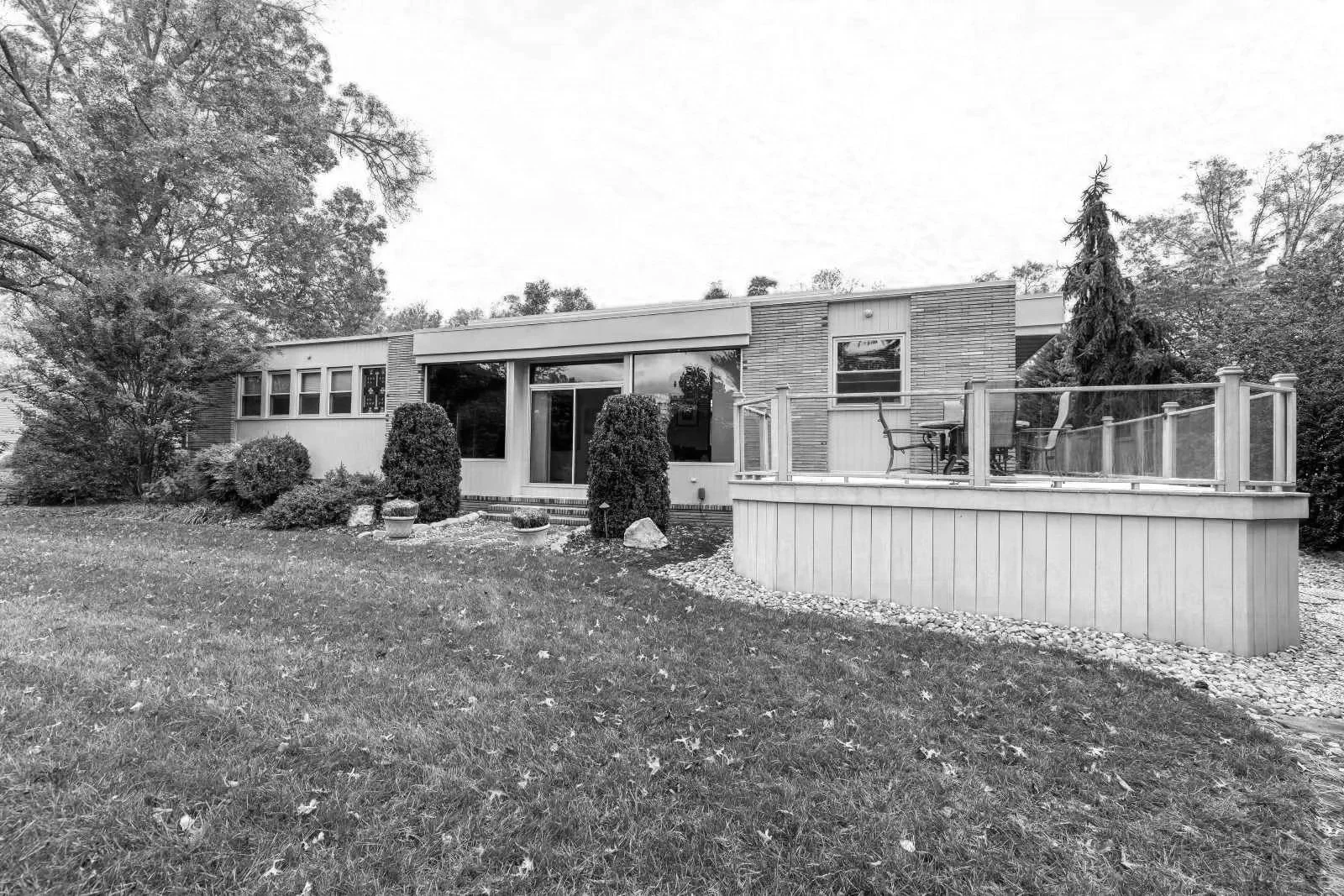
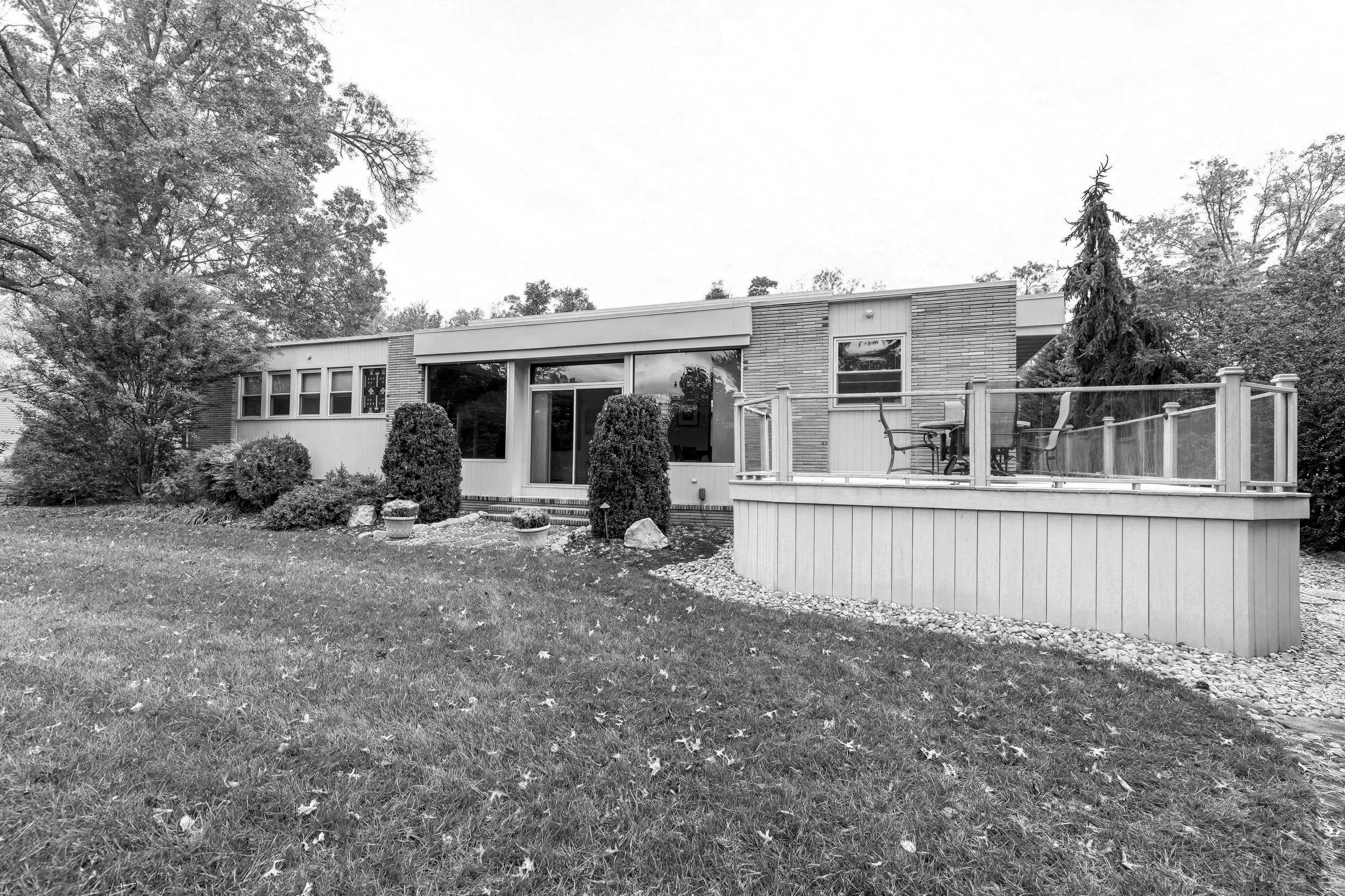
The rear of the house before renovation — the enclosed porch cutting off the interior from the yard, the cedar deck sitting disconnected from the house, stucco covering the original brick, slider doors that went nowhere useful. The golf course was right there. The house had no idea.
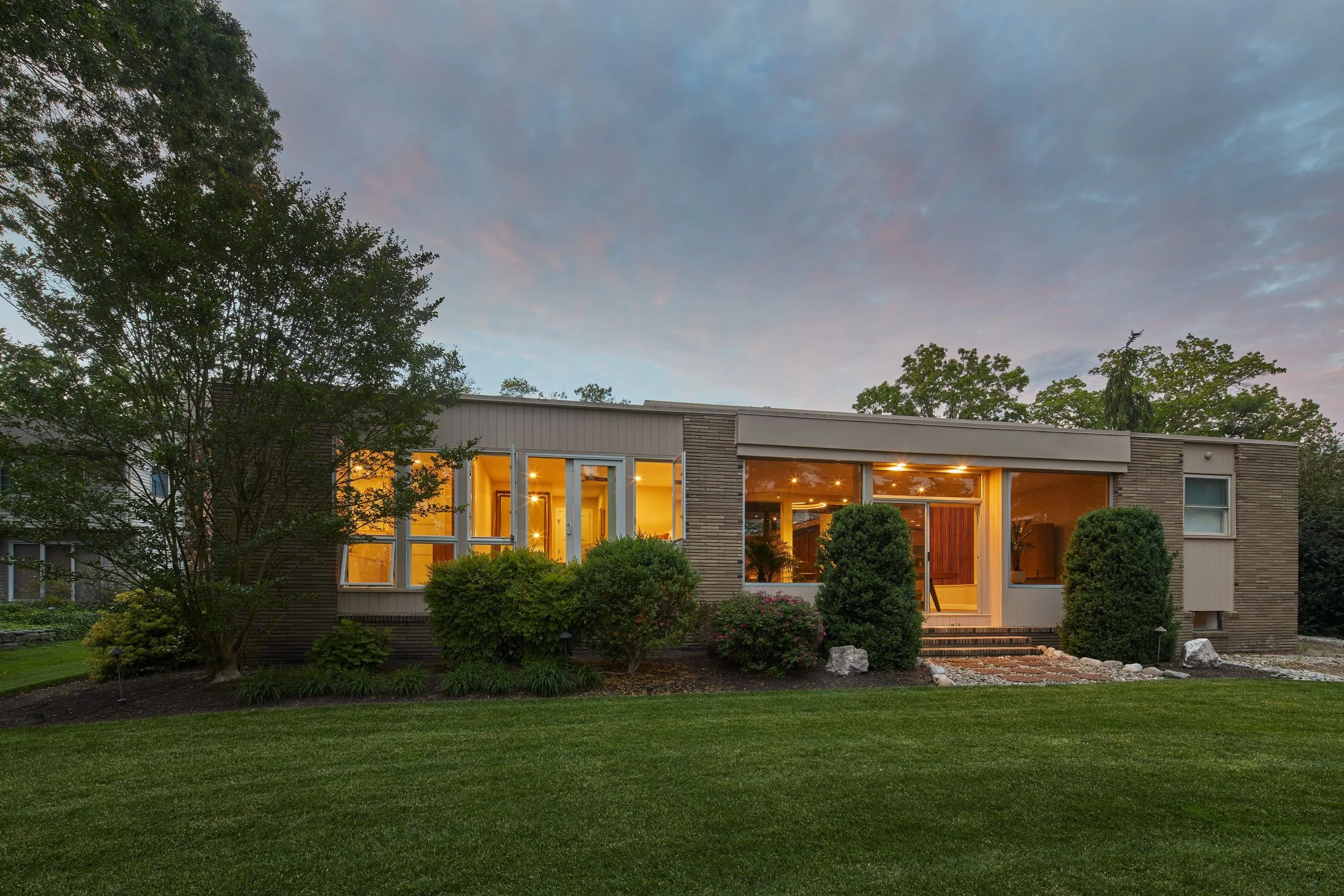
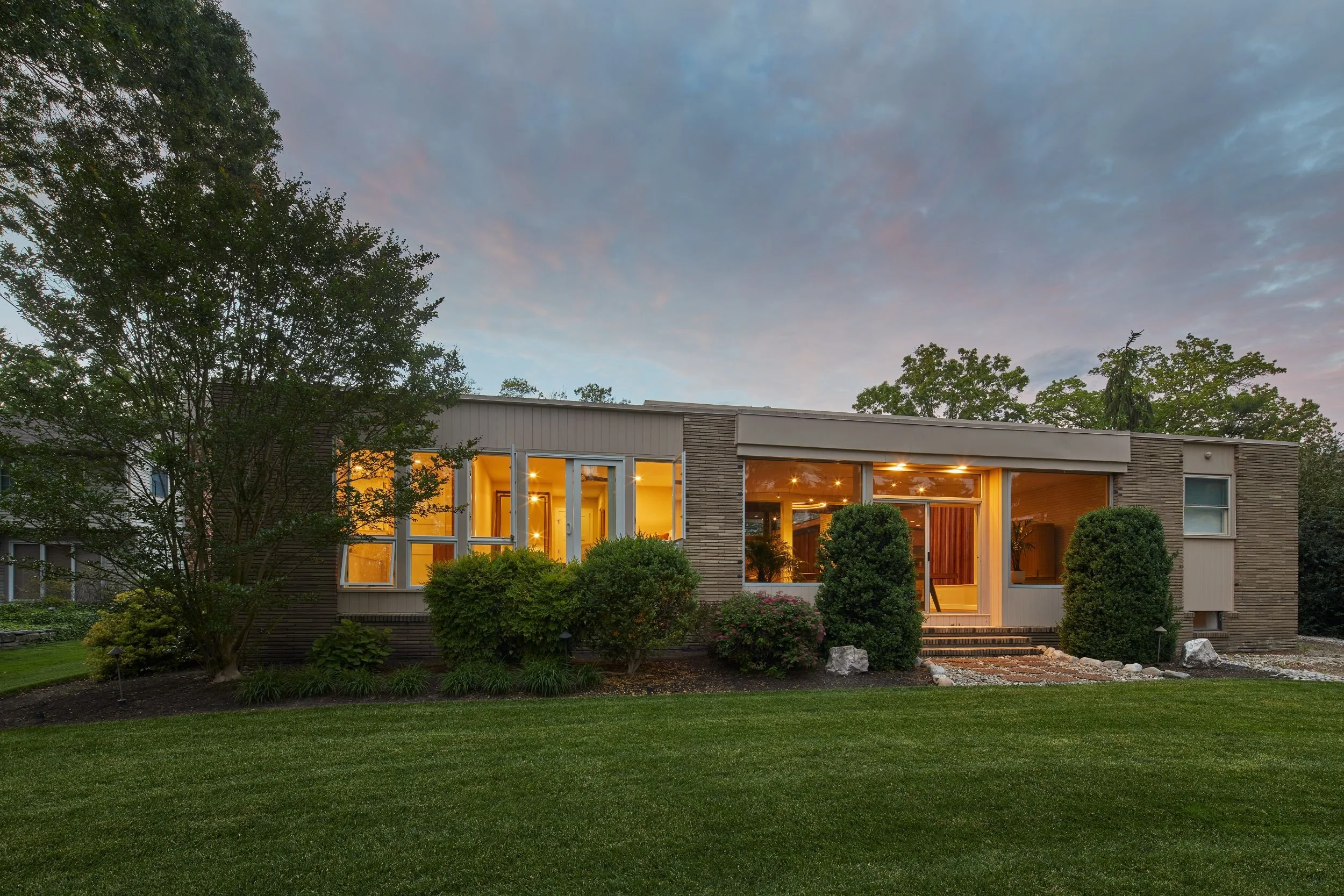
The same rear wall — the enclosed porch removed and integrated into the living volume, the original masonry restored, the glazing running continuously between the two brick masses. The golf course now part of every room that faces it.
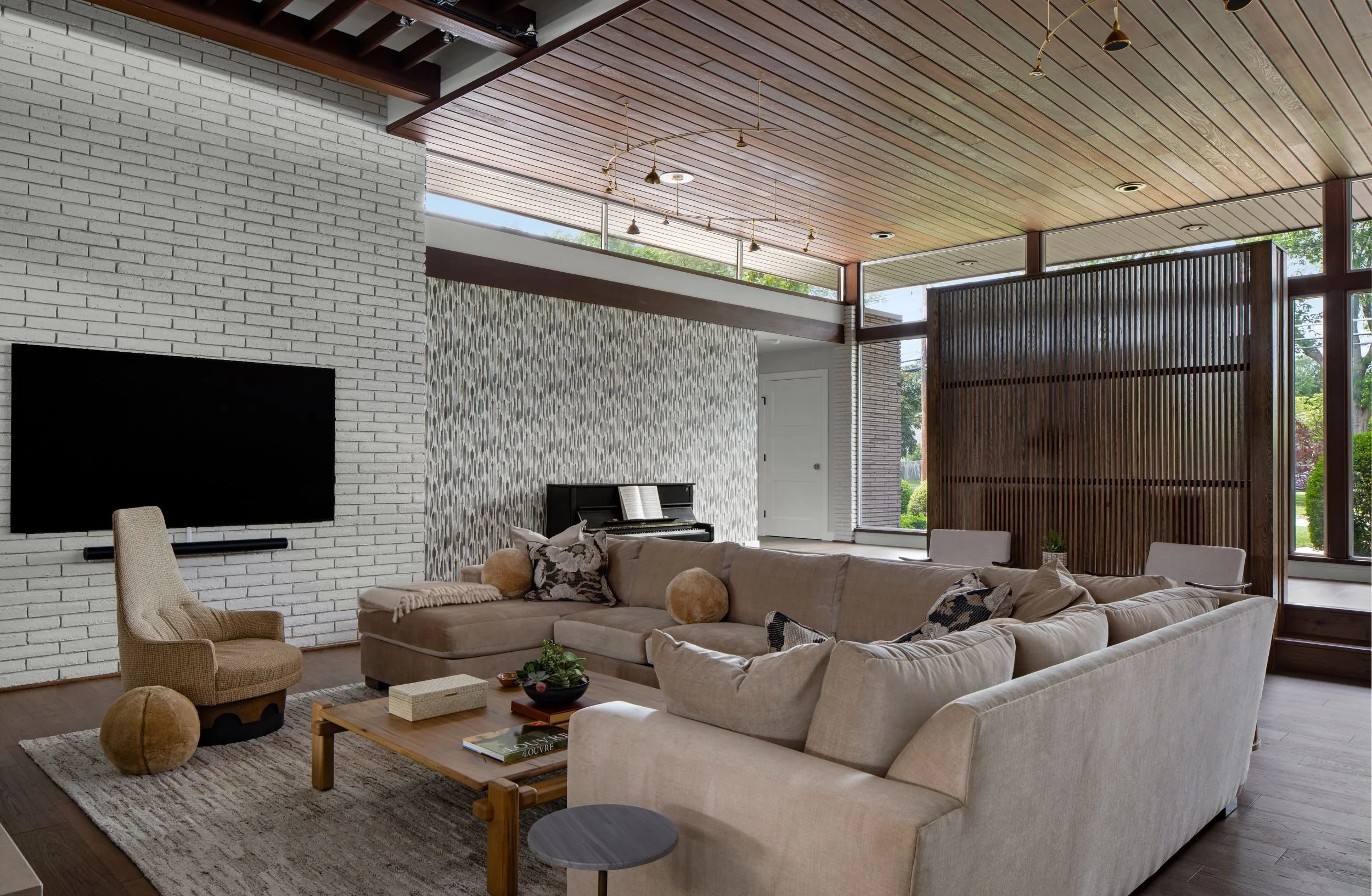
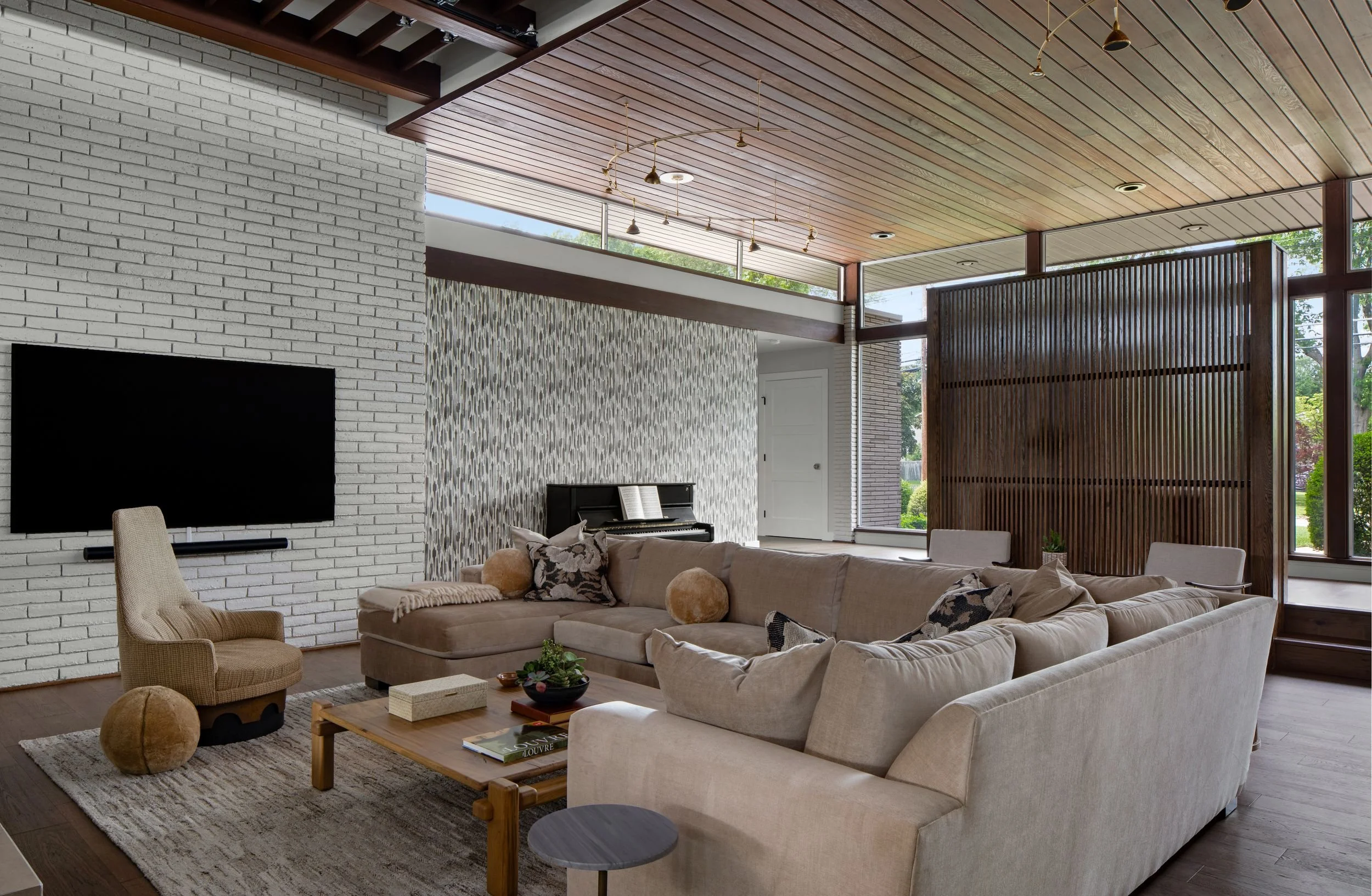
The living room restored to its original role as the heart of the house — horizontal, open, and connected to the landscape beyond.
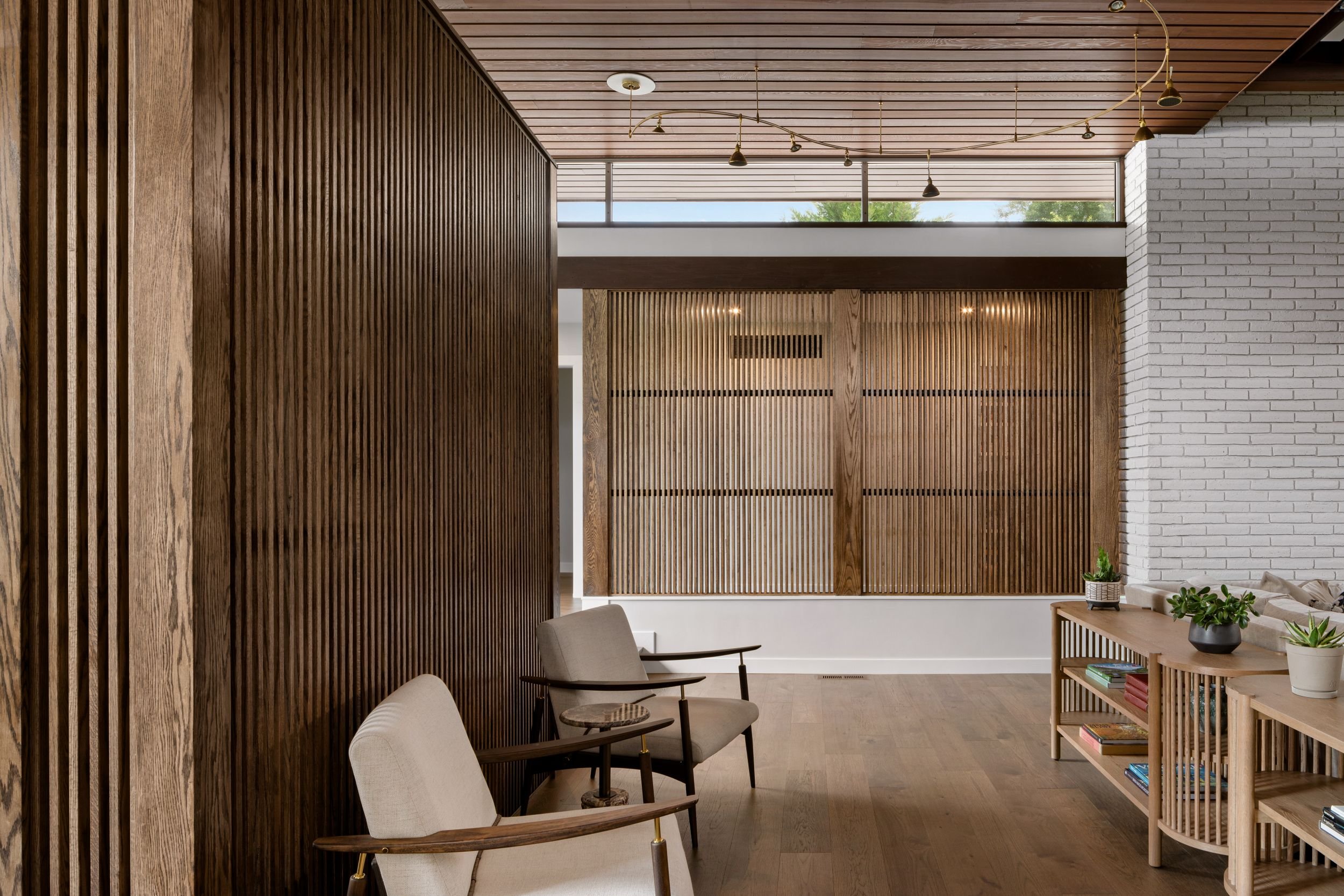
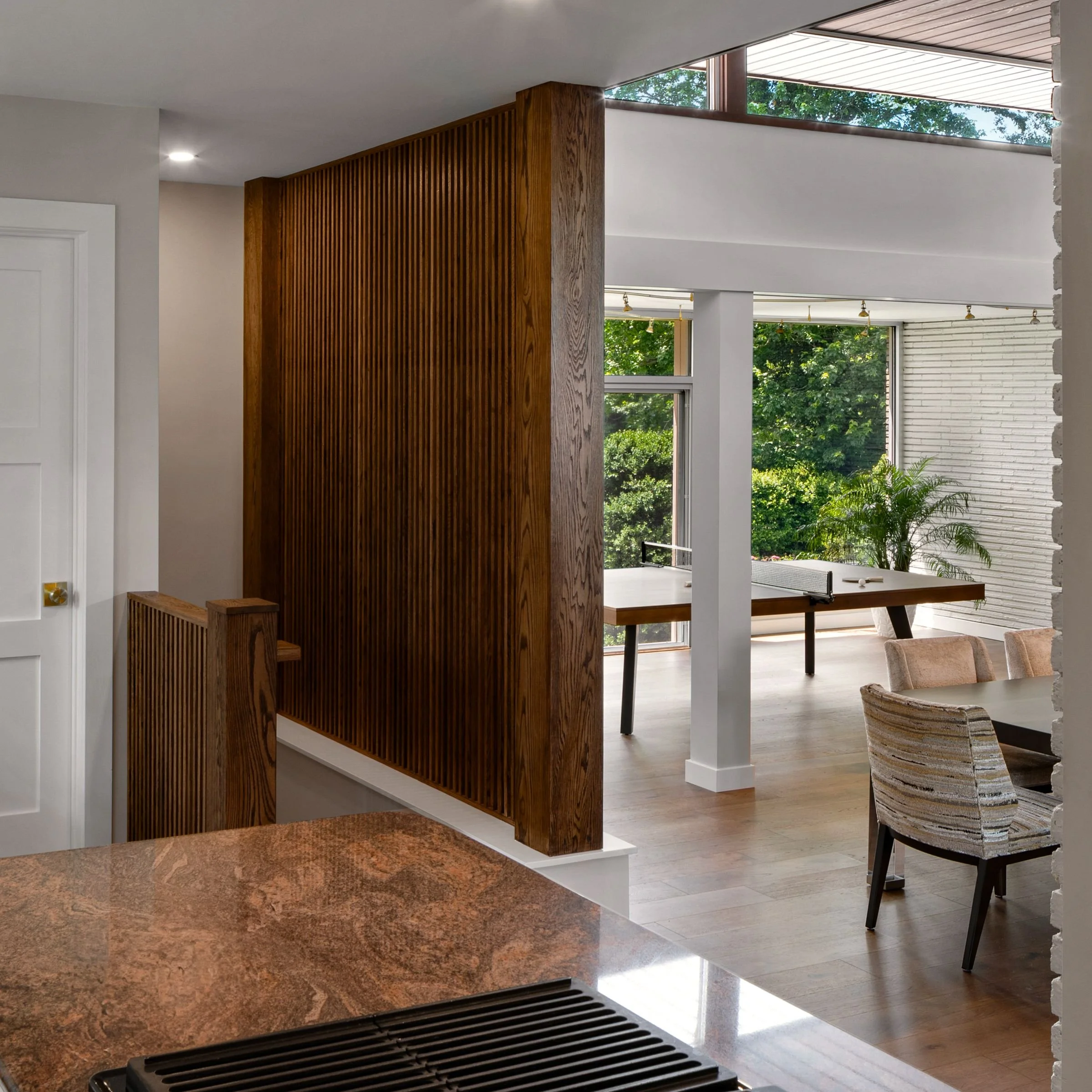
The oak slat screen from living side the entry corridor — the vertical rhythm of the slats filtering light and views, the spaces beyond visible but not yet revealed.
One move corrected the plan's central problem and created two new functional spaces simultaneously.
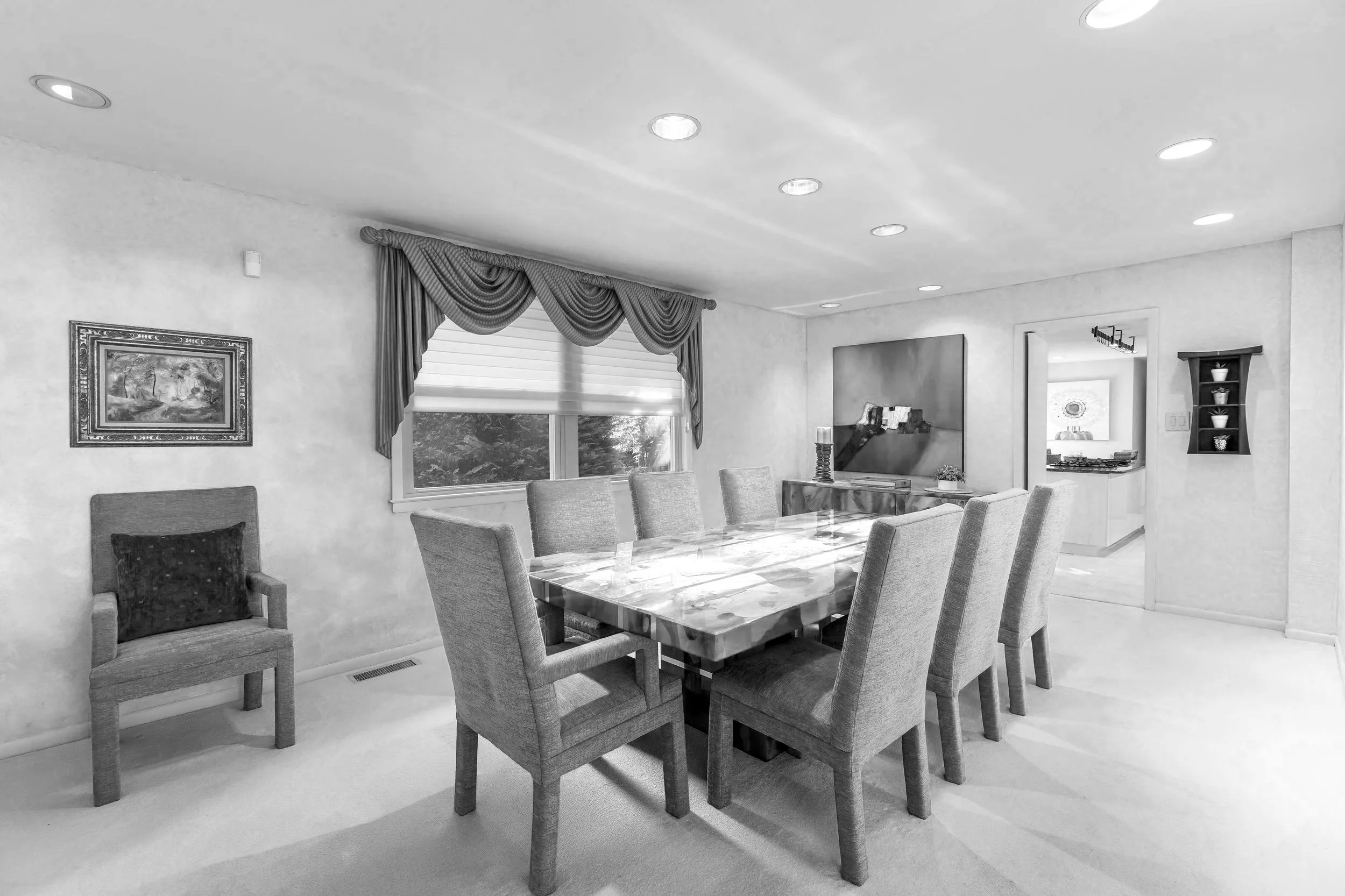
The dining room on the service side of the house — between the garage and the kitchen, disconnected from the light, the views, and the social spaces it should have been part of.
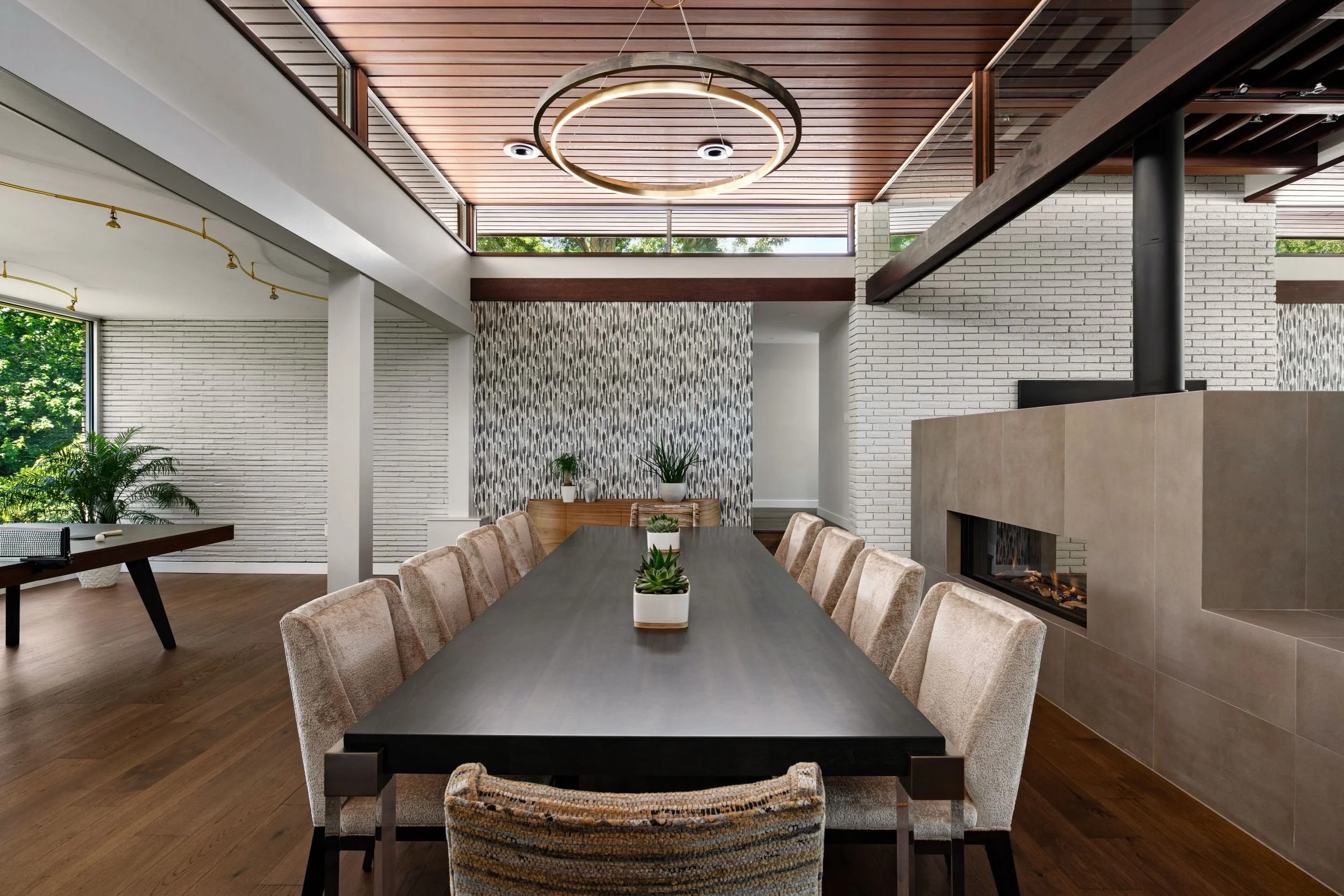
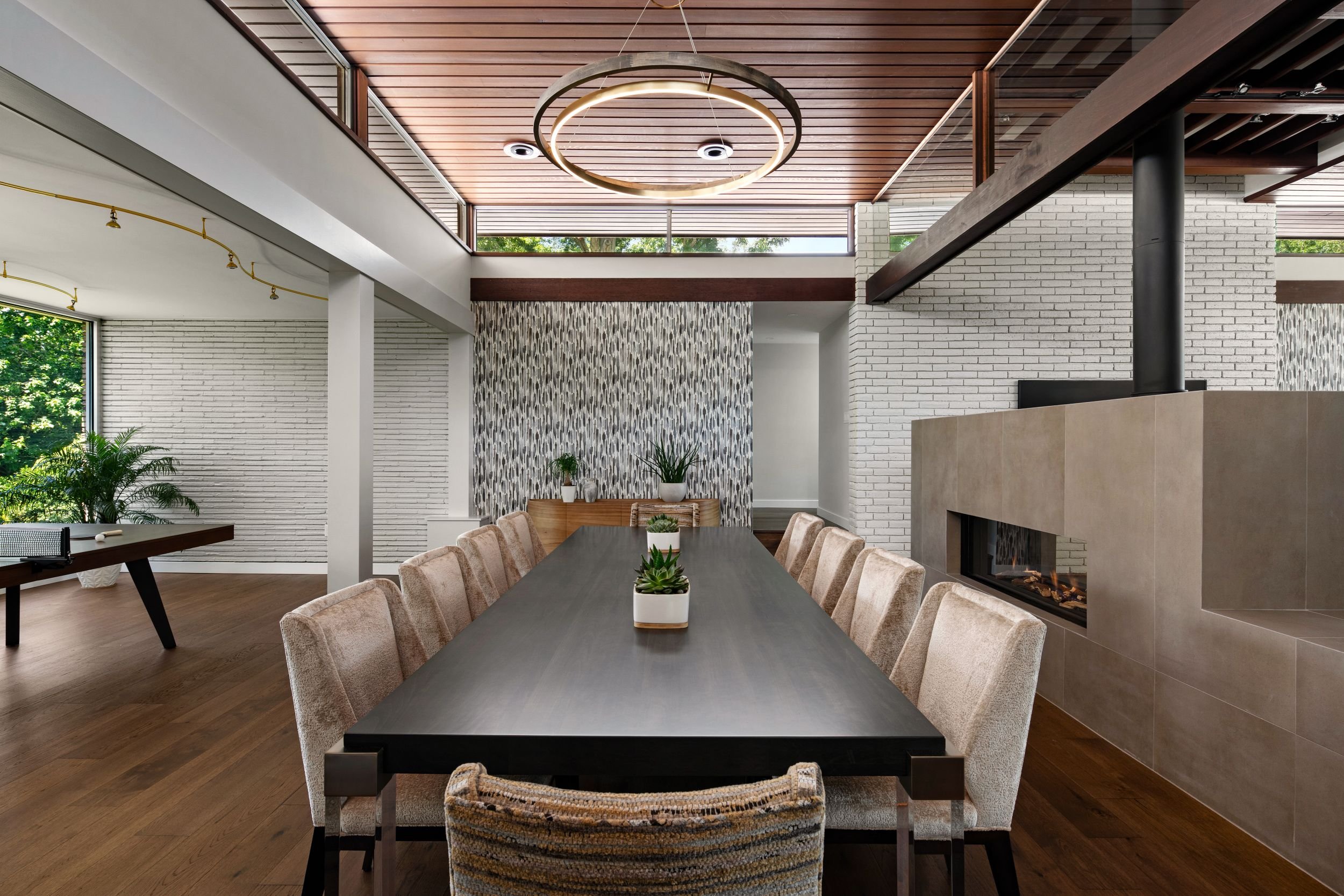
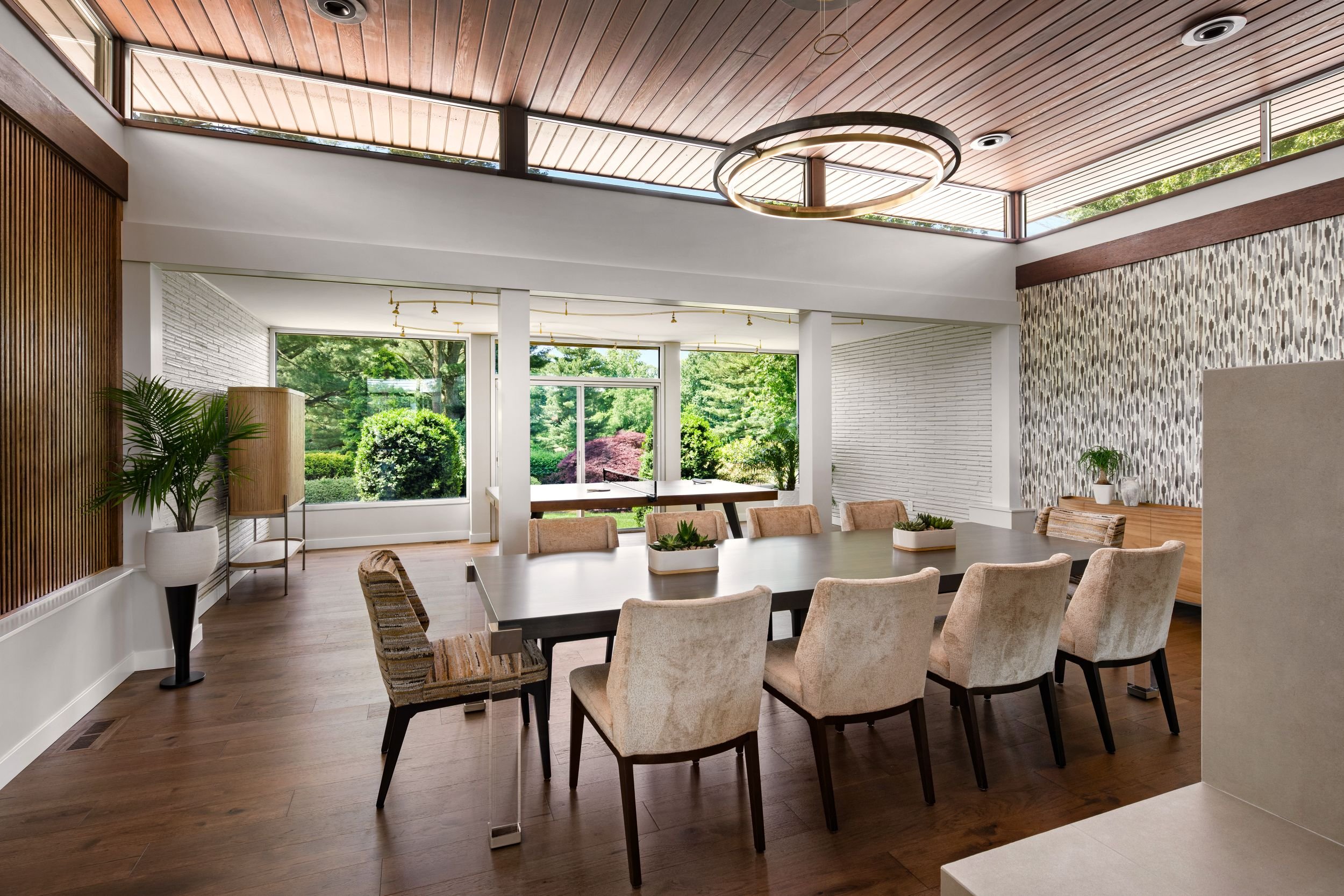
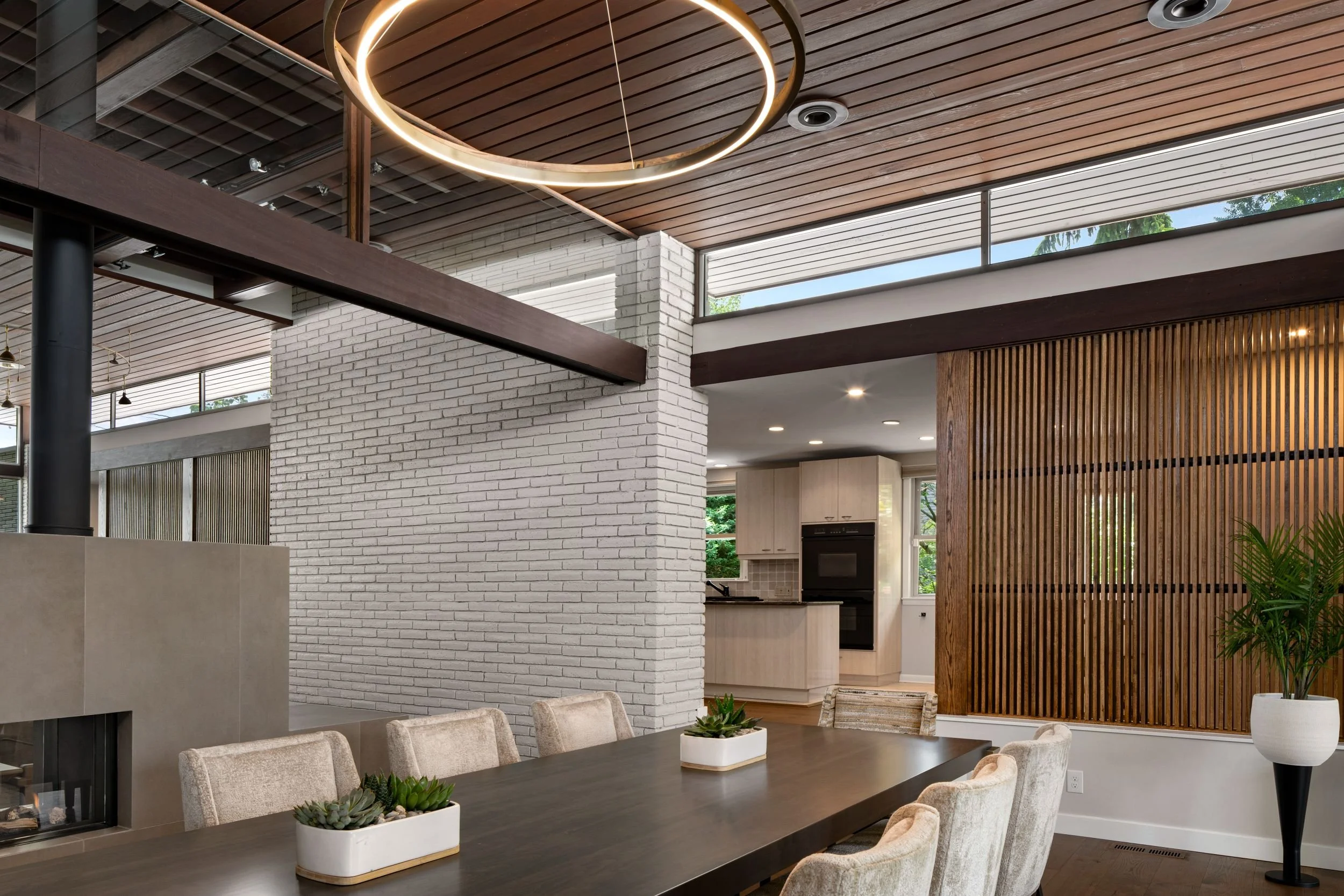
The dining room in its new position at the heart of the house — clerestory light above, the floating fireplace to one side, the game room and garden beyond. This is the spatial experience the original plan never offered. The dining room had always been capable of this. It just needed to be in the right place.
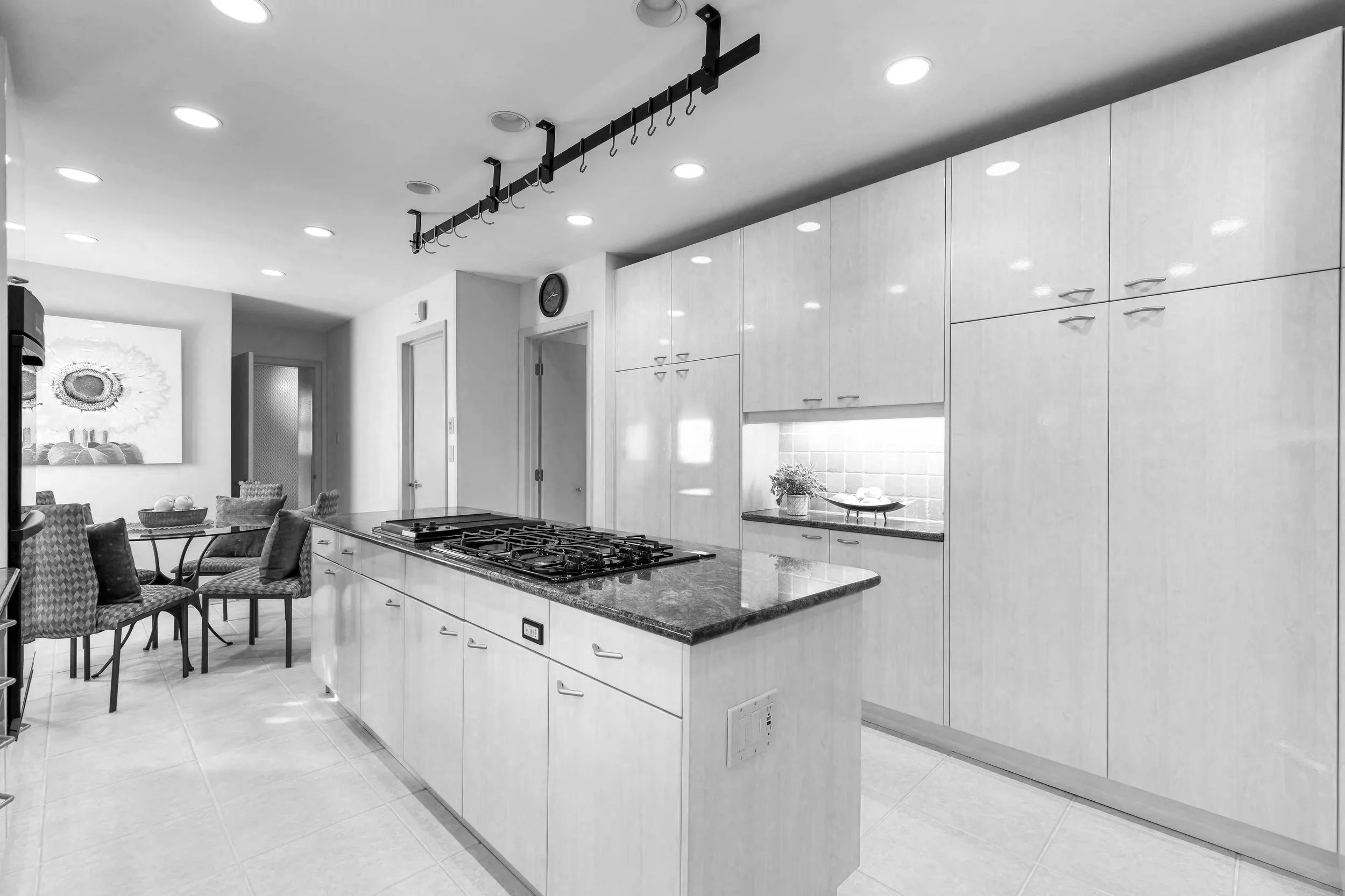
The dining room had been placed on the service side of the house — between the garage and the kitchen — disconnected from everything a dining room should be part of. Moving it into the central atrium, where the clerestory windows, wood ceiling, and garden views are, restored the conceptual clarity of the original design. The vacated space on the service side became a mudroom with cubbies, bench, and shelves, and a walk-in pantry — replacing storage lost when cabinetry was removed from the kitchen to improve circulation. The existing enclosed basement stair had separated the kitchen from what became the new dining area. Opening that enclosure provided a better connection between the spaces and made the basement entry feel like part of the home rather than a hidden service element. The basement storage area was converted to a children's play and hangout space — important in a house type that doesn't naturally provide great kids spaces within the atrium volume.
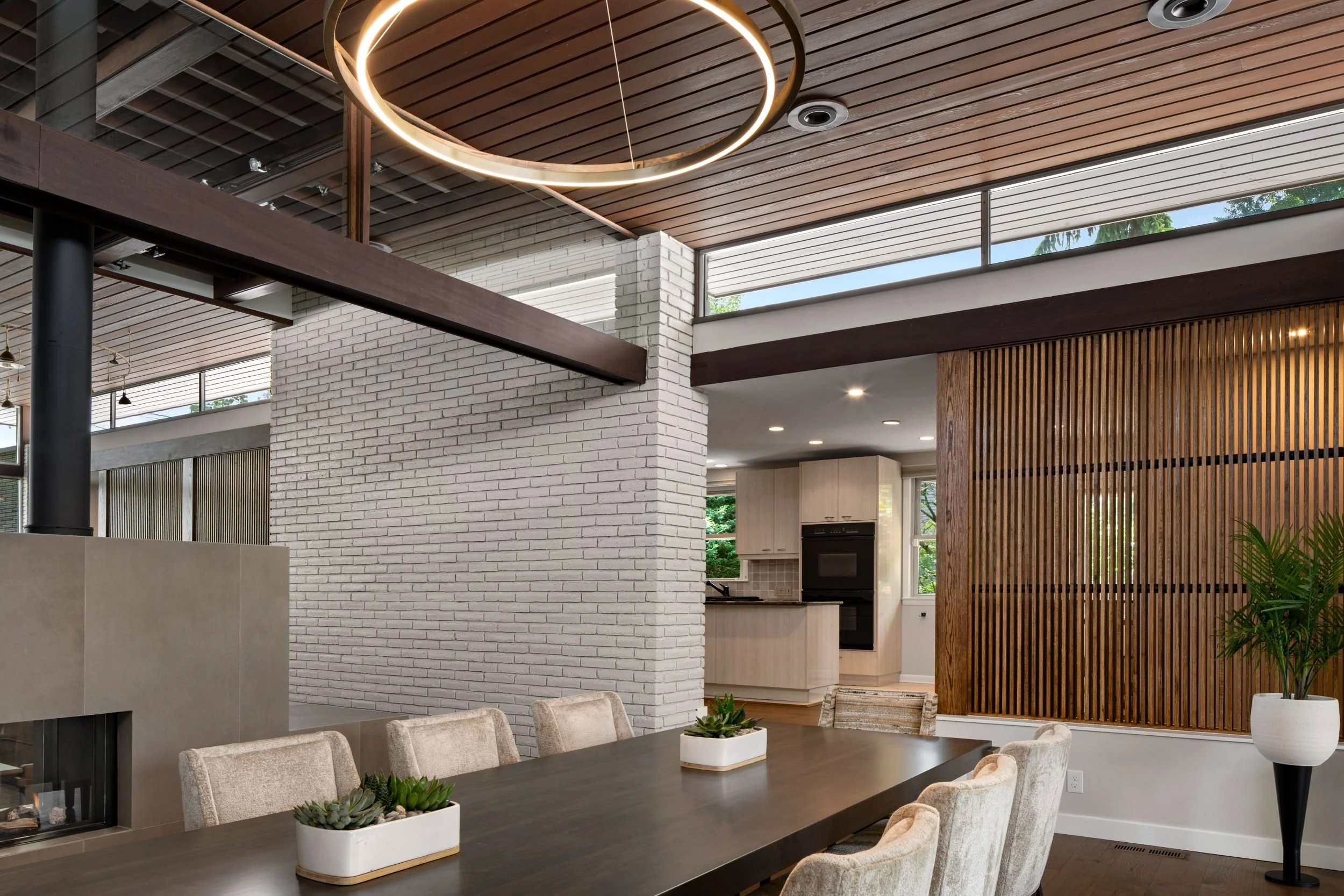
The dining room in conversation with the kitchen beyond and the oak slat screen to the right — the three zones of the house visible simultaneously from a single point. The white brick structural wall, the floating fireplace, and the slat screen are doing the same work: organizing space without closing it.
The primary suite was redesigned to give it what a primary suite should always have — connection to the landscape, a proper bath, and enough closet space.
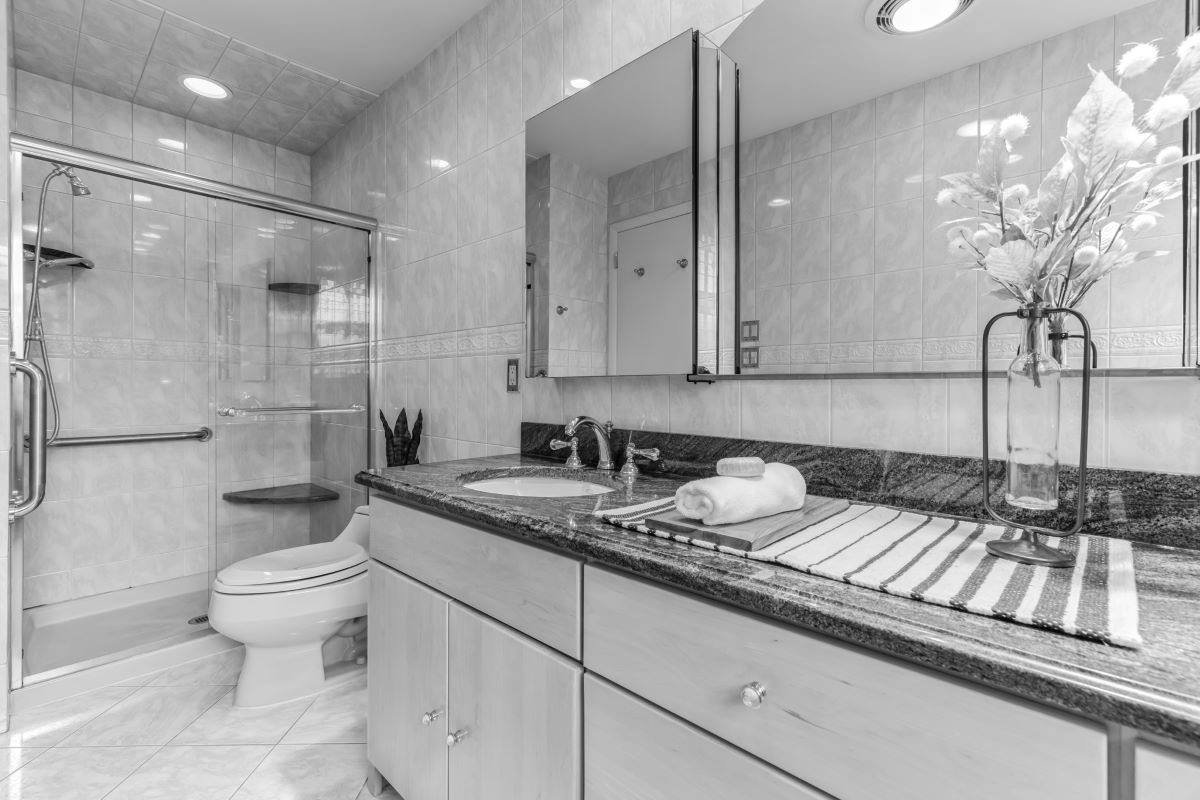
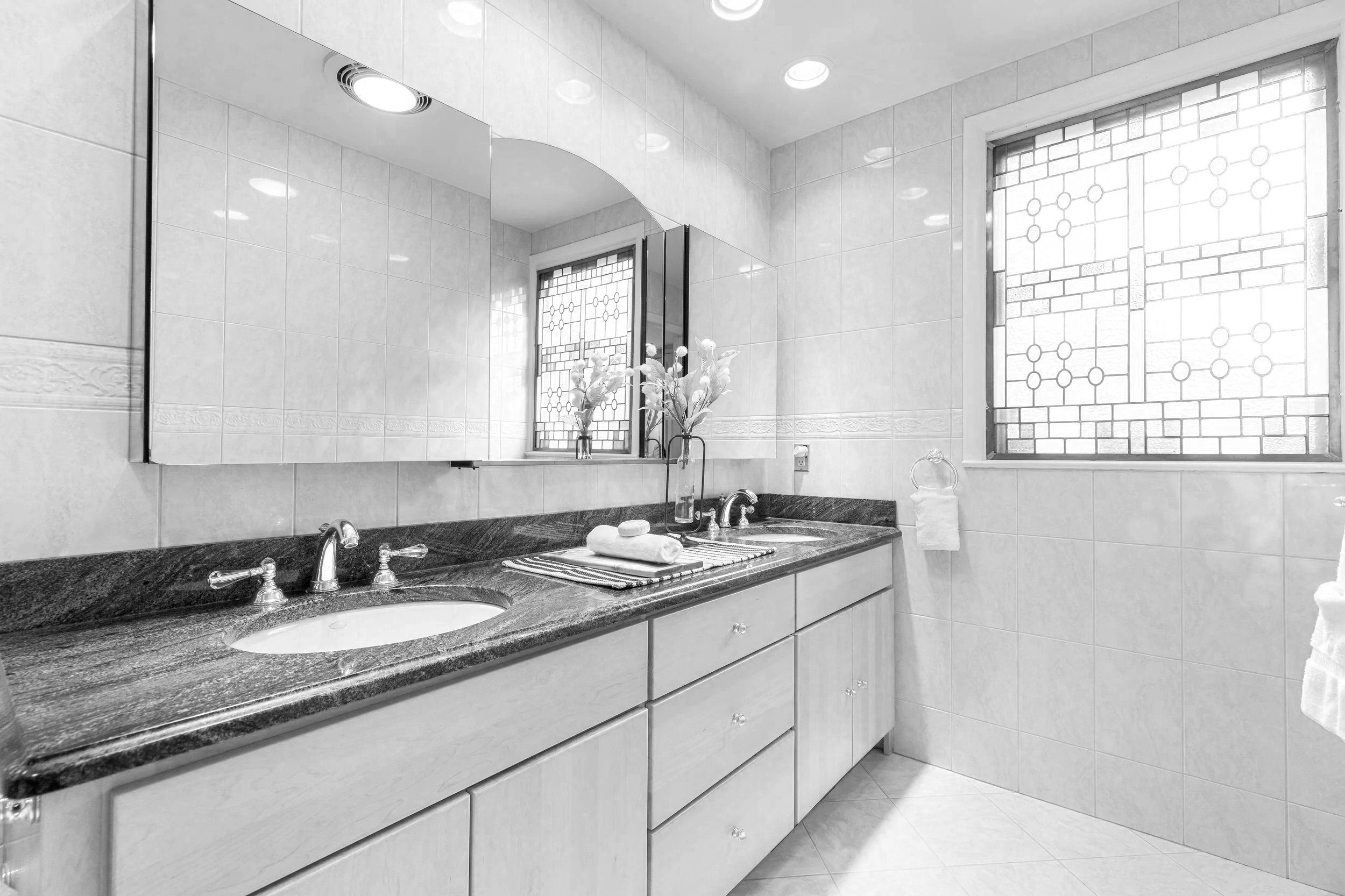
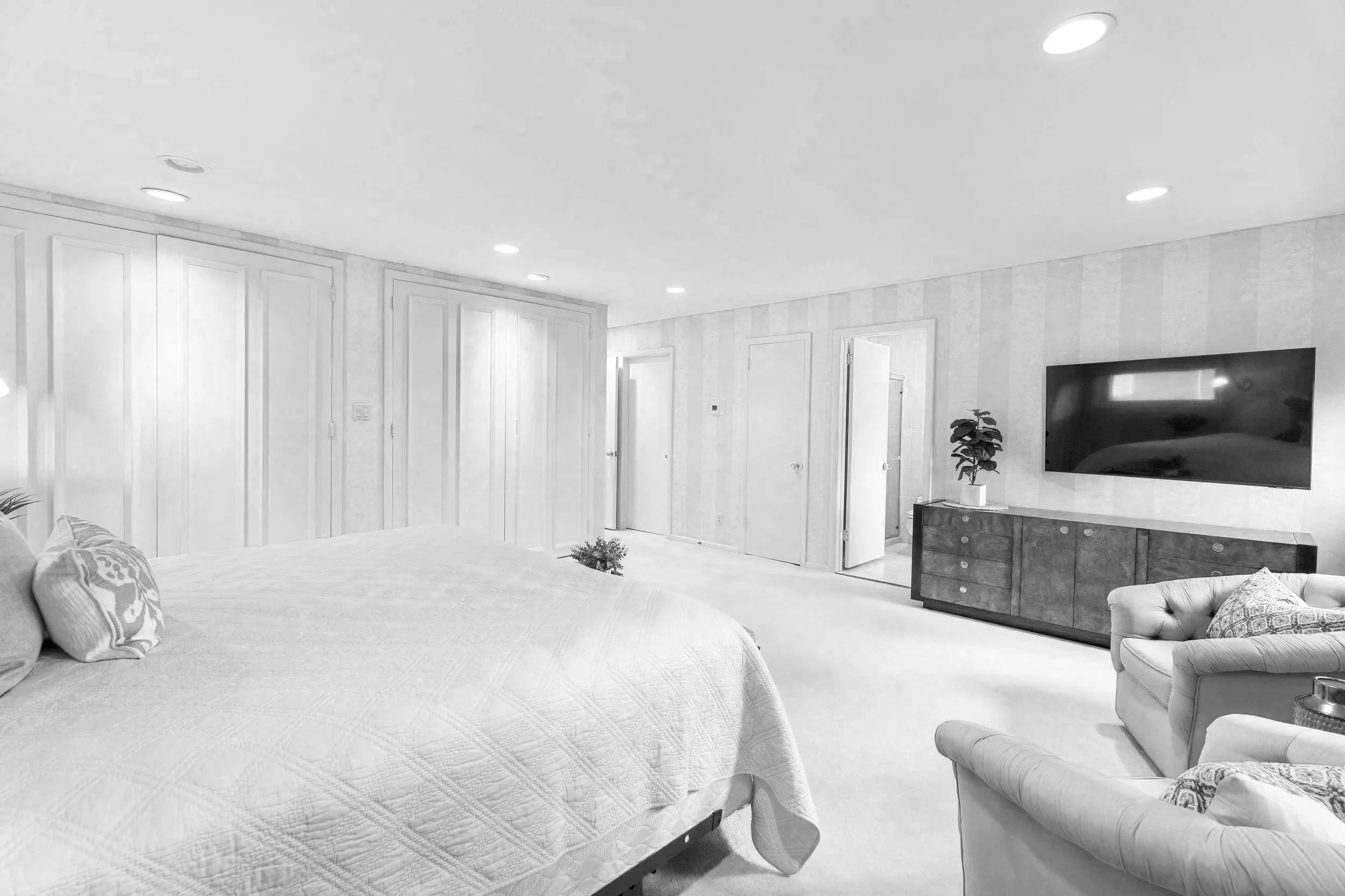
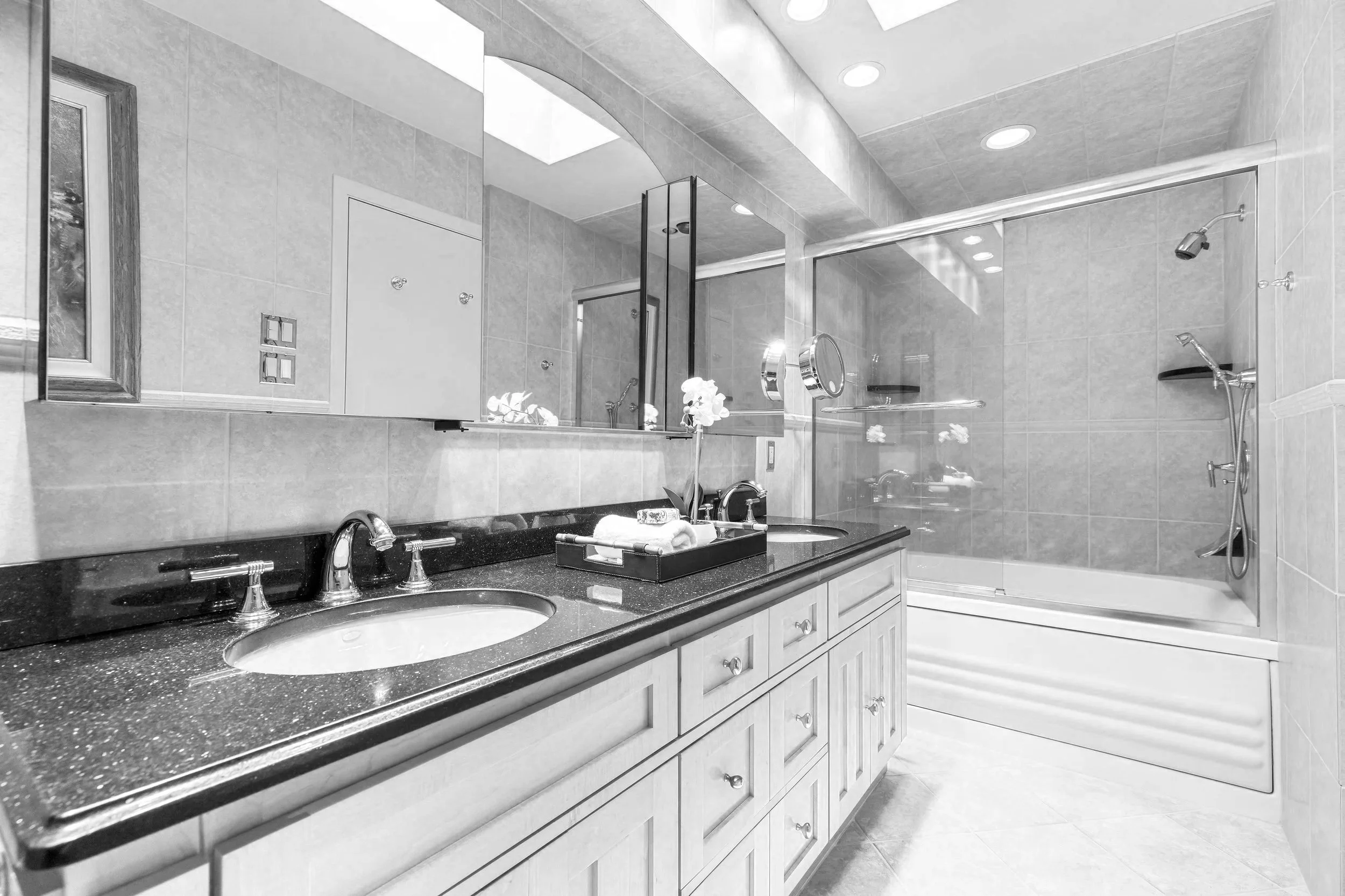
The primary bathroom before renovation — dated tile, inadequate layout, no connection to the rear yard or the character of the house.
The primary suite was reorganized to provide three things it had lacked: a better connection to the rear yard and golf course, a properly scaled primary bathroom, and adequate closet space. The rear-facing orientation of the suite gave it natural access to the landscape the house was designed to engage with — that relationship had simply never been properly developed. The redesigned suite sequences bedroom, closet, and bathroom in a logical order and gives the bathroom the space and natural light it deserves.
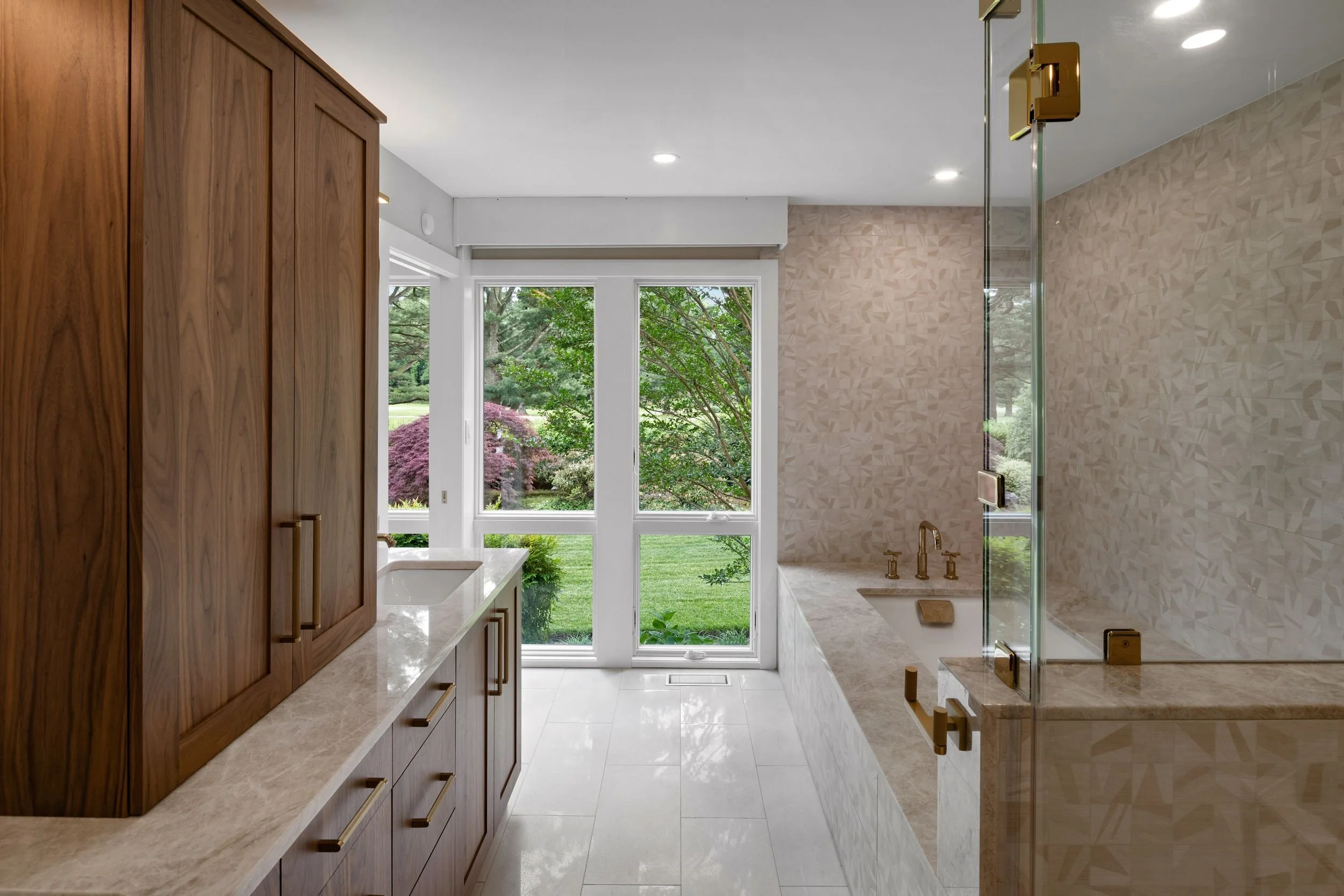
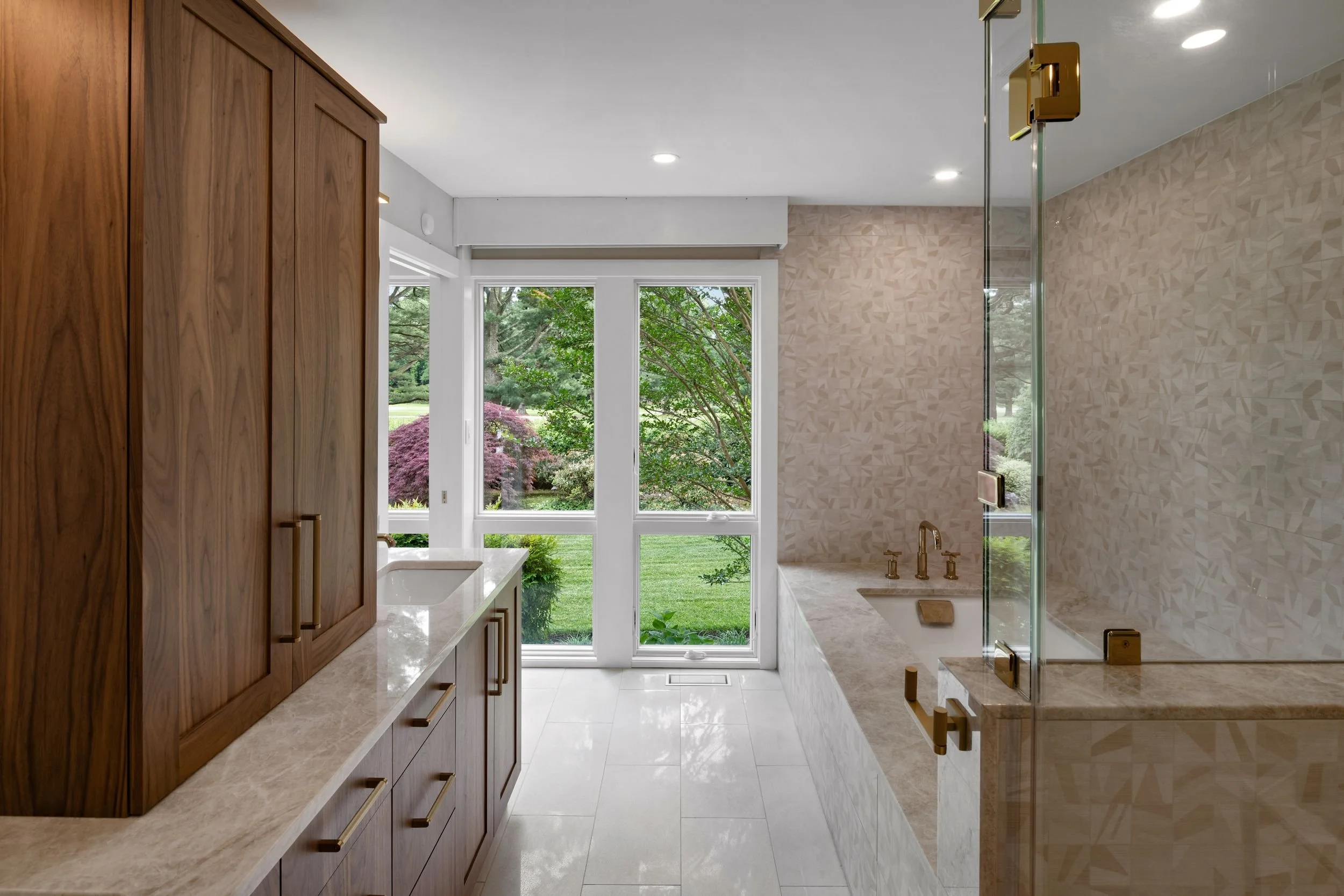
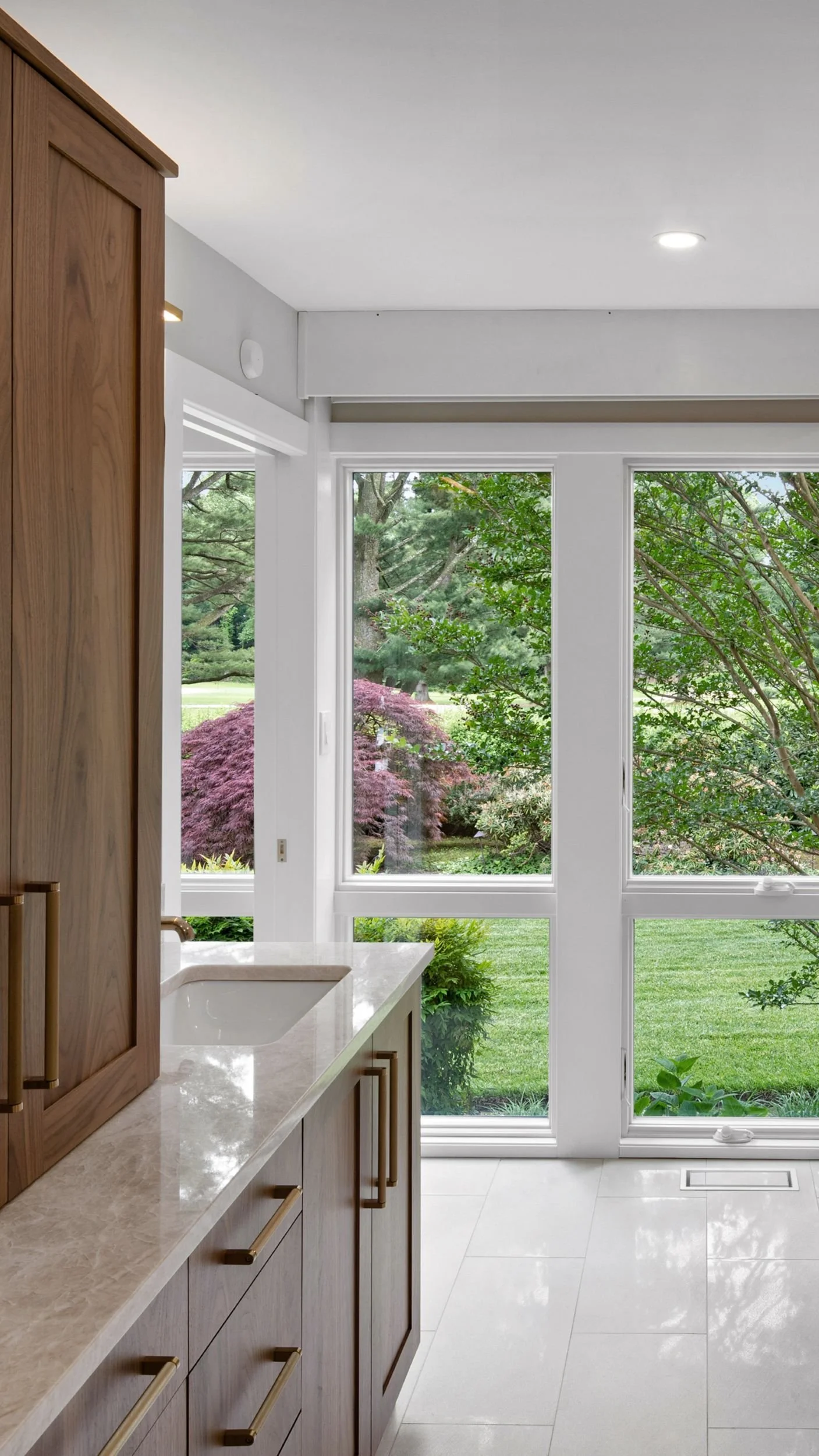
The primary bathroom redesigned around the one thing a rear-facing suite in this house always had — the garden. Walnut cabinetry, marble surfaces, and brass fixtures in a room that finally earns its connection to the landscape beyond the glass.
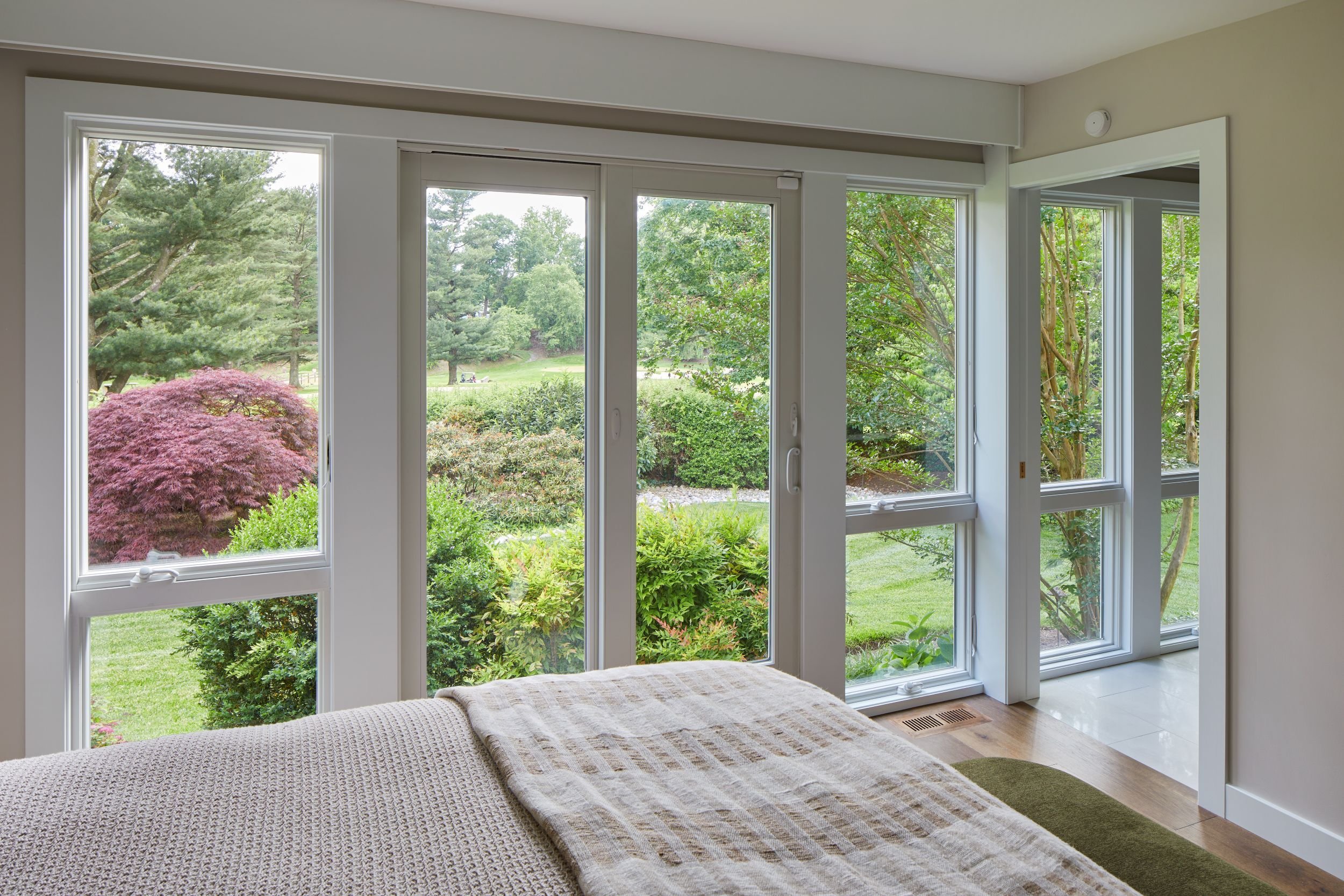
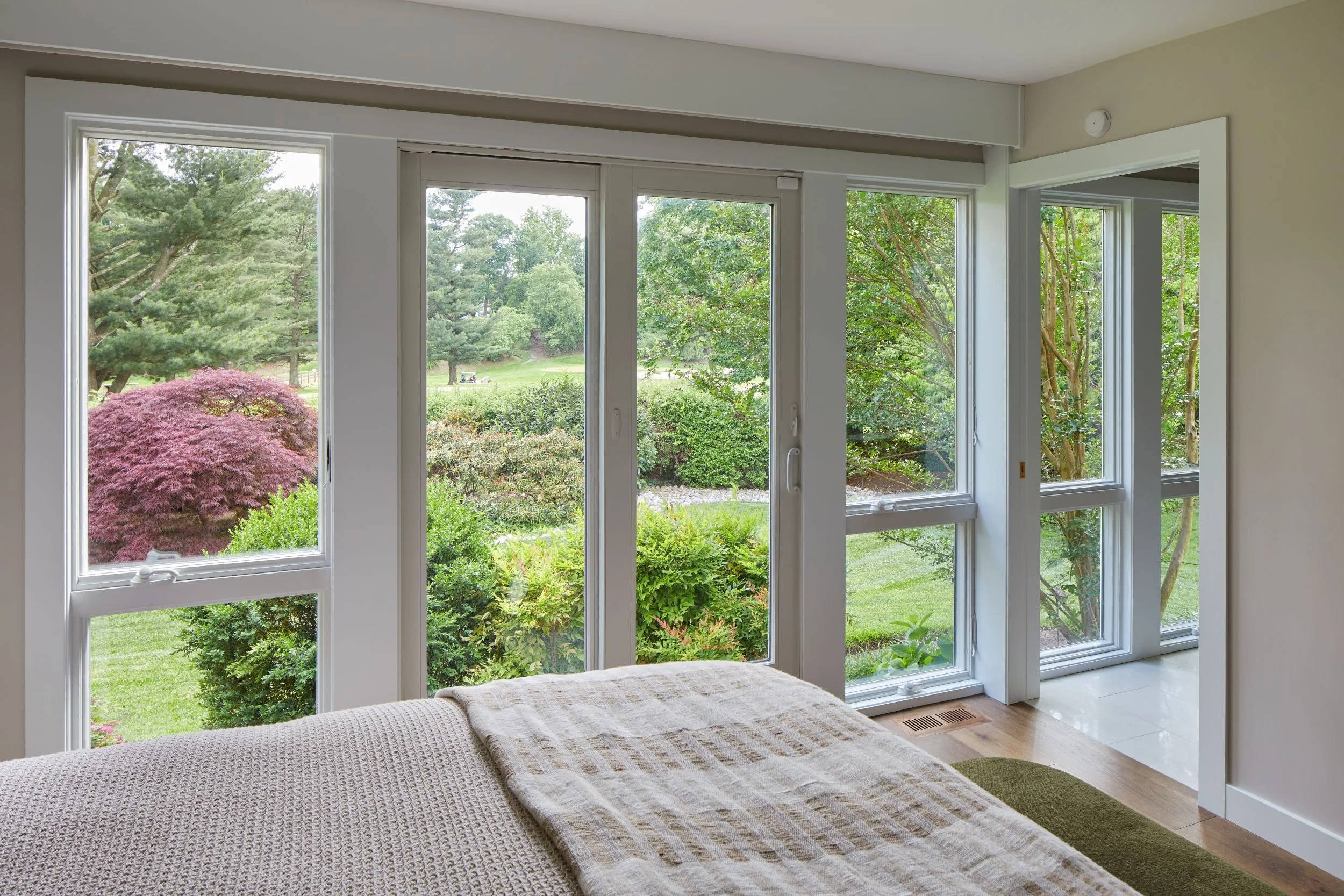
The primary bedroom with direct access to the rear yard and uninterrupted views to the former Woodcrest Country Club golf course. This is the connection the suite always should have had.
The complete Before and After photography — exterior, interior, site, and details.
Recent shots of our project after construction
Photography by Matt Wargo, Architectural Photography
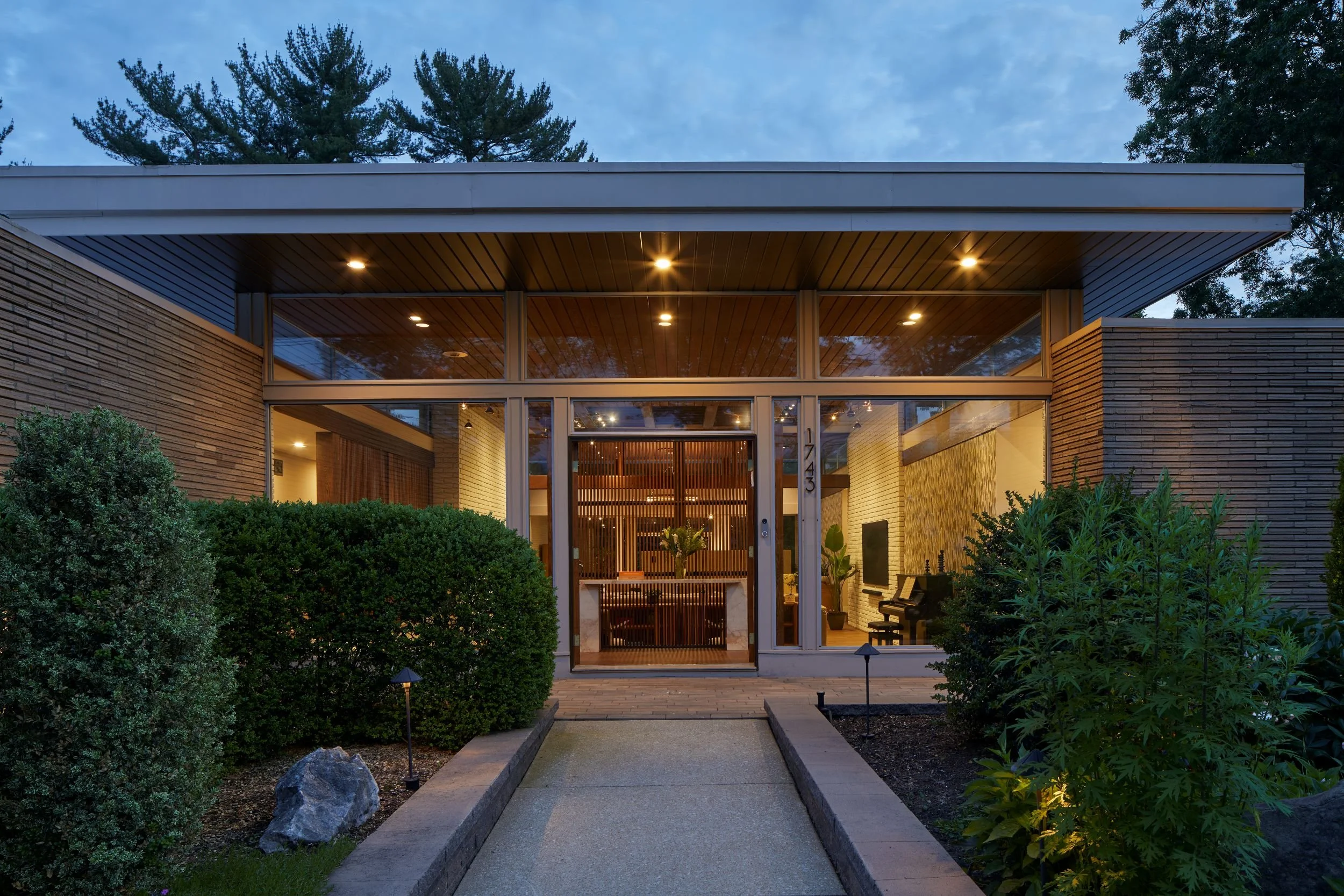
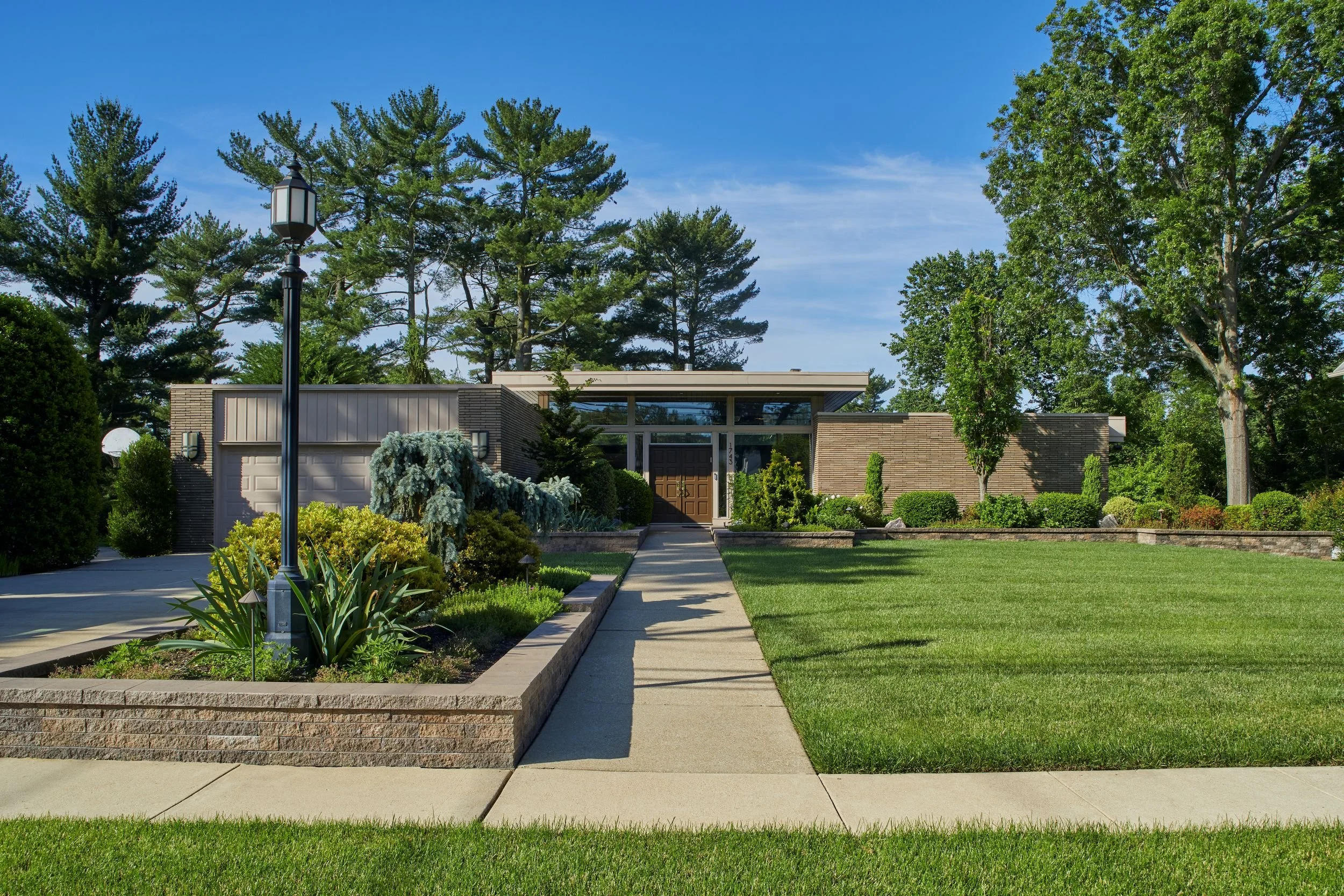
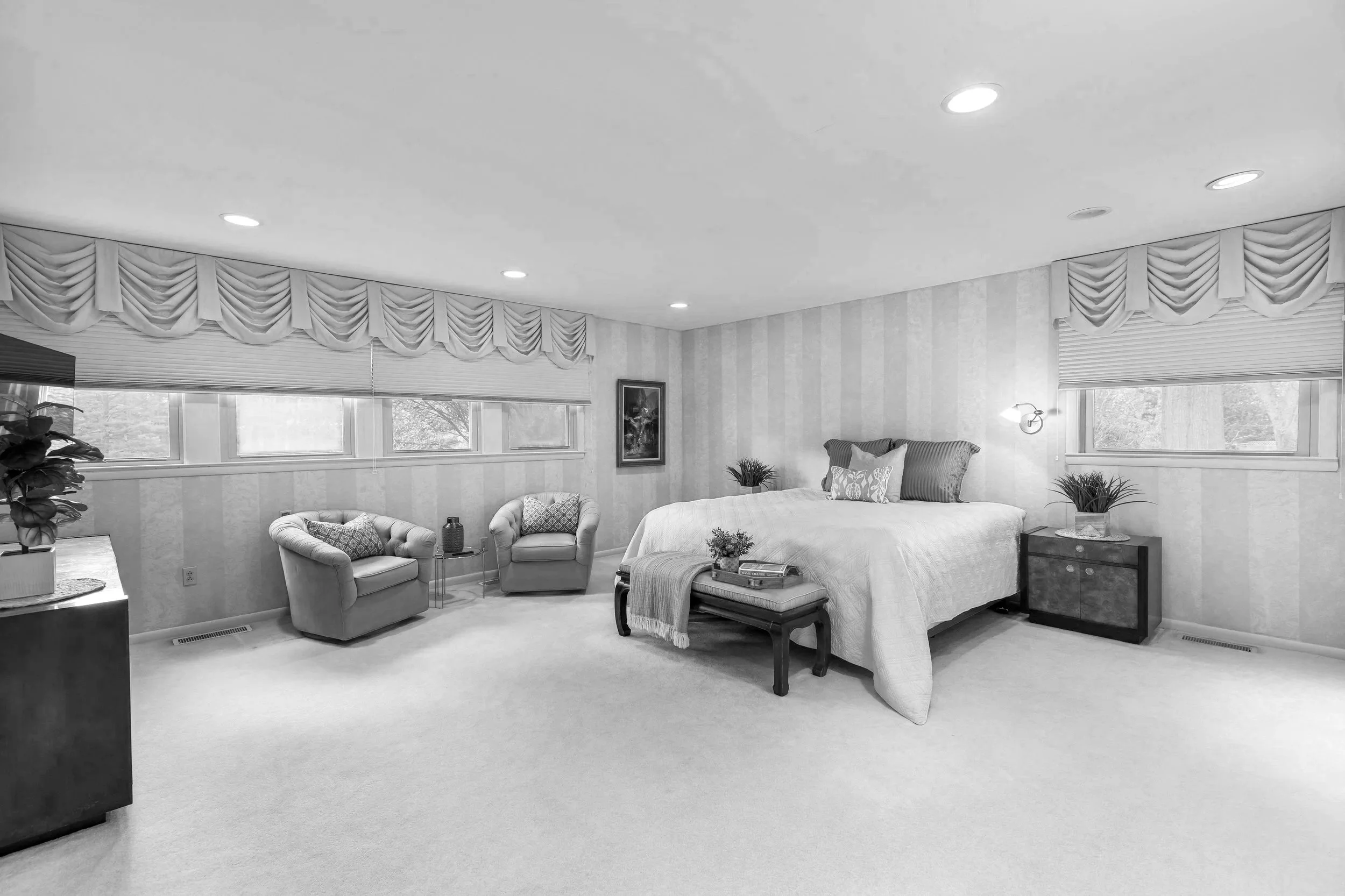
Before photos of the home prior to renovation.
Real-estate listing photography by